Loading...
Done
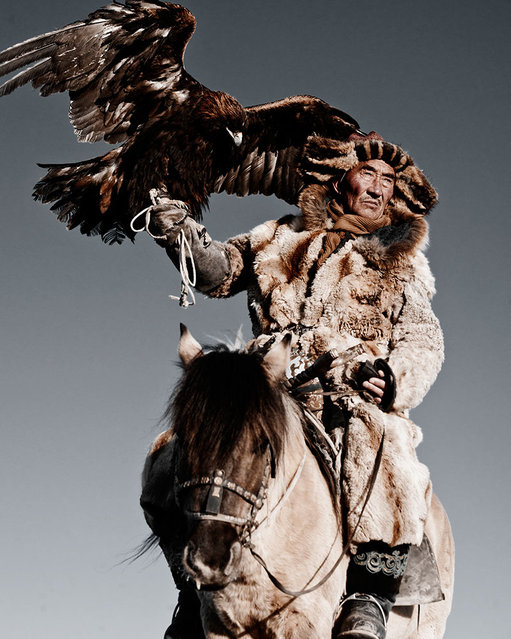
Fine Horses And Fierce Eagles Are The wings Of The Kazakh

The Kazakhs are the descendants of Turkic, Mongolic and Indo-Iranian tribes and Huns that populated the territory between Siberia and the Black Sea. They are a semi-nomadic people and have roamed the mountains and valleys of western Mongolia with their herds since the 19th century. The ancient art of eagle hunting is one of many traditions and skills that the Kazakhs have, in recent decades, been able to hold on to. They rely on their clan and herds, believing in pre-Islamic cults of the sky, the ancestors, fire and the supernatural forces of good and evil spirits.
Details
20 Feb 2014 12:12:00
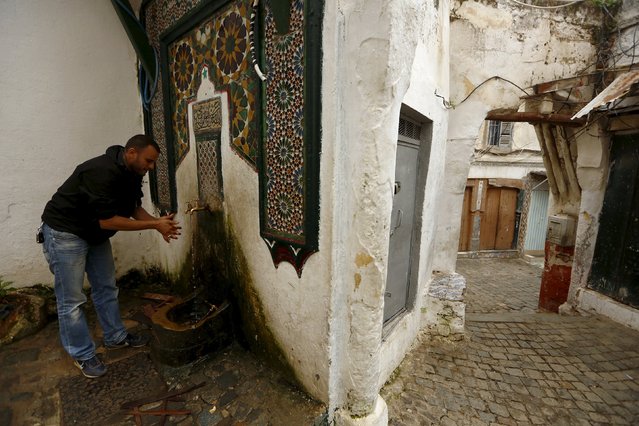
A man performs ablution using water at an old fountain before performing prayers in the old city of Algiers Al Casbah, Algeria December 3, 2015. (Photo by Zohra Bensemra/Reuters)

A man performs ablution using water at an old fountain before performing prayers in the old city of Algiers Al Casbah, Algeria December 3, 2015. The Algiers Casbah is a UNESCO World heritage site that includes the Sidi Ramdane mosque and former fortress, 10 centuries old. Decay from the passing years, as well as earthquake damage in 2003, leads some to consider a move to modern apartments with financial backing from the government. Others refuse to leave a neighbourhood they have called home for decades. (Photo by Zohra Bensemra/Reuters)
Details
22 Jan 2016 11:00:00
An Iraqi Shi'ite boy poses for a photograph as Iraq Shi'ite Muslims commemorate Ashura in Baghdad, October 24, 2015. (Photo by Ahmed Saad/Reuters)

An Iraqi Shi'ite boy poses for a photograph as Iraq Shi'ite Muslims commemorate Ashura in Baghdad, October 24, 2015. Ashura, which falls on the 10th day of the Islamic month of Muharram, commemorates the death of Imam Hussein, grandson of Prophet Mohammad, who was killed in the seventh century battle of Kerbala. (Photo by Ahmed Saad/Reuters)
Details
27 Oct 2015 08:00:00
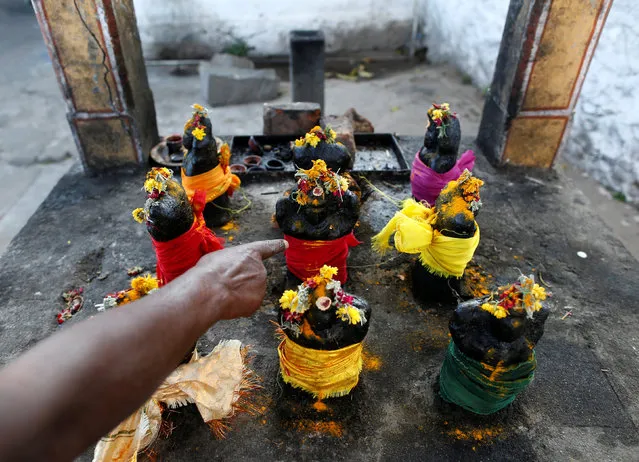
Paramasivan points to the statue of sun god Surya at a temple outside the Kodaikanal Solar Observatory, India, February 5, 2017. (Photo by Danish Siddiqui/Reuters)

Paramasivan points to the statue of sun god Surya at a temple outside the Kodaikanal Solar Observatory, India, February 5, 2017. In the early morning darkness, Devendran P. walks up a hill to a solar observatory in India's southern hill town of Kodaikanal, trudging the same path his father and grandfather walked in a century-old family tradition of studying the sun. (Photo by Danish Siddiqui/Reuters)
Details
24 Feb 2017 00:03:00
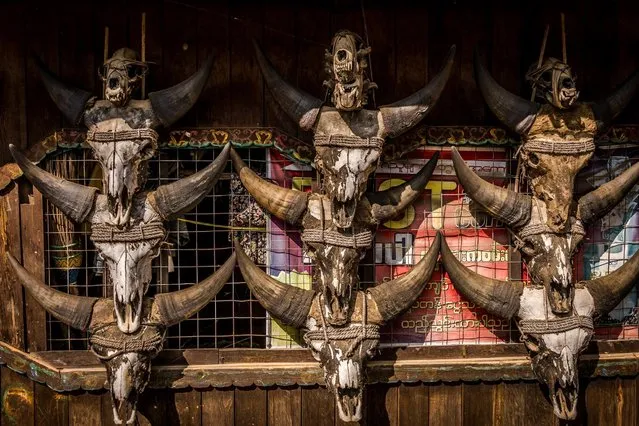
Traditional sculptures by Chin tribe in, Mindat, Myanmar, November 2016. (Photo by Teh Han Lin/Barcroft Images)

Traditional sculptures by Chin tribe in, Mindat, Myanmar, November 2016. In the mountains of Myanmar lives a tribe where the women have taken a unique approach to their beauty regime by decorating their faces with tattoos. The Chin people in the remote mountain town of Mindat, have been marking women in the area with intricate face tattoos for centuries. (Photo by Teh Han Lin/Barcroft Images)
Details
28 Dec 2016 07:01:00
Rita Ora attends the World Premiere of JEREMY SCOTT: THE PEOPLE'S DESIGNER, presented by The Vladar Company and Quintessentially at the TCL Chinese Theatre on Tuesday, September 8, 2015, in Hollywood, Calif. (Photo by Matt Sayles/Invision for The Vladar Company/AP Images)

Rita Ora attends the World Premiere of JEREMY SCOTT: THE PEOPLE'S DESIGNER, presented by The Vladar Company and Quintessentially at the TCL Chinese Theatre on Tuesday, September 8, 2015, in Hollywood, Calif. (Photo by Matt Sayles/Invision for The Vladar Company/AP Images)
Details
13 Sep 2015 13:16:00
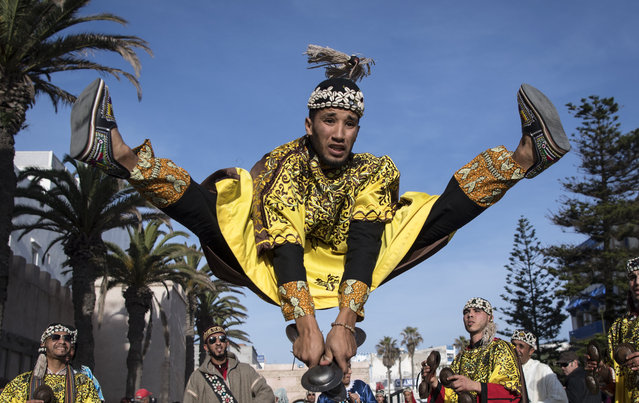
A Gnawa traditional group performs in the city of Essaouira on December 14, 2019, to celebrate the decision of adding the Gnawa culture to UNESCO's list of Intangible Cultural Heritage of Humanity. Gnawa culture, a centuries-old Moroccan practice rooted in music, African rituals and Sufi traditions, was added to UNESCO's list of Intangible Cultural Heritage of Humanity earlier in the week. Gnawa refers to a “set of musical productions, fraternal practices and therapeutic rituals where the secular mixes with the sacred”, according to the nomination submitted by Morocco. Often dressed in colourful outfits, Gnawa musicians play the guenbri, a type of lute with three strings, accompanied by steel castanets called krakebs. (Photo by Fadel Senna/AFP Photo)

A Gnawa traditional group performs in the city of Essaouira on December 14, 2019, to celebrate the decision of adding the Gnawa culture to UNESCO's list of Intangible Cultural Heritage of Humanity. Gnawa culture, a centuries-old Moroccan practice rooted in music, African rituals and Sufi traditions, was added to UNESCO's list of Intangible Cultural Heritage of Humanity earlier in the week. Gnawa refers to a “set of musical productions, fraternal practices and therapeutic rituals where the secular mixes with the sacred”, according to the nomination submitted by Morocco. Often dressed in colourful outfits, Gnawa musicians play the guenbri, a type of lute with three strings, accompanied by steel castanets called krakebs. (Photo by Fadel Senna/AFP Photo)
Details
18 Dec 2019 00:05:00
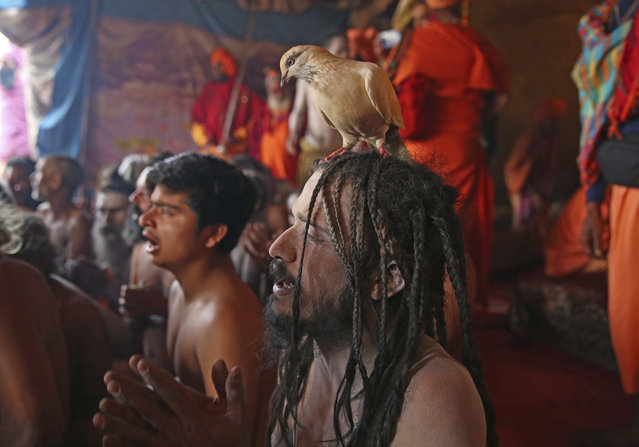
In this January 27, 2019, photo, Hindu holy men of monastic order Juna Akhara participate in a ritual before becoming Naga Sadhus or naked holy men at Sangam, the confluence of three holy rivers during the Kumbh Mela or pitcher festival in Prayagraj Uttar Pradesh state, India. At every Kumbh, including this year's, thousands of devotees were initiated into the reclusive sect of the Naga Sadhus, naked, ash-smeared cannabis-smoking Hindu warriors and onetime-armed defenders of the faith who for centuries have lived as ascetics in jungles and caves. (Photo by Rajesh Kumar Singh/AP Photo)

In this January 27, 2019, photo, Hindu holy men of monastic order Juna Akhara participate in a ritual before becoming Naga Sadhus or naked holy men at Sangam, the confluence of three holy rivers during the Kumbh Mela or pitcher festival in Prayagraj Uttar Pradesh state, India. At every Kumbh, including this year's, thousands of devotees were initiated into the reclusive sect of the Naga Sadhus, naked, ash-smeared cannabis-smoking Hindu warriors and onetime-armed defenders of the faith who for centuries have lived as ascetics in jungles and caves. (Photo by Rajesh Kumar Singh/AP Photo)
Details
18 Feb 2019 00:05:00