Loading...
Done
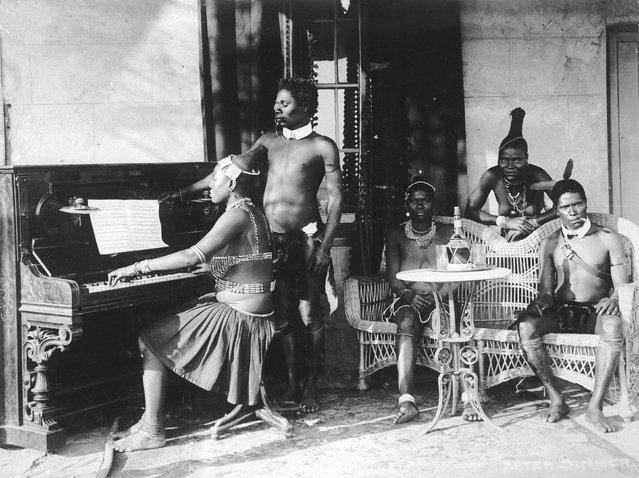
circa 1925:  A Zulu woman playing the piano while a group of others sit and listen.  (Photo by General Photographic Agency/Getty Images)

“The Zulu are the largest South African ethnic group, with an estimated 10–11 million people living mainly in the province of KwaZulu-Natal. Small numbers also live in Zimbabwe, Zambia, and Mozambique. Their language, Zulu, is a Bantu language; more specifically, part of the Nguni subgroup. The Zulu Kingdom played a major role in South African history during the 19th and 20th centuries. Under apartheid, Zulu people were classed as third-class citizens and suffered from state-sanctioned discrimination. They remain today the most numerous ethnic group in South Africa, and now have equal rights along with all other citizens”. – Wikipedia.

Photo: A Zulu woman playing the piano while a group of others sit and listen (to put it briefly, Englishmen scoff over Zulu). South Africa, circa 1925. (Photo by General Photographic Agency)

Details
03 Feb 2014 09:40:00
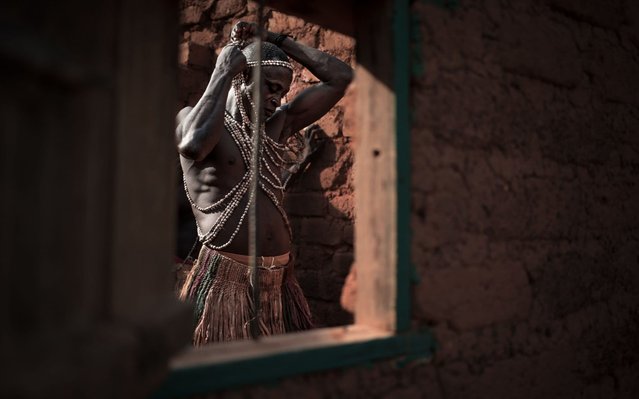
A Broto dancer prepares himself in a disused house of Bambari, in the centre of Central African Republic, before performing on March 14, 2019. The Broto, belonging to the Banda ethnic group, are known for their traditional dances accompanied by heavy horns made of tree roots. Today this tradition falls into disuse and its history is now forgotten by the new generations. (Photo by Florent Vergnes/AFP Photo)

A Broto dancer prepares himself in a disused house of Bambari, in the centre of Central African Republic, before performing on March 14, 2019. The Broto, belonging to the Banda ethnic group, are known for their traditional dances accompanied by heavy horns made of tree roots. Today this tradition falls into disuse and its history is now forgotten by the new generations. (Photo by Florent Vergnes/AFP Photo)
Details
05 Apr 2019 00:01:00
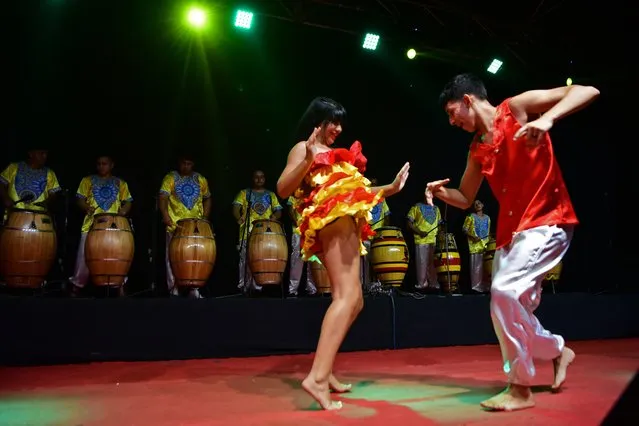
Dancers of the Saint Balthazar Kamba Kua traditional group perform in honour of Saint Balthazar, one of the Three Wise Men, during the Afro-Paraguay festival of Kamba Kua, in Fernando de la Mora, Paraguay, on January 6, 2024. The annual festival is a tradition that keeps Paraguay's Afro-descendants connected with their African roots through ancestral dance, drumming and customs. (Photo by Norberto Duarte/AFP Photo)

Dancers of the Saint Balthazar Kamba Kua traditional group perform in honour of Saint Balthazar, one of the Three Wise Men, during the Afro-Paraguay festival of Kamba Kua, in Fernando de la Mora, Paraguay, on January 6, 2024. The annual festival is a tradition that keeps Paraguay's Afro-descendants connected with their African roots through ancestral dance, drumming and customs. (Photo by Norberto Duarte/AFP Photo)
Details
28 Apr 2024 03:42:00
Club-goers dance at “Morning Gloryville” at the Ministry of Sound in south London August 11, 2015. (Photo by Toby Melville/Reuters)

Club-goers dance at “Morning Gloryville” at the Ministry of Sound in south London August 11, 2015. Morning dance parties with names like “Morning Gloryville” and "Daybreaker" are gathering steam in cities across the world, giving rise to a movement known as “conscious clubbing”. Its founders aim to create the energy and community of electronic dance parties with fruit smoothies and coffee instead of the drugs and alcohol more common after nightfall. (Photo by Toby Melville/Reuters)
Details
18 Aug 2015 14:06:00
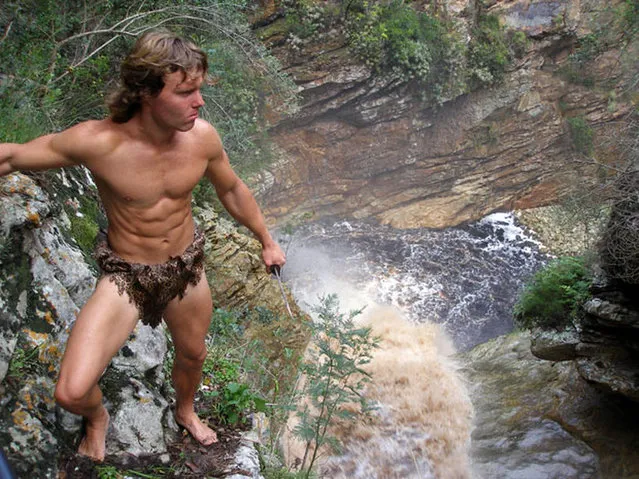
Real-Life Tarzan DeWet Du Toit

South African-born DeWet du Toit once worked as a security guard at a Co-op shop in Manchester, but now he’s decided to live his dream by becoming a real-life Tarzan – all with the hope of one day making it to Hollywood to portray his hero.
Details
21 Mar 2013 12:10:00
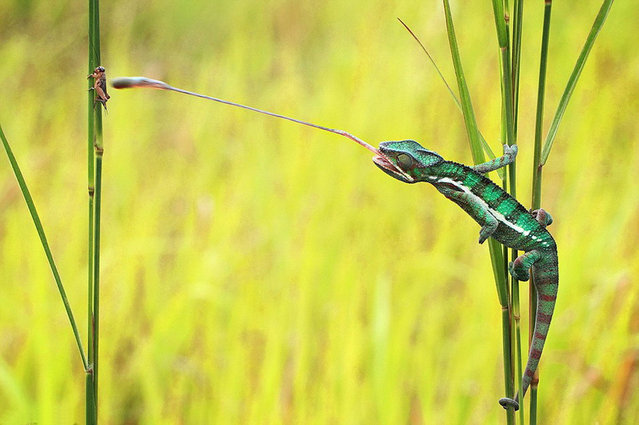
Chameleon lunch by Shikhei Goh

Photos taken by Shikhei Goh while he was walking through a field on Batam Island, Indonesia.


SEE ALSO: South African Leopard Catches Sandgrouse
Details
01 Nov 2012 09:30:00
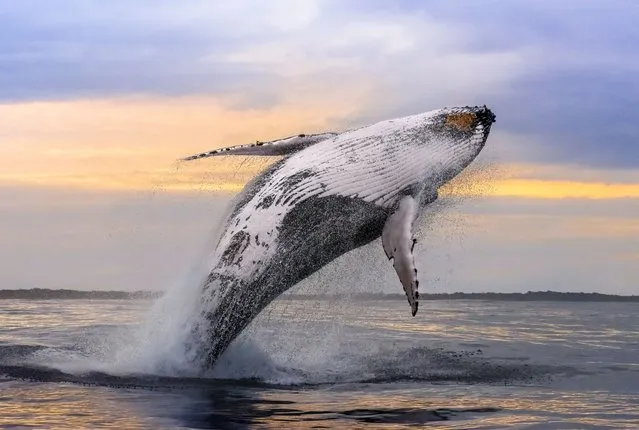
A 40-tonne humpback launching out of the water in an incredible breach in New South Wales, Australia on October 2022 in front of a sunset. The humpback whale can grow up to 56 feet long and typically covers 9,900 miles a year as it travels through the oceans of the world. Humpback whales are a species of Baleen whale, meaning they don't have teeth. Instead, they have baleen which helps them to filter feed. Their main source of food is krill or tiny bait fish. (Photo by Jodie Lowe/Media Drum Images)

A 40-tonne humpback launching out of the water in an incredible breach in New South Wales, Australia on October 2022 in front of a sunset. The humpback whale can grow up to 56 feet long and typically covers 9,900 miles a year as it travels through the oceans of the world. Humpback whales are a species of Baleen whale, meaning they don't have teeth. Instead, they have baleen which helps them to filter feed. Their main source of food is krill or tiny bait fish. (Photo by Jodie Lowe/Media Drum Images)
Details
30 Oct 2022 04:28:00
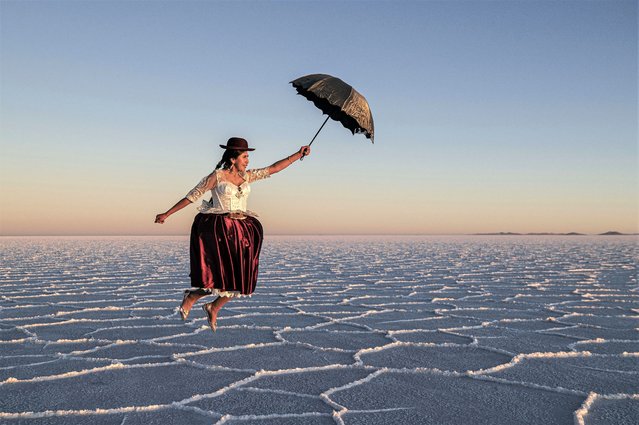
A young cholita from “Warmi Empollerada” project is portrayed emulating to fly with an umbrella during the sunset at the Salar de Uyuni (Uyuni Salt Flats), southwestern Bolivia, on June 25, 2023. The Salar de Uyuni is the world's largest salt flat and a top tourist destination in Bolivia and South America. (Photo by Marcelo Perez Del Carpio/Anadolu Agency via Getty Images)

A young cholita from “Warmi Empollerada” project is portrayed emulating to fly with an umbrella during the sunset at the Salar de Uyuni (Uyuni Salt Flats), southwestern Bolivia, on June 25, 2023. The Salar de Uyuni is the world's largest salt flat and a top tourist destination in Bolivia and South America. (Photo by Marcelo Perez Del Carpio/Anadolu Agency via Getty Images)
Details
21 Jul 2023 03:36:00