Loading...
Done
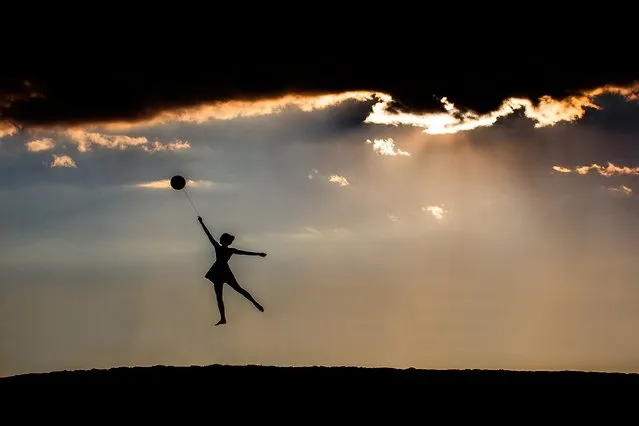
“Balloon”. (Photo by Tyler Shields)

Photographer Tyler Shields had become comfortable, a feeling he found “terrible” as an artist. He wanted to do something challenging, something that pushed the human boundaries. So he spent a year documenting heights, fear, energy and falling – a series he calls “Suspense”. Photo: “Balloon”. (Photo by Tyler Shields)
Details
13 Jul 2014 10:58:00
Technicians check a CRH high-speed train at Shanghai Hongqiao High-speed train base

Technicians check a CRH high-speed train at Shanghai Hongqiao High-speed train base on December 28, 2011 in Shanghai, China. China's railway stations have started today to sell tickets for the 2012 Spring Festival travel season scheduled to run between January 8th and February 16th, centred around the Chinese New Year which this year falls on January 23rd. (Photo by ChinaFotoPress/Getty Images)
Details
30 Dec 2011 11:40:00
China Celebrates The Year Of The Dragon Spring Festival

Chinese folk artists perform the lion dance at a temple fair to celebrate the Lunar New Year of Dragon on January 22, 2012 in Beijing, China. Falling on January 23 this year, the Chinese Lunar New Year, also known as the Spring Festival, which is based on the Lunisolar Chinese calendar, is celebrated from the first day of the first month of the lunar year and ends with Lantern Festival on the Fifteenth day. (Photo by Feng Li/Getty Images)
Details
23 Jan 2012 10:13:00
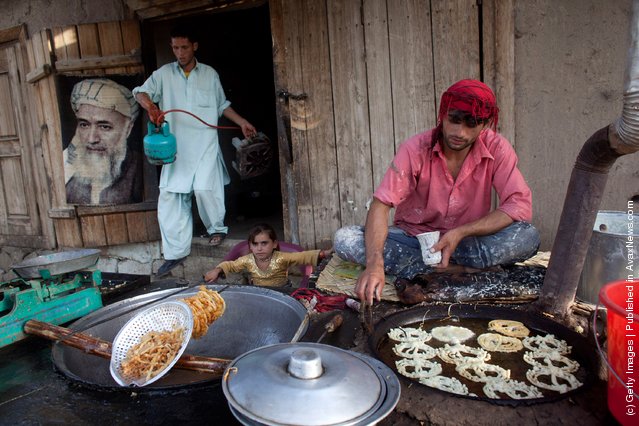
Afghans Prepare For Eid ul-Fitr

“Eid ul-Fitr, Eid al-Fitr, Id-ul-Fitr, or Id al-Fitr, often abbreviated to Eid, is a Muslim holiday that marks the end of Ramadan, the Islamic holy month of fasting (sawm). Eid is an Arabic word meaning “festivity”, while Fiṭr means “breaking (the fast)”. The holiday celebrates the conclusion of the twenty nine or thirty days of dawn-to-sunset fasting during the entire month of Ramadan. The first day of Eid, therefore, falls on the first day of the month Shawwal”. – Wikipedia
Details
30 Aug 2011 12:05:00
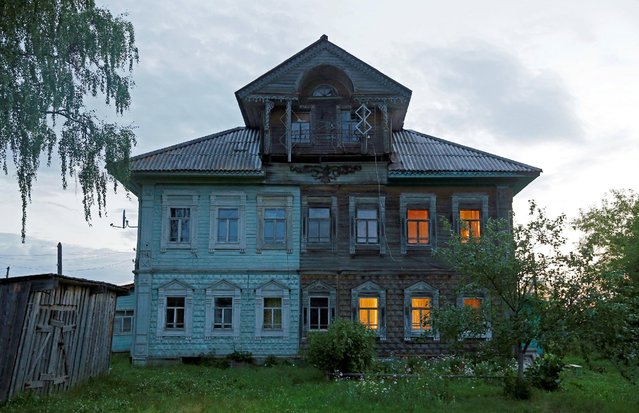
A view of the facade of a house in the village of Cherevkovo, Arkhangelsk region, Russia, July 12, 2016. (Photo by Maxim Shemetov/Reuters)

A view of the facade of a house in the village of Cherevkovo, Arkhangelsk region, Russia, July 12, 2016. Traditional wooden houses, many featuring exquisite carvings and craftsmanship, are falling into decay across Russia because of neglect, lack of funds and an exodus from the countryside to the cities. Urbanisation and a low birth rate are emptying out the countryside, and residents and authorities are often largely indifferent towards the historical value of their properties. (Photo by Maxim Shemetov/Reuters)
Details
10 Nov 2016 12:11:00
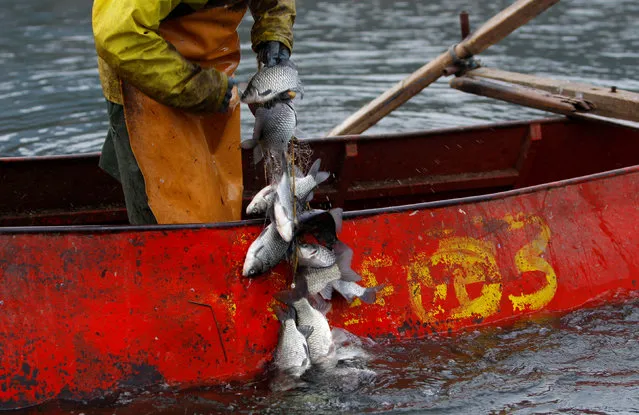
Fishermen collect their catch from a net at Dojran Lake, Macedonia, January 4, 2017. (Photo by Ognen Teofilovski/Reuters)

Fishermen collect their catch from a net at Dojran Lake, Macedonia, January 4, 2017. Fish from the lake is a traditional food for locals for orthodox Christmas eve, which falls on January 6. The lake faced sustainability issues during the 1990s due to drought and excessive use of its water but has since recovered after measures were taken to replenish and sustain water levels, according to local media. Dojran Lake is one of the three natural lakes in Macedonia, and also the warmest. It is said it is also the richest lake in fish in Europe. (Photo by Ognen Teofilovski/Reuters)
Details
05 Jan 2017 13:41:00
Upper Atmosphere Research Satellite (UARS)

In this artist illustration handout from the National Aeronautics and Space Administration (NASA), the Upper Atmosphere Research Satellite (UARS) is seen. According to NASA, the 12,500 pound satellite will fall from orbit into earth's atmosphere anytime between September 22 through 24. It is estimated that the space craft will break up into about 100 pieces, with an estimated 26 of which could hit the earth over a possible 500 mile debris field. (Illustration by NASA via Getty Images)
Details
21 Sep 2011 10:49:00
Hunter Berek and his eagle outside his home. (Photo by Brad Ruoho/The Star Tribune)

“I’d come to the Altai Mountains on an Adventure Sherpas tour. Our group of 12 was made up mostly of Minnesotans who’d left warm weather and falling leaves for frosty Mongolia. We’d come to sleep in cozy ger tents, the traditional yurt abode of the Mongolian steppe; sip mare’s milk tea; climb mountain glaciers; ride horses to an ancient battle site, and attend the annual Eagle Hunting Festival in Ölgiy...”. – Kathryn Kysar via The Star Tribune. Here: hunter Berek and his eagle outside his home. (Photo by Brad Ruoho/The Star Tribune)
Details
11 Jan 2015 12:57:00