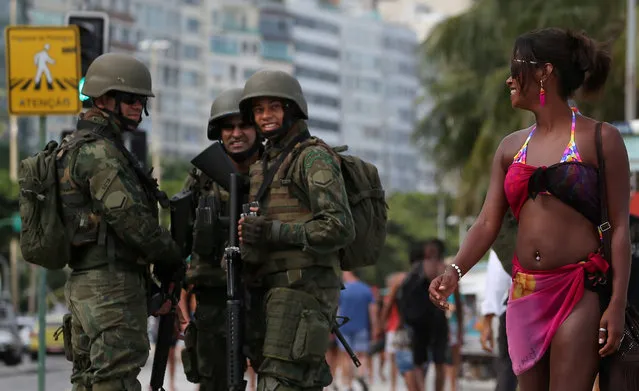
Brazilian navy soldiers watch a woman as they patrol the area at the Copacabana Beach before carnival festivities in Rio de Janeiro, Brazil February 14, 2017. (Photo by Sergio Moraes/Reuters)
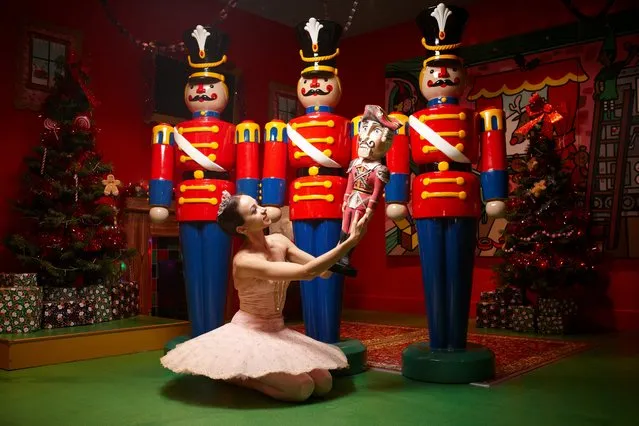
Principle Ballet Dancer, Ekaterina Bulgutova, of the Russian State Ballet, with the Nutcracker part of Christmas Ballet Season in Cardiff which starts at St Davids Hall on December 20, 2016 in Cardiff, England. (Photo by Kiran Ridley/Barcroft Images)
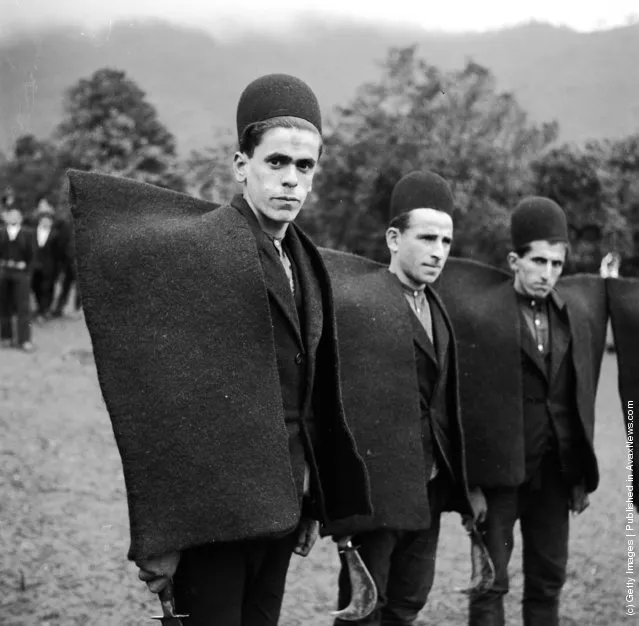
Shepherds from the north wear their traditional heavy woollen mantles as they stand ready to shear sheep with sycthe-like shears. (Photo by Three Lions/Getty Images). Circa 1952
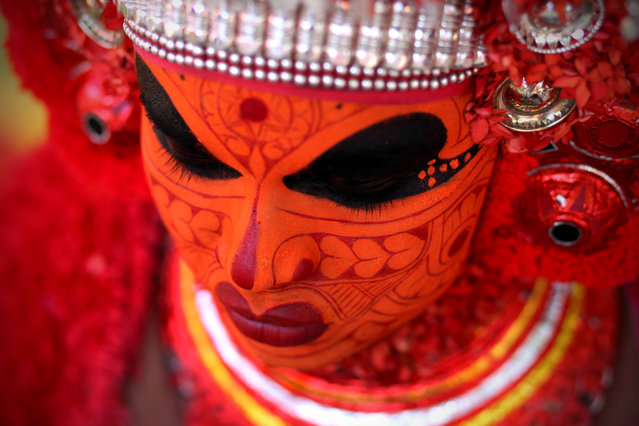
“Theyyam”. Preparation for the Theyyam performance in the surroundings of Kasaragod city. Theyyam is a popular ritual dance form of North Kerala, particularly in Kannur and Kasargod districts. The Theyyam represents a mythological, divine or heroic character. Make up of Theyyams is done by specialist. There are different types of face painting for which primarily and secondary colours are used. Therefore it is essential that the makeup man should have perfect knowledge of primary and secondary colour combinations. Sometimes, it takes several hours to paint each face. Photo location: Kasaragod, India. (Photo and caption by Rafal Ziejewski/National Geographic Photo Contest)
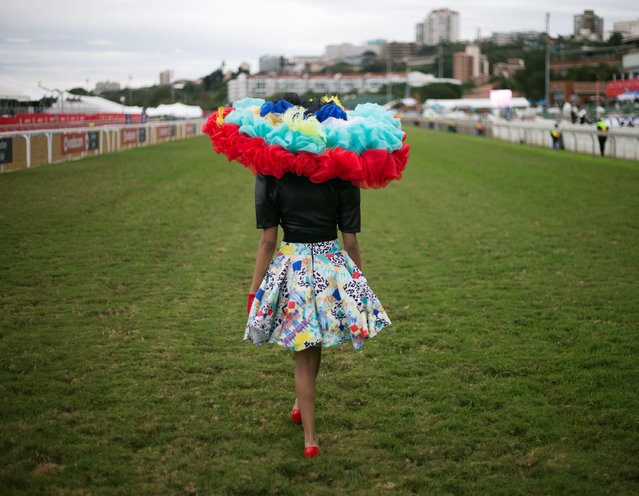
A person poses on the track during a fashion competition at the Durban July horse racing event in Durban, South Africa, July 2, 2016. (Photo by Rogan Ward/Reuters)
Vocalist Laila Skovmand, a musician with Danish company Between Music, plays underwater in a tank during a rehearsal ahead of their UK premiere concert Aquasonic at the Tramway in Glasgow on Ocrober 25, 2017. (Photo by Robert Perry/PA Images)
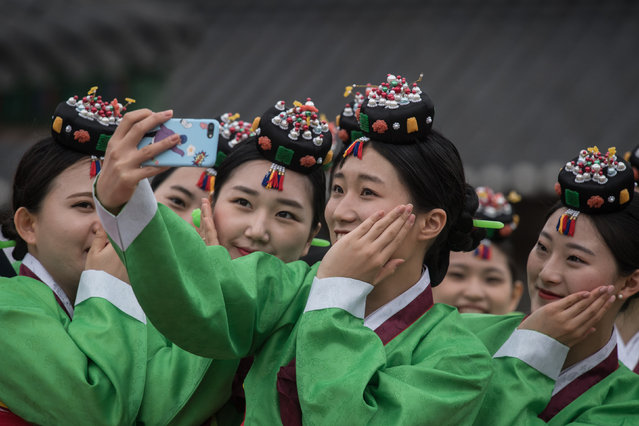
South Korean students pose for a selfie following a traditional coming-of-age ceremony at Namsan hanok village in Seoul on May 15, 2017. The Coming of Age Day is the day to celebrate and encourage the youth who have reached the age of 20, which is considered the beginning of adulthood. (Photo by Ed Jones/AFP Photo)
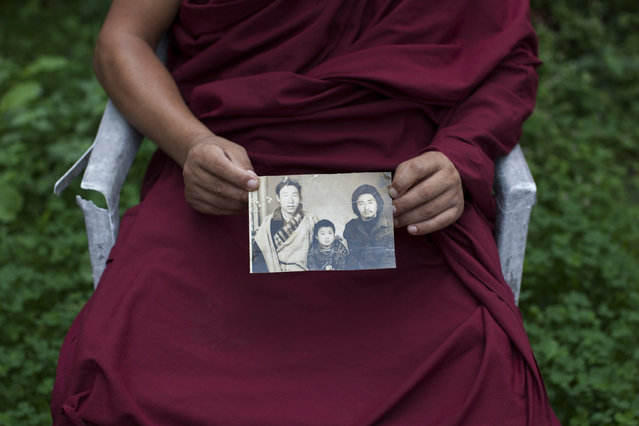
“When I was 8 years old, my parents paid a smuggler to take me across the Himalayas, a weekslong walk over the mountains from Tibet to India. It was a trek that tens of thousands of other Tibetans have taken since the Dalai Lama fled a failed 1959 uprising against Chinese rule. My parents must have had their reasons to send me here; they must have had the best of intentions. But 18 years later, I still don't know why they did it. They are not political people. They are small farmers who raise barley and a few yak in a rural area not far from Lhasa, the Tibetan capital. I have not seen them since I left...”. – Tsering Topgyal via The Associated Press. (Photo by Tsering Topgyal/AP Photo)