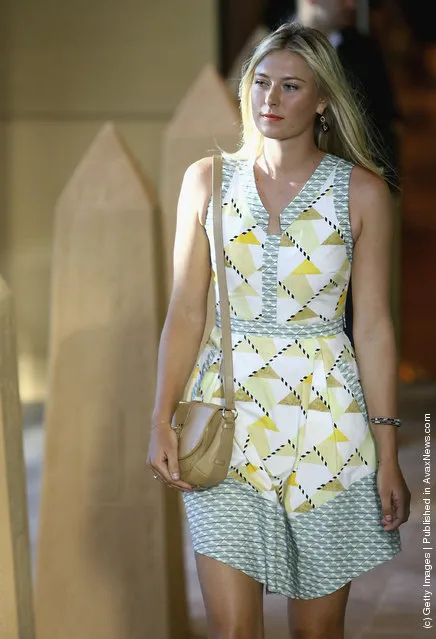
Maria Sharapova of Russia arrives at the 2012 Australian open Players Party at Crown Towers on January 15, 2012 in Melbourne, Australia. (Photo by Robert Prezioso/Getty Images)
Ghanaian fans take a selfie prior to a Group G football match between Germany and Ghana at the Castelao Stadium in Fortaleza during the 2014 FIFA World Cup on June 21, 2014. (Photo by Patrik Stollarz/AFP Photo)
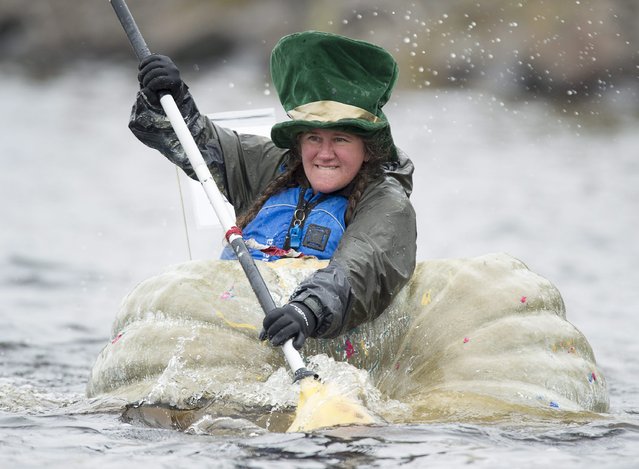
A paddler races in a giant pumpkin during the annual regatta on Lake Pisiquid in Windsor, Nova Scotia, Sunday, October 11, 2015. Participants hollow out the massive gourds and pilot them across the 500 meter course. (Photo by Andrew Vaughan/The Canadian Press via AP Photo)
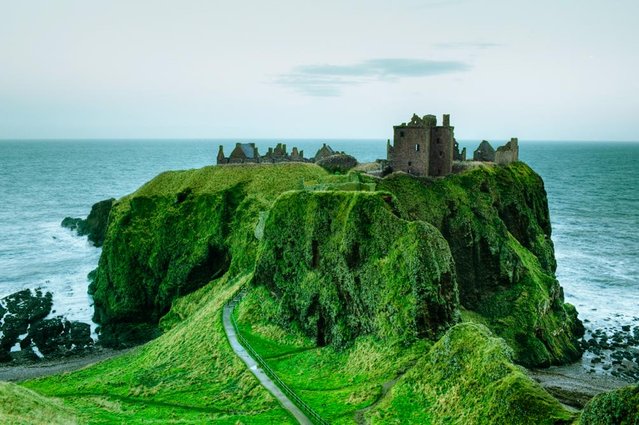
Dunnottar Castleis a ruined medieval fortress located upon a rocky headland on the north-east coast of Scotland, about 3 kilometres (1.9 mi) south of Stonehaven. The surviving buildings are largely of the 15th and 16th centuries, but the site is believed to have been fortified in the Early Middle Ages. Dunnottar has played a prominent role in the history of Scotland through to the 18th-century Jacobite risings because of its strategic location and the strength of its situation. Dunnottar is best known as the place where the Honours of Scotland, the Scottish crown jewels, were hidden from Oliver Cromwell's invading army in the 17th century. The property of the Keiths from the 14th century, and the seat of the Earl Marischal, Dunnottar declined after the last Earl forfeited his titles by taking part in the Jacobite rebellion of 1715. The castle was restored in the 20th century and is now open to the public.