Loading...
Done
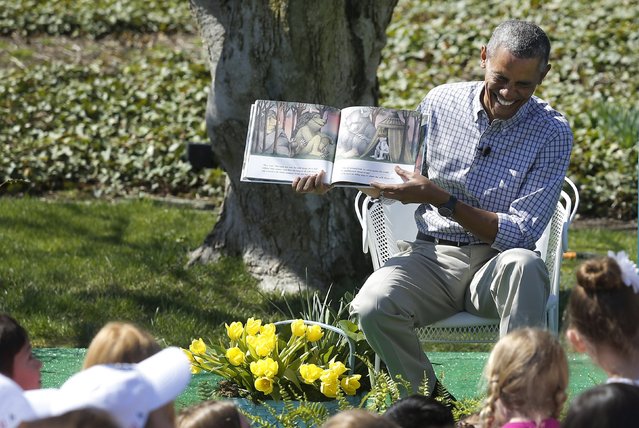
U.S. President Barack Obama laughs as he reads the storybook “Where the Wild Things Are” during the annual Easter Egg Roll at the White House in Washington April 6, 2015. (Photo by Jonathan Ernst/Reuters)

U.S. President Barack Obama laughs as he reads the storybook “Where the Wild Things Are” during the annual Easter Egg Roll at the White House in Washington April 6, 2015. Thousands of children gathered at the White House for the annual Easter Egg Roll. This year's event features live music, cooking stations, storytelling, and of course, some Easter egg roll. (Photo by Jonathan Ernst/Reuters)
Details
07 Apr 2015 11:28:00
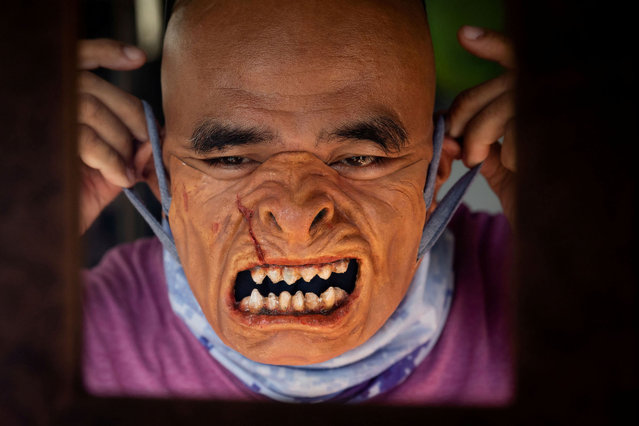
TV prosthetics artist Rene Abelardo tries on a sample of his prosthetic face mask, his latest creation as TV projects took a halt amid the coronavirus disease (COVID-19) outbreak, in San Pedro, Laguna, Philippines, June 17, 2020. (Photo by Eloisa Lopez/Reuters)

TV prosthetics artist Rene Abelardo tries on a sample of his prosthetic face mask, his latest creation as TV projects took a halt amid the coronavirus disease (COVID-19) outbreak, in San Pedro, Laguna, Philippines, June 17, 2020. (Photo by Eloisa Lopez/Reuters)
Details
31 Aug 2020 00:03:00
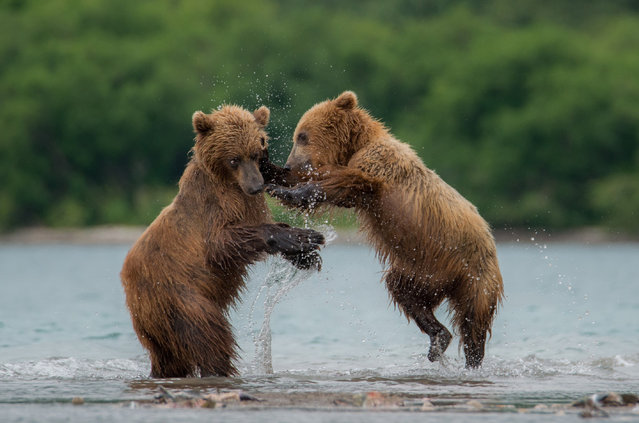
Kamchatka brown bears at Kurile Lake in Kamchatka peninsula’s volcanic terrain, Russia on August, 2017. Kamchatka brown bears are generally not dangerous to humans, and only 1% of encounters result in attack. (Photo by Igor Ivanko/Anadolu Agency/Getty Images)

Kamchatka brown bears at Kurile Lake in Kamchatka peninsula’s volcanic terrain, Russia on August, 2017. Kamchatka brown bears are generally not dangerous to humans, and only 1% of encounters result in attack. (Photo by Igor Ivanko/Anadolu Agency/Getty Images)
Details
03 Sep 2017 07:17:00
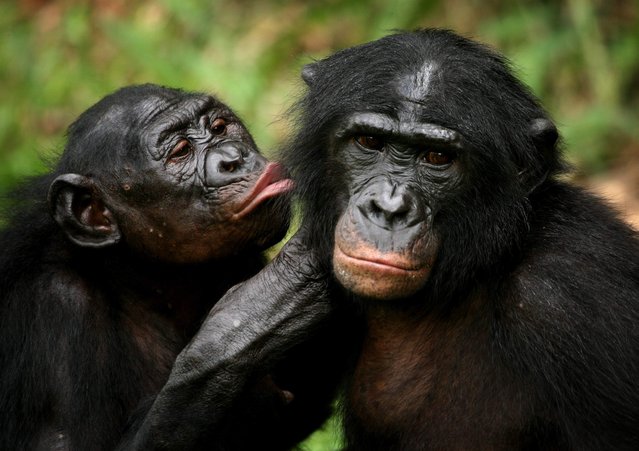
Bonobo apes, primates unique to Congo and humankind's closest relative, groom one another at a sanctuary just outside the capital Kinshasa, Congo on October 31, 2006. (Photo by Finbarr O'Reilly/Reuters)

Bonobo apes, primates unique to Congo and humankind's closest relative, groom one another at a sanctuary just outside the capital Kinshasa, Congo on October 31, 2006. (Photo by Finbarr O'Reilly/Reuters)
Details
08 Feb 2017 00:01:00
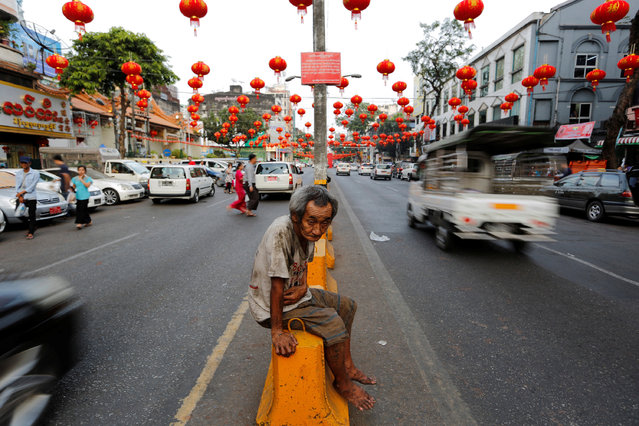
A man sits under lanterns and decorations on a street ahead of the Chinese Lunar New Year in Chinatown Yangon, Myanmar January 23, 2017. (Photo by Soe Zeya Tun/Reuters)

A man sits under lanterns and decorations on a street ahead of the Chinese Lunar New Year in Chinatown Yangon, Myanmar January 23, 2017. (Photo by Soe Zeya Tun/Reuters)
Details
25 Jan 2017 11:32:00
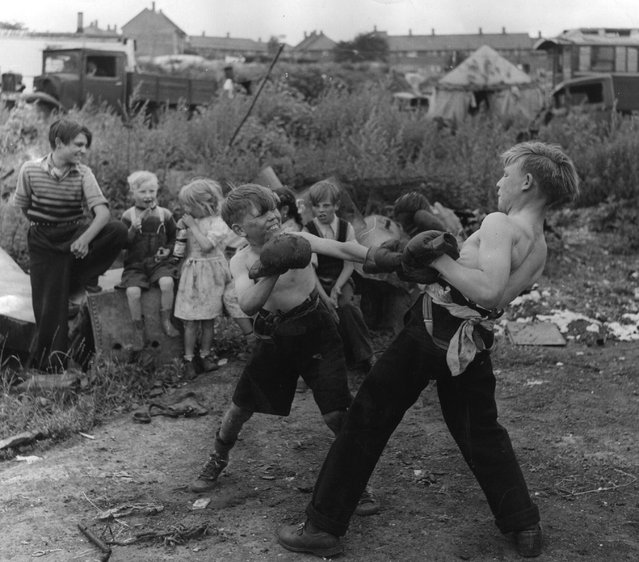
The unromantic gypsies. Children boxing in a gypsy camp in Kent, England on July 1, 1951. Like all boys these gypsy lads like to try their hand at boxing. Encouraged by their friends they fight it out on Corke's Meadow. Few Romanies now live a life of wandering romance. Most are like the three hundred squatters of Corke's Meadow, Kent, which is part of a “gypsy problem” that involves about 100,000 today. Of those about 25,000 can be rightly called gypsies, the rest are Mumpers and Posh-rats and Hobos. Corke's Meadow has both kinds. “Picture Post” cameraman Bert Hardy photographs the Corke's Meadow gypsies in their encampment. (Photo by Hulton-Deutsch Collection/Corbis via Getty Images)

The unromantic gypsies. Children boxing in a gypsy camp in Kent, England on July 1, 1951. Like all boys these gypsy lads like to try their hand at boxing. Encouraged by their friends they fight it out on Corke's Meadow. Few Romanies now live a life of wandering romance. Most are like the three hundred squatters of Corke's Meadow, Kent, which is part of a “gypsy problem” that involves about 100,000 today. Of those about 25,000 can be rightly called gypsies, the rest are Mumpers and Posh-rats and Hobos. Corke's Meadow has both kinds. “Picture Post” cameraman Bert Hardy photographs the Corke's Meadow gypsies in their encampment. (Photo by Hulton-Deutsch Collection/Corbis via Getty Images)
Details
12 Mar 2017 00:01:00
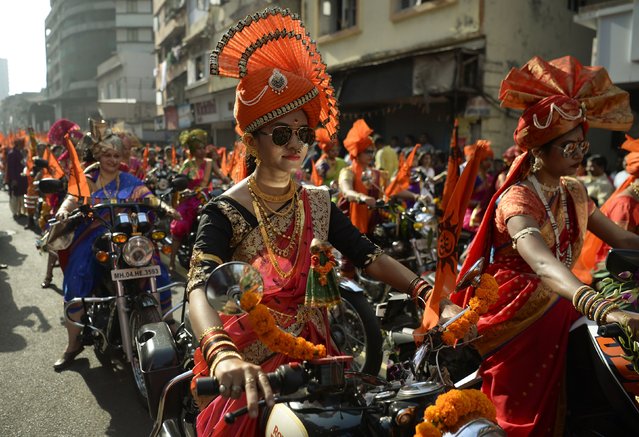
Indian women dressed in traditional attire drive motorcycles as they take part in a procession celebrating “Gudhi Padwa” or the Maharashtrian New Year in Mumbai on March 28, 2017. Gudhi Padwa is the Hindu New Year for people in India's Maharashtra state and marks the end of a harvest and the beginning of a new one. (Photo by Punit Paranjpe/AFP Photo)

Indian women dressed in traditional attire drive motorcycles as they take part in a procession celebrating “Gudhi Padwa” or the Maharashtrian New Year in Mumbai on March 28, 2017. Gudhi Padwa is the Hindu New Year for people in India's Maharashtra state and marks the end of a harvest and the beginning of a new one. (Photo by Punit Paranjpe/AFP Photo)
Details
29 Mar 2017 09:39:00
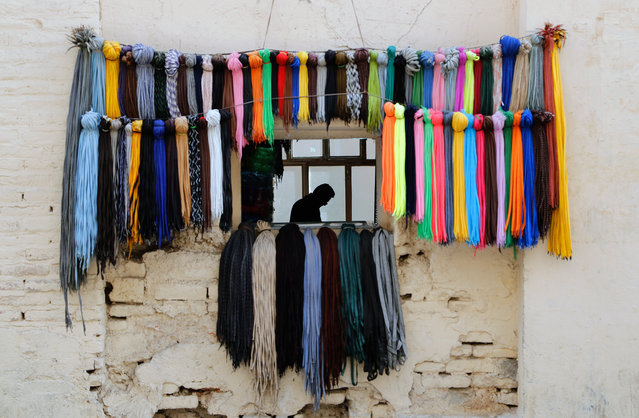
An Iranian man sells colorful ropes at  the Tehrans old Bazaar, the place where the main economy trades take place, in Tehran, Iran, 25 January 2016. Reports state that Iranian officials expected the Iranian economy to grow on an average of eight percent over the coming five years following the lifting of sanctions against Iran. (Photo by Abedin Taherkenareh/EPA)

An Iranian man sells colorful ropes at the Tehrans old Bazaar, the place where the main economy trades take place, in Tehran, Iran, 25 January 2016. Reports state that Iranian officials expected the Iranian economy to grow on an average of eight percent over the coming five years following the lifting of sanctions against Iran. (Photo by Abedin Taherkenareh/EPA)
Details
02 Feb 2016 12:53:00