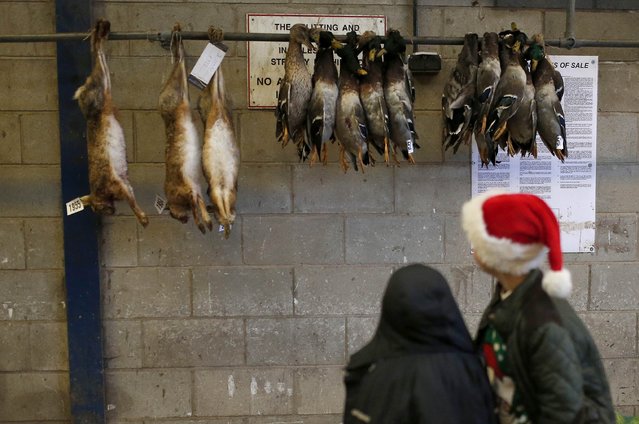
Children look at Hares and Ducks ahead of the Turkey and dressed poultry auction at Chelford Market, northern England December 22, 2014. (Photo by Phil Noble/Reuters)
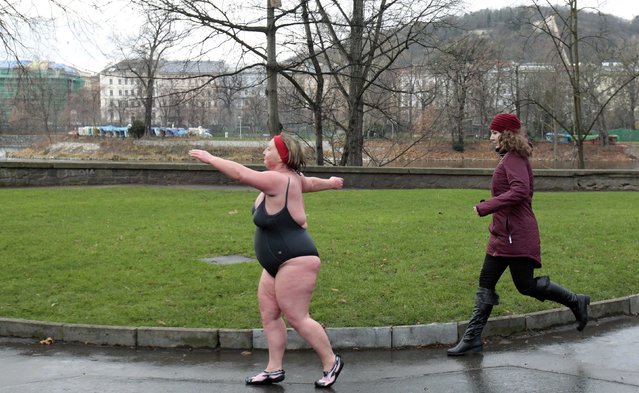
A woman looks at a swimmer getting herself warm after the annual Christmas winter swimming competition in the Vltava river in Prague December 26, 2014. (Photo by David W. Cerny/Reuters)
Ultra-Orthodox Jews inspect etrogs, or citrons, inside a shop in the Mea Shearim neighbourhood in Jerusalem, 07 October 2014, as they look to purchase an unblemished fruit ahead of the holiday of Sukkot. (Photo by Jim Hollander/EPA)
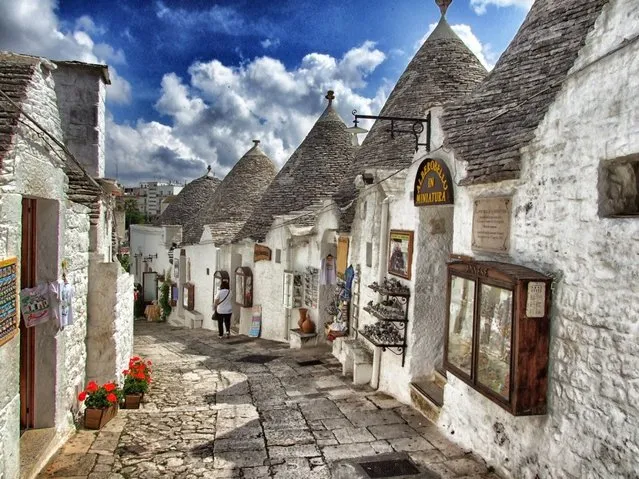
The stone huts and streets of this Italian city look like a scene from a fairytale. The buildings you see before you are called trulli. The rise in popularity of such houses was in 19th century when they were constructed as storehouses and temporary field shelters or as permanent shelters by agricultural laborers and small proprietors. Wouldn’t it be amazing to own such a house? To become engulfed by the fairytale as you sip a cup of coffee, looking out of a small window onto a crowded street.
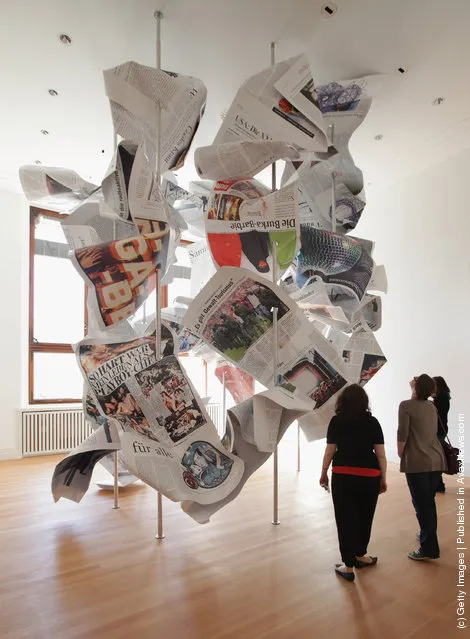
Visitors look at an installation by Olaf Metzel at the exhibition “ARTandPRESS” at Martin Gropius Bau on March 26, 2012 in Berlin, Germany. The exhibition shows works by artists who have interpreted the medium of newspapers and is open from March 23 to June 24. (Photo by Sean Gallup/Getty Images)
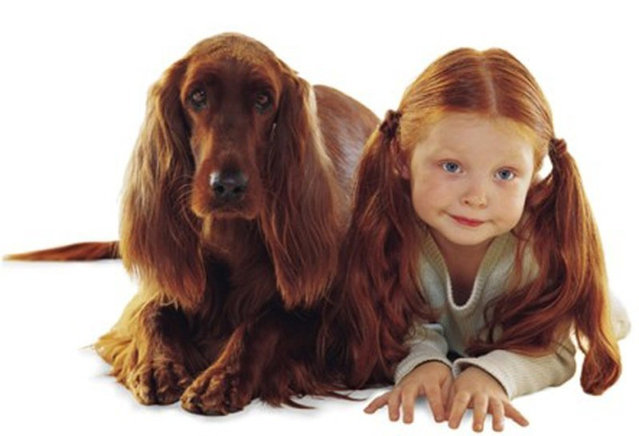
It’s the topic of one never-ending conundrum — do dogs look like their owners? If this is indeed true, do dogs grow to mimic their owners, or do owners choose a dog in their own image? It’s great when science confirms something we already instinctively know. According to a U.S. study, it’s official — dogs do look like their owners.
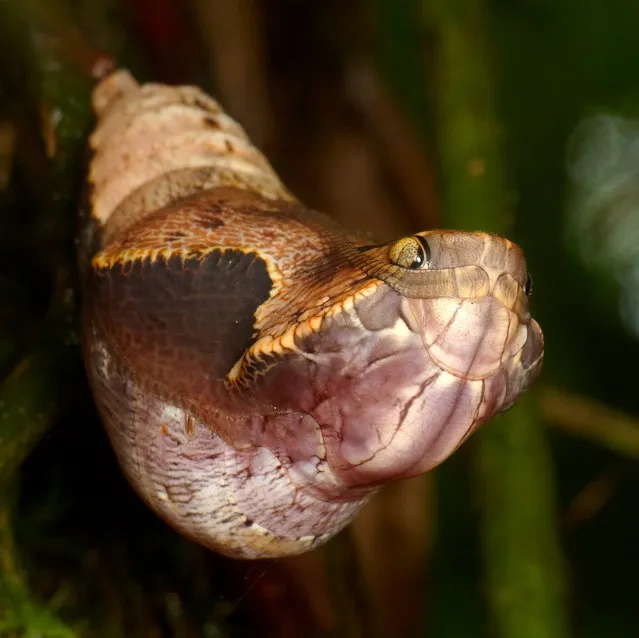
Meet the snake-mimicking butterfly (Dynastor darius). While this slick master of disguise may show off impeccable imitation skills, prior to taking on this serpentine appearance it was simply a furry, nondescript caterpillar, and it looked pretty much how you would expect any old caterpillar to look.