Loading...
Done
A family pose for a picture as thousands of redheads fill a Dutch city Breda to celebrate International Redhead Day event in Breda, The Netherlands on Sunday, 4 September 2016. Every year natural redheads from more than 80 countries come together at “Roodharigendag” annual weekend long festival to celebrate their ginger genes. The event also holds the world record for the largest number of natural redheads being in one place. (Photo by Akmen/London News Pictures)

A family pose for a picture as thousands of redheads fill a Dutch city Breda to celebrate International Redhead Day event in Breda, The Netherlands on Sunday, 4 September 2016. Every year natural redheads from more than 80 countries come together at “Roodharigendag” annual weekend long festival to celebrate their ginger genes. The event also holds the world record for the largest number of natural redheads being in one place. (Photo by Akmen/London News Pictures)
Details
05 Sep 2016 11:28:00
Bodie, Mono County, California. Gold was discovered at Bodie in 1859 (just after the initial California gold rush) and it went from mining camp to boomtown. Its decline began in 1880, when word spread of new boomtowns elsewhere. The Standard Consolidated Mine closed in 1913, and four years later the Bodie Railway was abandoned. By 1940 the population was down to 40. Today, Bodie is maintained in a state of arrested decay as a visitor attraction. (Photo by Alamy Stock Photo)

Kieron Connolly’s new book of photographs of more than 100 once-busy and often elegant buildings gives an idea of how the world might look if humankind disappeared. Here: Bodie, Mono County, California. Gold was discovered at Bodie in 1859 (just after the initial California gold rush) and it went from mining camp to boomtown. Its decline began in 1880, when word spread of new boomtowns elsewhere. The Standard Consolidated Mine closed in 1913, and four years later the Bodie Railway was abandoned. By 1940 the population was down to 40. Today, Bodie is maintained in a state of arrested decay as a visitor attraction. (Photo by Alamy Stock Photo)
Details
07 Sep 2016 09:50:00
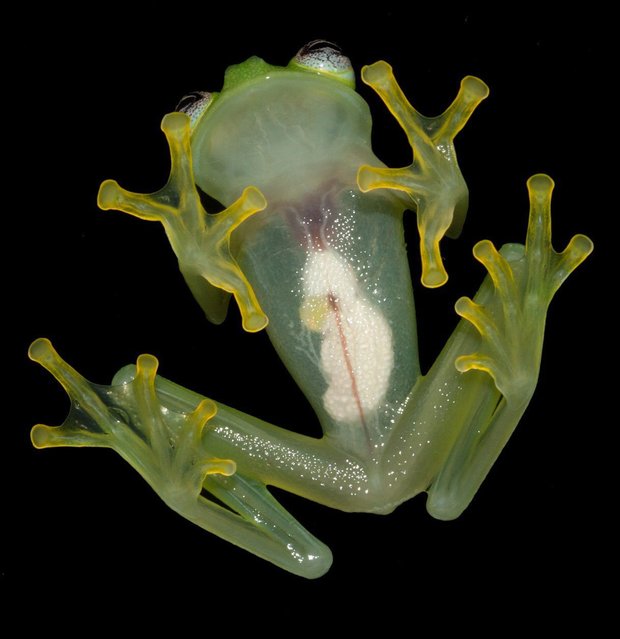
A handout photograph provided by Brian Kubicki of Costa Rican Amphibian Research Center on 26 April 2016 shows a “Crystal frog”, Hyalinobatrachium dianae (H. diane). This frog was discovered by US biologist Brian Kubicki and Costa Ricans Stanley Salazar and Robert Puschendorf in a rainy forest of Costa Rican caribbean after 40 years without notice of any new example of this kind. (Photo by Brian Kubicki/EPA/Costa Rican Amphibian Research Center)

A handout photograph provided by Brian Kubicki of Costa Rican Amphibian Research Center on 26 April 2016 shows a “Crystal frog”, Hyalinobatrachium dianae (H. diane). This frog was discovered by US biologist Brian Kubicki and Costa Ricans Stanley Salazar and Robert Puschendorf in a rainy forest of Costa Rican caribbean after 40 years without notice of any new example of this kind. (Photo by Brian Kubicki/EPA/Costa Rican Amphibian Research Center)
Details
02 May 2015 15:23:00
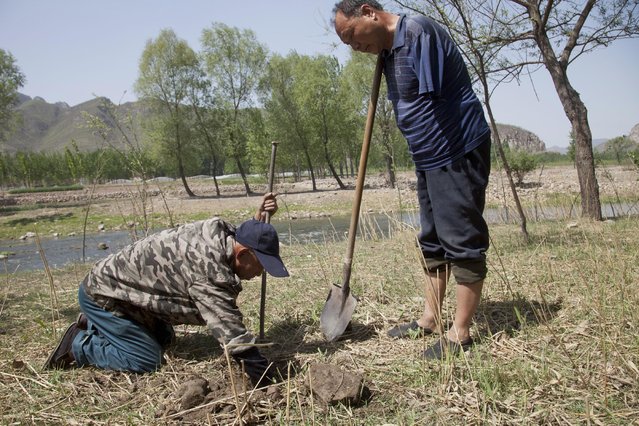
In this April 23, 2015 photo, friends Jia Haixia, left, and Jia Wenqi work to plant a tree in a field in Yeli village near Shijiazhuang city in northern China's Hebei province. For the past 13 years, Jia Wenqi, who has no arms, and Jia Haixia, who is blind, have worked together to plant and water more than 12,000 trees near their village. (Photo by Helene Franchineau/AP Photo)

In this April 23, 2015 photo, friends Jia Haixia, left, and Jia Wenqi work to plant a tree in a field in Yeli village near Shijiazhuang city in northern China's Hebei province. For the past 13 years, Jia Wenqi, who has no arms, and Jia Haixia, who is blind, have worked together to plant and water more than 12,000 trees near their village. (Photo by Helene Franchineau/AP Photo)
Details
13 May 2015 11:21:00
Asia, Mongolia, March 27, 2011. A view of Ulaan Baator over the shoulder of a slumbering drunk. Alcoholism is a huge problem in the city, home to almost half of Mongolia's people. The capital's population has doubled in the past two years, expanding outward in a haphazard sprawl, and many inhabitants live in slums known as the “Gher District”. (Photo by Alessandro Grassani)

“Environmental Migrants: The Last Illusion” by photographer Alessandro Grassani, documents the life of people in Kenya, Mongolia and Bangladesh who migrate to escape environmental stresses to the city of their own countries in hopes for a better life. Here: Asia, Mongolia, March 27, 2011. A view of Ulaan Baator over the shoulder of a slumbering drunk. Alcoholism is a huge problem in the city, home to almost half of Mongolia's people. The capital's population has doubled in the past two years. High levels of unemployment and poverty await herders who abandon rural areas and arrive in the city, illiterate and untrained in any skills necessary for urban jobs. (Photo by Alessandro Grassani)
Details
21 Jul 2015 10:10:00
A Nepalese Hindu devotee bathes in the Bagmati River on her way to the Pashupatinath Temple to offer prayers to Lord Shiva, Hindu god of destruction during Shravan festivities in Sundarijal, on the outskirts of Kathmandu on August 3, 2015. According to the Nepali calendar, Shravan is considered the holiest month of the year with each Monday of the month known as Shravan Somvar when worshippers offer prayers for a happy and prosperous life. (Photo by Prakash Mathema/AFP Photo)

A Nepalese Hindu devotee bathes in the Bagmati River on her way to the Pashupatinath Temple to offer prayers to Lord Shiva, Hindu god of destruction during Shravan festivities in Sundarijal, on the outskirts of Kathmandu on August 3, 2015. According to the Nepali calendar, Shravan is considered the holiest month of the year with each Monday of the month known as Shravan Somvar when worshippers offer prayers for a happy and prosperous life. (Photo by Prakash Mathema/AFP Photo)
Details
04 Aug 2015 12:46:00
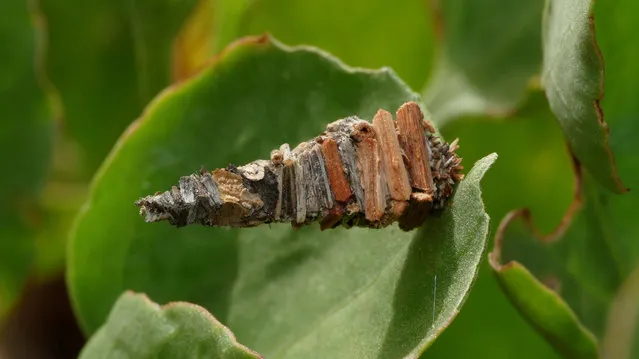
An undated handout photo made available by the Zerynthia Association shows the pupa of an amicta moneiba, a recently discovered species of moth endemic to La Gomera and El Hierro islands in the Canary Islands, Spain (issued 01 July 2020), as those two islands pulled apart from the rest of the Canary Islands 2.5 million years ago. The Institute of Evolutionary Biology of the Spanish National Research Council (CSIC) and the Zerynthia Association have recently discovered two new moth species in El Hierro and La Gomera. (Photo by Yeray Monasterio/Zerynthia/EPA/EFE)

An undated handout photo made available by the Zerynthia Association shows the pupa of an amicta moneiba, a recently discovered species of moth endemic to La Gomera and El Hierro islands in the Canary Islands, Spain (issued 01 July 2020), as those two islands pulled apart from the rest of the Canary Islands 2.5 million years ago. The Institute of Evolutionary Biology of the Spanish National Research Council (CSIC) and the Zerynthia Association have recently discovered two new moth species in El Hierro and La Gomera. (Photo by Yeray Monasterio/Zerynthia/EPA/EFE)
Details
11 Oct 2020 00:01:00
Reflected in the rearview mirror, Jose Collantes gets a hug from daughter Kehity while they're stopped at a red light, as Jose drives his five-year-old home from a playdate in Santiago, Chile, Sunday, September 6, 2020, three months after they lost his wife, her mother, to COVID-19. Their case highlights how COVID-19 deaths the world over are often the beginning of a new personal journey for those affected. (Photo by Esteban Felix/AP Photo)

Reflected in the rearview mirror, Jose Collantes gets a hug from daughter Kehity while they're stopped at a red light, as Jose drives his five-year-old home from a playdate in Santiago, Chile, Sunday, September 6, 2020, three months after they lost his wife, her mother, to COVID-19. Their case highlights how COVID-19 deaths the world over are often the beginning of a new personal journey for those affected. (Photo by Esteban Felix/AP Photo)
Details
15 Oct 2020 00:05:00