Loading...
Done
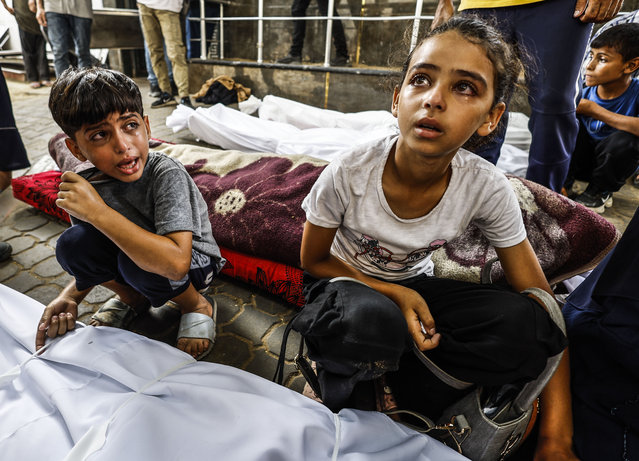
Relatives of the Palestinians, who lost their lives as a result of the Israeli attacks on the public market in the Sheikh Ridan neighborhood where people were waiting for aid, mourn as the dead bodies are brought the Al-Shifa Hospital for burial process on August 13, 2025 in Deir Al Balah, Gaza. (Photo by Mahmoud Issa/Anadolu via Getty Images)

Relatives of the Palestinians, who lost their lives as a result of the Israeli attacks on the public market in the Sheikh Ridan neighborhood where people were waiting for aid, mourn as the dead bodies are brought the Al-Shifa Hospital for burial process on August 13, 2025 in Deir Al Balah, Gaza. (Photo by Mahmoud Issa/Anadolu via Getty Images)
Details
30 Aug 2025 03:26:00
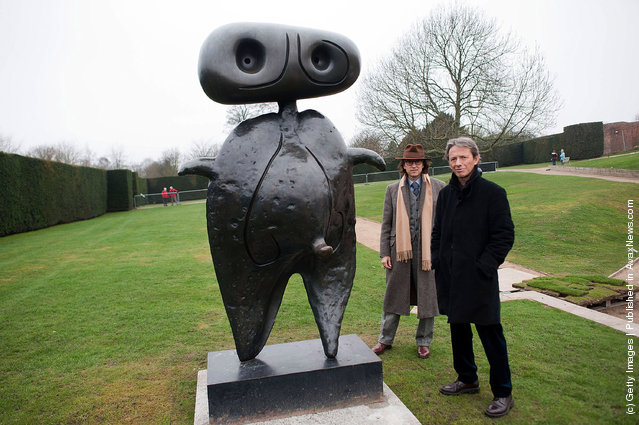
Joan Miro's, grandsons, Emilio Fernandez Miro and Joan Punyet Miro pose beside Personnage (1970) in the Yorkshire Sculpture park

“Joan Miro i Ferra (April 20, 1893 – December 25, 1983) was a Spanish Catalan painter, sculptor, and ceramicist born in Barcelona. Earning international acclaim, his work has been interpreted as Surrealism, a sandbox for the subconscious mind, a re-creation of the childlike, and a manifestation of Catalan pride. In numerous interviews dating from the 1930s onwards, Miro expressed contempt for conventional painting methods as a way of supporting bourgeois society, and famously declared an “assassination of painting” in favour of upsetting the visual elements of established painting”. – Wikipedia

Photo: Joan Miro's, grandsons, Emilio Fernandez Miro and Joan Punyet Miro pose beside Personnage (1970) in the Yorkshire Sculpture park on March 14, 2012 in Wakefield, England. Yorkshire Sculpture Park stages the first major UK survey of sculpture by Spanish artist Joan Miro. (Photo by Bethany Clarke/Getty Images)

Details
15 Mar 2012 13:47:00
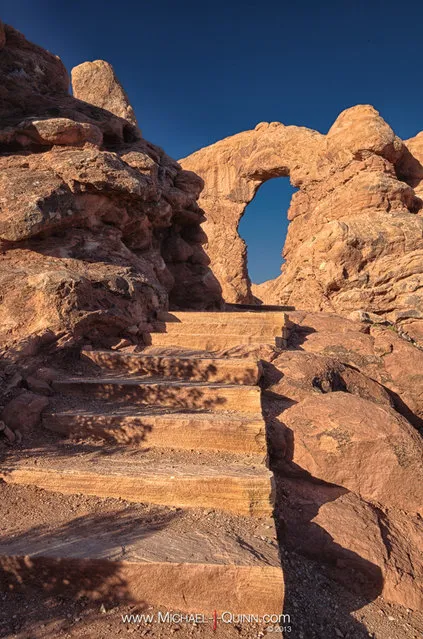
Michael Quinn By Pathways in Arches

Images from my travels with John Paul Caponigro in the spring of 2011. During that week JP inspired me to create this body of work. This is my path, my pathways in arches.

Michael Quinn
Details
18 Dec 2013 14:11:00
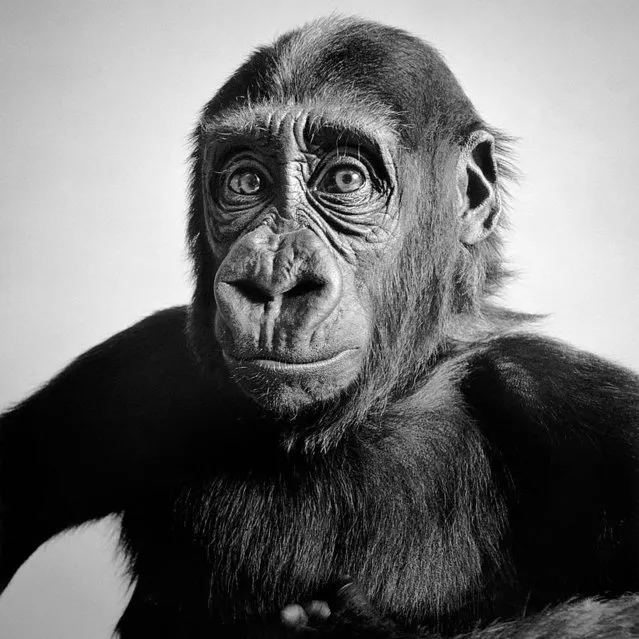
Animal Photographers By Alexander Von Reiswitz

Spanish born photographer and architect, Alexander von Reiswitz, lives in Berlin and has many bodies of wonderful work.
Details
19 Feb 2013 10:34:00

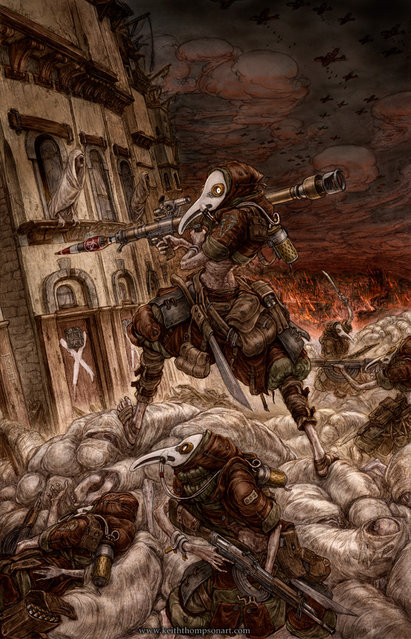
VIRAEMIA

The civilised world lies on its knees, a sickness wracking its body. The affliction causes a necrotising of tissues so perfectly uniform in distribution that victims take on the appearance of corpses long before death occurs due to organ failure or secondary infections. ...
Details
03 May 2012 22:54:00


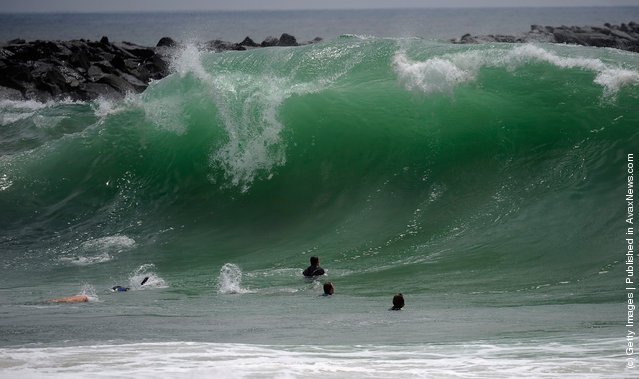
Body surfers ride a large wave at the Wedge in Newport Beach of the Southland coast on May 20, 2011 in Newport, California. Surfers have been lured to the south facing beaches for the biggest swells of the season. (Photo by Kevork Djansezian/Getty Images)
Details
21 May 2011 07:24:00
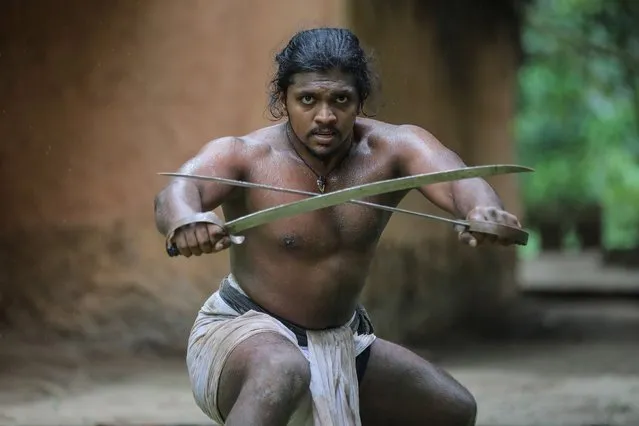
A student of the Sri Lankan ancient martial art “Angampora” performs during a practice session at the angam maduwa or fighting field, in Korathota, a suburb of Colombo, Sri Lanka, 07 September 2022. Sri Lanka's ancient martial art, Angampora, is thought to be thousands of years old. Anga translates to “body parts” and Angampora is a fighting art that uses body parts. Martial arts practitioners in Angampora were mostly in the king's service, and they were tasked with protecting the king and his kingdom. Angampora was practiced in secret for most centuries because the British, who colonized Sri Lanka, banned it in 1818 after seeing it as a threat. (Photo by Chamila Karunarathne/EPA/EFE)

A student of the Sri Lankan ancient martial art “Angampora” performs during a practice session at the angam maduwa or fighting field, in Korathota, a suburb of Colombo, Sri Lanka, 07 September 2022. Sri Lanka's ancient martial art, Angampora, is thought to be thousands of years old. Anga translates to “body parts” and Angampora is a fighting art that uses body parts. Martial arts practitioners in Angampora were mostly in the king's service, and they were tasked with protecting the king and his kingdom. Angampora was practiced in secret for most centuries because the British, who colonized Sri Lanka, banned it in 1818 after seeing it as a threat. (Photo by Chamila Karunarathne/EPA/EFE)
Details
14 Oct 2022 04:47:00
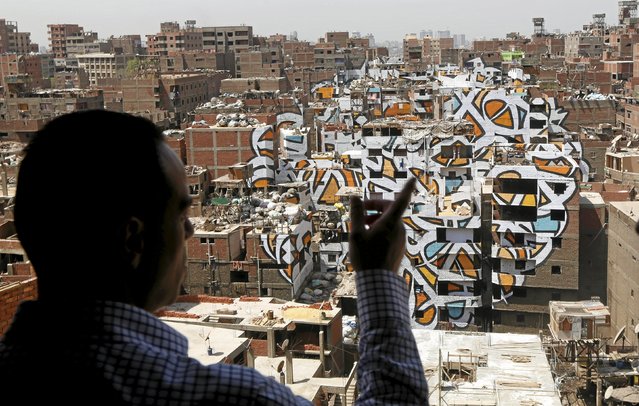
A man looks at a mural painted on the walls of houses in Zaraeeb, created by French-Tunisian artist El Seed, in the shanty area known also as Zabaleen or “Garbage City” on the Mokattam Hills in eastern Cairo, Egypt, April 4, 2016. (Photo by Amr Abdallah Dalsh/Reuters)

A man looks at a mural painted on the walls of houses in Zaraeeb, created by French-Tunisian artist El Seed, in the shanty area known also as Zabaleen or “Garbage City” on the Mokattam Hills in eastern Cairo, Egypt, April 4, 2016. (Photo by Amr Abdallah Dalsh/Reuters)
Details
15 Apr 2016 11:01:00