Loading...
Done
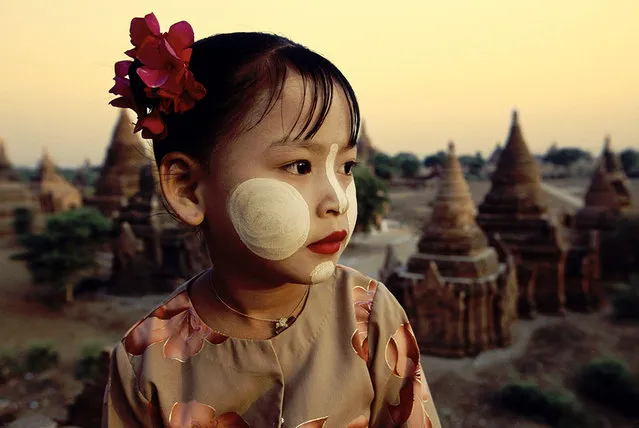
Pagan Kingdom, Myanmar

The Kingdom of Pagan (also commonly known as the Pagan Dynasty and the Pagan Empire) was the first kingdom to unify the regions that would later constitute modern-day Burma (Myanmar). Pagan's 250-year rule over the Irrawaddy valley and its periphery laid the foundation for the ascent of Burmese language and culture, the spread of Burman ethnicity in Upper Burma, and the growth of Theravada Buddhism in Burma and in mainland Southeast Asia.
Details
22 Feb 2014 15:14:00
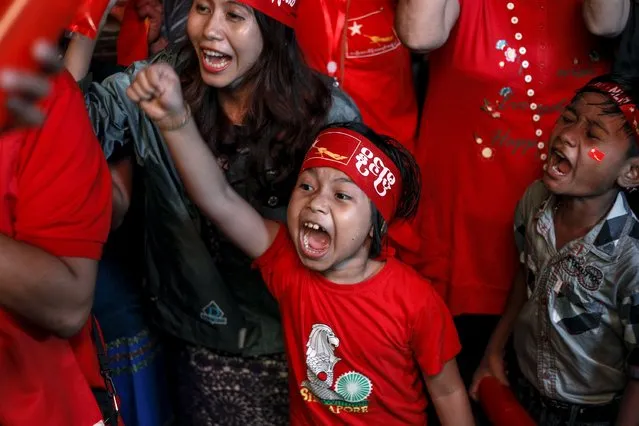
Supporters celebrate as they watch official results from the Union Election Commission on an LED screen in front of the National League for Democracy Party (NLD) head office in Yangon, November 9, 2015. (Photo by Soe Zeya Tun/Reuters)

Supporters celebrate as they watch official results from the Union Election Commission on an LED screen in front of the National League for Democracy Party (NLD) head office in Yangon, November 9, 2015. Myanmar's ruling party conceded defeat in the country's general election on Monday, as the opposition led by democracy figurehead Aung San Suu Kyi appeared on course for a landslide victory that would ensure it can form the next government. "We lost," Union Solidarity and Development Party (USDP) acting chairman Htay Oo told Reuters in an interview a day after the Southeast Asian country's first free nationwide election in a quarter of a century. (Photo by Soe Zeya Tun/Reuters)
Details
11 Nov 2015 08:01:00
Rural Daily Life in Radicondoli by Photographer Marco Sgarbi Part 2

For the past 20 years,Marco has divided his time photographing, traveling, and living between italy and France. He regularly participates in workshops in Paris. Sharpening his technical skills and learning to take risks. He has been investigating various photographic styles, including macro-photography of precious stones and insects, portraits and weddings. All of these subjects have given him the opportunity to bring his love for the medium into areas which challenges his capacity to be creative.


See also: Part 1

Details
22 Jun 2014 12:51:00
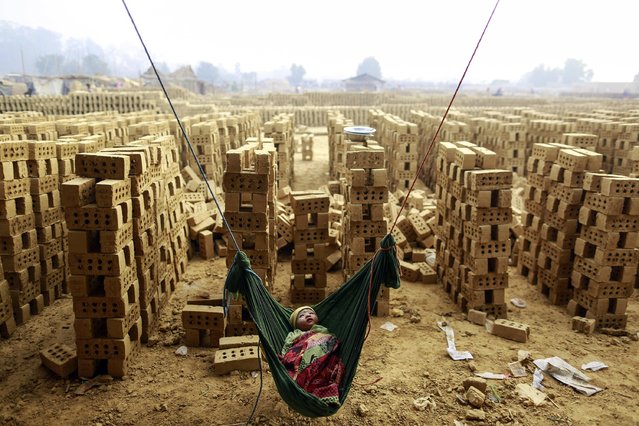
A boy sleeps in a hammock while his mother works at a brick kiln on the outskirts of Yangon February 1, 2015. (Photo by Soe Zeya Tun/Reuters)

A boy sleeps in a hammock while his mother works at a brick kiln on the outskirts of Yangon February 1, 2015. (Photo by Soe Zeya Tun/Reuters)
Details
02 Feb 2015 09:58:00
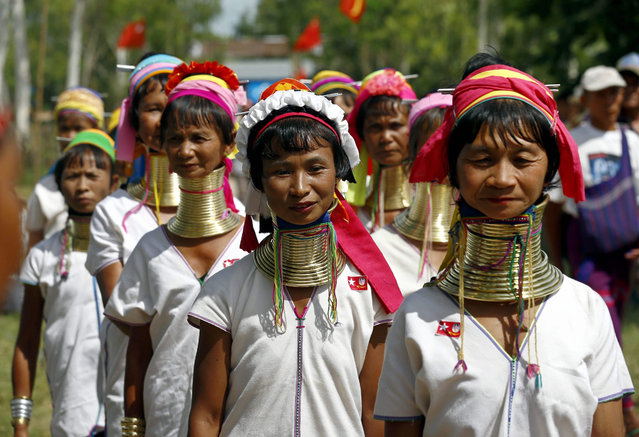
Padaung ethnic women arrive to listen to the speech of Myanmar opposition leader Aung San Suu Kyi (not in picture), Chairwoman of the National League for Democracy (NLD) party, during Suu Kyi's first official election campaign at Demoso township of Kayah State, eastern Myanmar, 10 September 2015. (Photo by Lynn Bo Bo/EPA)

Padaung ethnic women arrive to listen to the speech of Myanmar opposition leader Aung San Suu Kyi (not in picture), Chairwoman of the National League for Democracy (NLD) party, during Suu Kyi's first official election campaign at Demoso township of Kayah State, eastern Myanmar, 10 September 2015. Suu Kyi is on a three-day visit to Kayah State near the Thai-Myanmar border, as part of her first official election campaign. Myanmar political parties and candidates started their campaigns on 08 September ahead of the upcoming general election, which will be held on 08 November 2015. (Photo by Lynn Bo Bo/EPA)
Details
12 Sep 2015 13:44:00
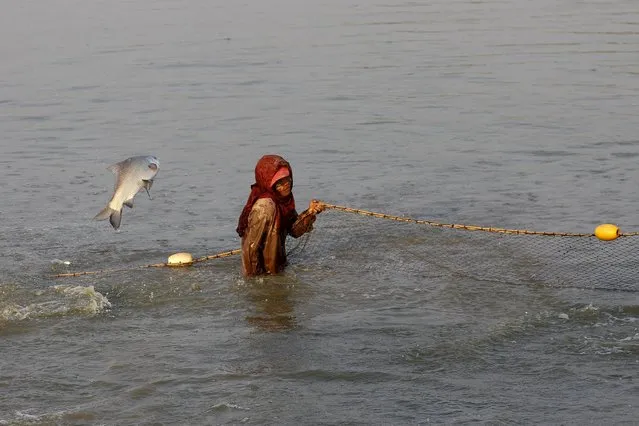
A fish jumps over a net as a boy works in a fish farm at Htantapin township, outside Yangon, Myanmar February 18, 2016. (Photo by Soe Zeya Tun/Reuters)

A fish jumps over a net as a boy works in a fish farm at Htantapin township, outside Yangon, Myanmar February 18, 2016. One in five children in Myanmar aged 10-17 go to work instead of school, according to figures from a census report on employment published last month, and the opening up of the economy since 2011 has triggered a spike in demand for labour. Many children work in fish farming and processing. At Yangon's San Pya fish market, the country's largest, girls and boys as young as nine clean and process fish and unload boats and trucks during 12-hour overnight shifts. (Photo by Soe Zeya Tun/Reuters)
Details
20 Apr 2016 12:18:00
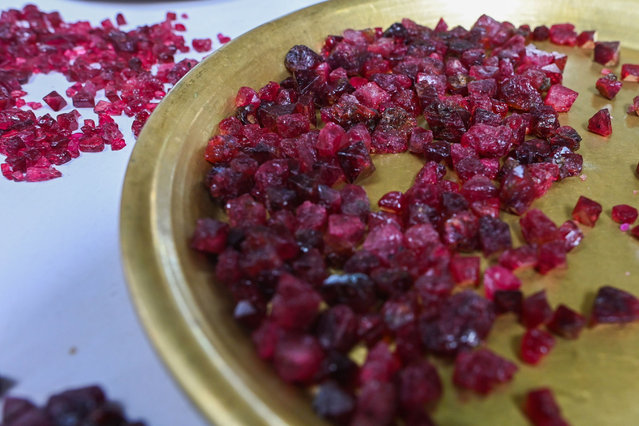
This photo taken on May 17, 2019 shows rough rubies displayed at the gems market in Mogok town, north of Mandalay. (Photo by Ye Aung Thu/AFP Photo)

This photo taken on May 17, 2019 shows rough rubies displayed at the gems market in Mogok town, north of Mandalay. Burrowing deep underground, thousands of informal miners risk their lives to find gleaming red gems as a law change spurs opportunity in Myanmar's “land of rubies”. (Photo by Ye Aung Thu/AFP Photo)
Details
29 May 2019 00:01:00
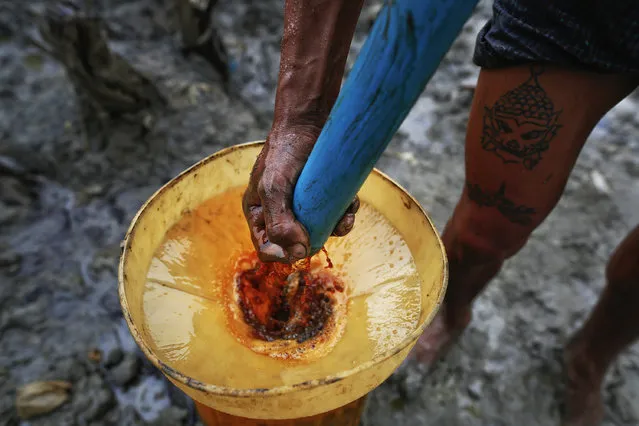
Ko Min, 26, manually extracts oil from one of three 300 feet deep wells he works on in the Minhla township of the Magwe district October 27, 2013. Everyday, Ko Min makes around $30 extracting crude oil from three small wells after he bought rights to use them for close to $1000 from a farmer who owns the land. (Photo by Damir Sagolj/Reuters)

Ko Min, 26, manually extracts oil from one of three 300 feet deep wells he works on in the Minhla township of the Magwe district October 27, 2013. Everyday, Ko Min makes around $30 extracting crude oil from three small wells after he bought rights to use them for close to $1000 from a farmer who owns the land. In Myanmar, an impoverished country rich with natural resources, people from poor communities find ways to supplement their income by exploiting such resources, such as the Minhla township, traditionally rich with oil, often using primitive and dangerous methods. (Photo by Damir Sagolj/Reuters)
Details
21 Apr 2014 10:06:00