Loading...
Done
Kawakanih Yawalapiti, 9, Upper Xingu region of Mato Grosso, Brazil, 2018: Kawakanih lives with her tribe, the Yawalapiti, in Xingu national park, a preserve in the Amazon basin of Brazil. The Yawalapiti collect seeds to preserve species unique to their ecosystem, which lies between the rain forest and savannah. Kawakanih’s diet is simple, consisting mainly of fish, cassava, porridge, fruit and nuts. “It takes five minutes to catch dinner”, says Kawakanih. “When you’re hungry, you just go to the river with your net”. (Photo by Gregg Segal/The Guardian)

Photographer Gregg Segal travelled the world to document children and the food they eat in a week. Partly inspired by the increasing problems of childhood obesity, he tracked traditional regional diets as yet unaffected by globalisation, and ironically, found that the healthiest diets were often eaten by the least well off. (Photo by Gregg Segal/The Guardian)
Details
03 Jul 2019 00:03:00
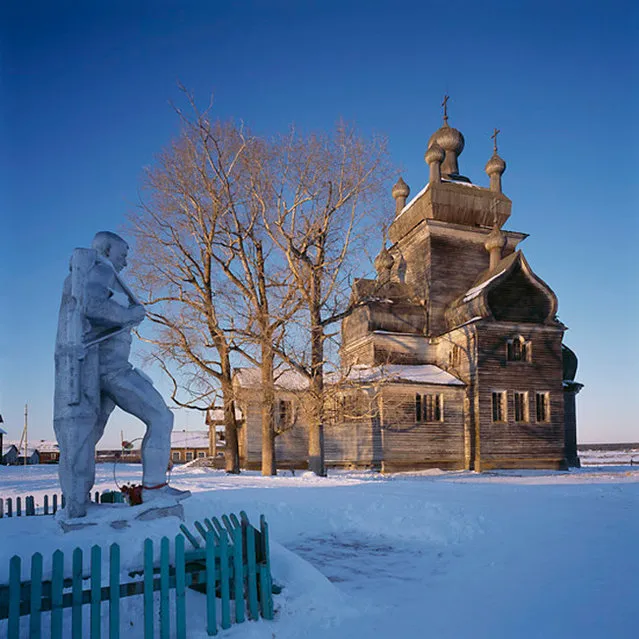
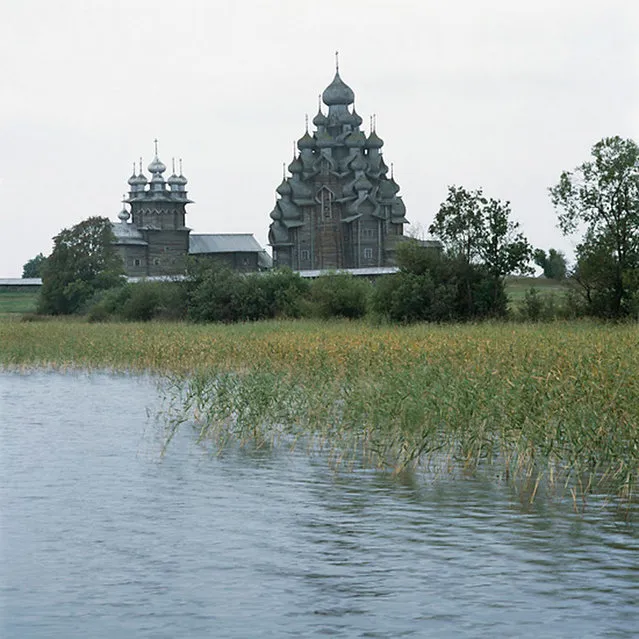
Wooden Churches - Travelling In The Russian North By Richard Davies Part 2

While communism, collectivism, worms, dry rot and casual looting failed to destroy the majestic wooden churches of Russia, it may be ordinary neglect that finally does them in. Dwindled now to several hundred remaining examples, these glories of vernacular architecture lie scattered amid the vastness of the world’s largest country. Just over a decade ago, Richard Davies, a British architectural photographer, struck out on a mission to record the fragile and poetic structures. Austerely beautiful and haunting, “Wooden Churches: Traveling in the Russian North” (White Sea Publishing; $132) is the result. Covering thousands of miles, Mr. Davies described how he and the writer Matilda Moreton tracked down the survivors from among the thousands of onion-domed structures built after Prince Vladimir converted to Christianity in 988.

See also: Wooden Churches Part1
Details
28 Nov 2013 12:13:00
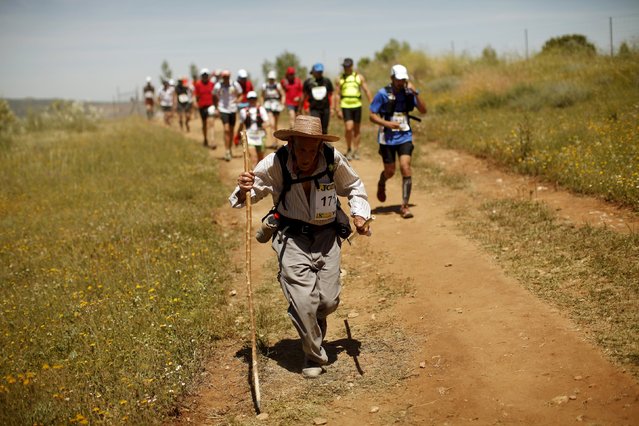
Spanish runner Francisco Contreras, 77, known as “Super Paco”, runs as he participates in the XVIII 101km international competition in the outskirts of Ronda, southern Spain, May 9, 2015. (Photo by Jon Nazca/Reuters)

Spanish runner Francisco Contreras, 77, known as “Super Paco”, runs as he participates in the XVIII 101km international competition in the outskirts of Ronda, southern Spain, May 9, 2015. About 7,000 participants, including runners, mountain bikers and duathletes, run a track of 101 km (63 miles) in less than 24 hours through the “Serrania de Ronda” (Ronda Mountain Range) during this competition organised by the 4th Tercio (Regiment) “Alejandro Farnesio” of the Spanish Legion. The Puente Nuevo is 120 metres (394 feet) high over the gorge of the river that divides the city of Ronda. Picture taken using long exposure. (Photo by Jon Nazca/Reuters)
Details
11 May 2015 12:17:00
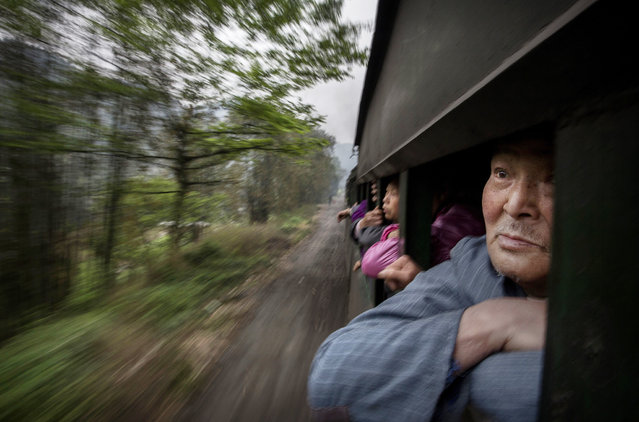
Local villagers ride a local coal powered steam train on March 27, 2015 at a station in the town of Shixi , Sichuan Province, in Southern China. While China boasts the world's most extensive high-speed rail infrastructure. (Photo by Kevin Frayer/Getty Images)

Local villagers ride a local coal powered steam train on March 27, 2015 at a station in the town of Shixi , Sichuan Province, in Southern China. While China boasts the world's most extensive high-speed rail infrastructure with over 16,000 kilometers of track, the Shixi-Bagou railway is still a primary connection for local villagers between towns and is kept alive by tourist cars carrying passengers for ten times the price. The rail line came into service in the late 1950s and the train was initially used to transport coal from a now-shuttered mine before passenger carriages were added. (Photo by Kevin Frayer/Getty Images)
Details
12 May 2015 12:00:00
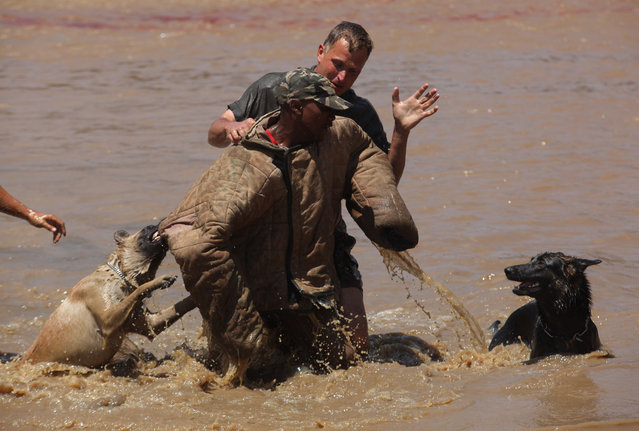
In this photo taken Wednesday, November 26, 2014 attack dogs and their handlers apprehend a “rhino poacher” center, after alighting from a helicopter into water,  in a simulation exercise showing training at an academy run by the Paramount Group, near Rustenburg, South Africa. (Photo by Denis Farrell/AP Photo)

In this photo taken Wednesday, November 26, 2014 attack dogs and their handlers apprehend a “rhino poacher” center, after alighting from a helicopter into water, in a simulation exercise showing training at an academy run by the Paramount Group, near Rustenburg, South Africa. The course prepares canine units to find firearms or contraband, track suspects in the undergrowth and abseil in harnesses from helicopters in pursuit of poachers. Dogs and handlers learn to trust each other and fine tune a relationship balancing control and aggression. (Photo by Denis Farrell/AP Photo)
Details
01 Dec 2014 14:14:00
Wooden Churches - Travelling In The Russian North By Richard Davies Part 1

While communism, collectivism, worms, dry rot and casual looting failed to destroy the majestic wooden churches of Russia, it may be ordinary neglect that finally does them in. Dwindled now to several hundred remaining examples, these glories of vernacular architecture lie scattered amid the vastness of the world’s largest country. Just over a decade ago, Richard Davies, a British architectural photographer, struck out on a mission to record the fragile and poetic structures. Austerely beautiful and haunting, “Wooden Churches: Traveling in the Russian North” (White Sea Publishing; $132) is the result. Covering thousands of miles, Mr. Davies described how he and the writer Matilda Moreton tracked down the survivors from among the thousands of onion-domed structures built after Prince Vladimir converted to Christianity in 988.
Details
25 Nov 2013 12:47:00
Waterdrop Sculptures by Josh Fancher

“I'm Josh Fancher, a 21 year old with an avid interest in photography, including macro, nature and wildlife, night photography, landscapes, cityscapes and architectural photography. Inspired by the beautiful and amazing water drop photography of Martin Waugh, I started doing water drop collisions in December of 2007. I use a 105mm Micro Nikkor lens for water drops, along with a pair of Nikon SB 600 flashes. I recently got a StopShot system (Nov 2009), which makes timing a lot easier. Before then, timing was manual, with an eye dropper, eye-hand coordination, and a lot of patience” – Josh Fancher. (Photo by Josh Fancher)
Details
19 Aug 2012 10:30:00
Fritz Lang, Metropolis

“Friedrich Christian Anton “Fritz” Lang (December 5, 1890 – August 2, 1976) was an Austrian-American filmmaker, screenwriter, and occasional film producer and actor. One of the best known émigrés from Germany's school of Expressionism, he was dubbed the “Master of Darkness” by the British Film Institute. His most famous films are the groundbreaking «Metropolis» (the world's most expensive silent film at the time of its release) and «M», made before he moved to the United States, his iconic precursor to the film noir genre”. – Wikipedia

Photo: Director Fritz Lang (right) and crew members inspect the robot from the film “Metropolis”, which is made to resemble the saintly Maria. (Photo by Hulton Archive/Getty Images). Circa 1926
Details
20 Aug 2011 11:50:00