Russian riot policemen beat young PREGNANT female anti-Putin activist during a protest rally against the Presidential inauguration of Vladimir Putin on May 6, 2012 in Moscow, Russia.
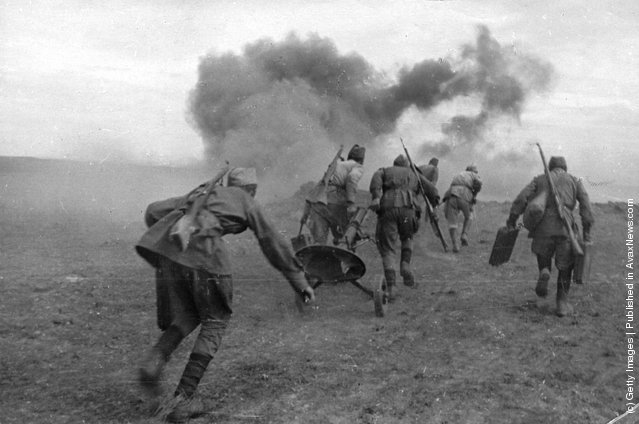
A Russian trenchmortar crew run to take up a new firing position in the Stalingrad area during the Great Patriotic War. (Photo by Keystone/Getty Images). October 1942
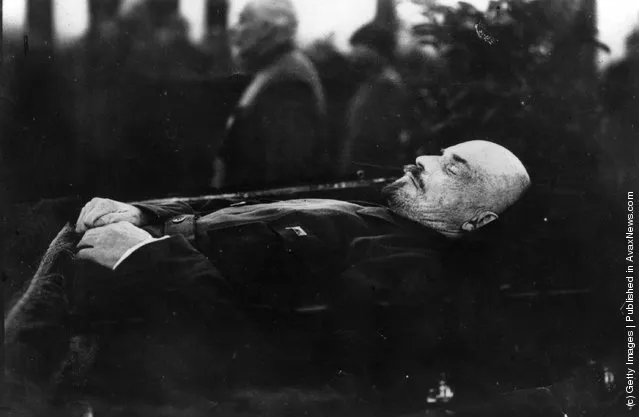
Photo: Vladimir Ilyich Lenin (1870 – 1924) lying in state in the Kremlin. (Photo by Hulton Archive/Getty Images). 1924
Important! For the same article in Russian language click here.
Something quite intriguing is happening within Russian-speaking internet during the last few – should you type a fully academic inquiry (at least, according to Russian academic requirements) in national search engines for "Lenin's mausoleum" – the first thing you get (even in top 10 searches) is website pages talking about black magic and occult. Website authors view this construction differently, but unconditionally agree on one thing: the mausoleum of the "leader of the world proletariat” – the essence of a magical artifact, a sort of “energy vampire”. It was built with a certain purpose: to drain the energy out of miserable Soviet citizens on one hand; and to poison the anthroposphere of one-sixth part of the earth with its vibes (the exact territory that was occupied by the former Soviet Union), depriving the Russian people of will to resist on the other hand. Complete nonsense? No doubt. Nevertheless, an intriguing one. Well, probably because some oddities do exist in mausoleum's history. These oddities are the thing we are going to discuss this time. First, let me refresh you memory on the subject.
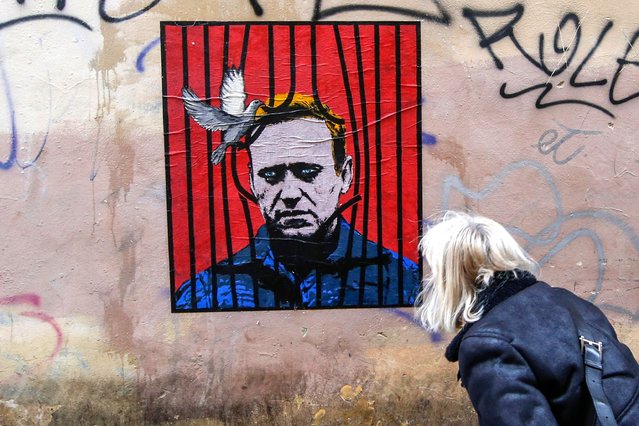
A view of a large poster depicting Russian opposition leader Alexei Navalny behind bars with a dove freeing him from detention, by an unidentified street artist known as Harry Greb, in downtown Rome, Italy, 25 January 2021. Navalny was detained after his arrival to Moscow from Germany on 17 January 2021. A Moscow judge on 18 January ruled that he will remain in custody for 30 days following his airport arrest. Navalny urged Russians to take to the streets to protest against President Putin's rule. (Photo by Fabio Frustaci/EPA/EFE)
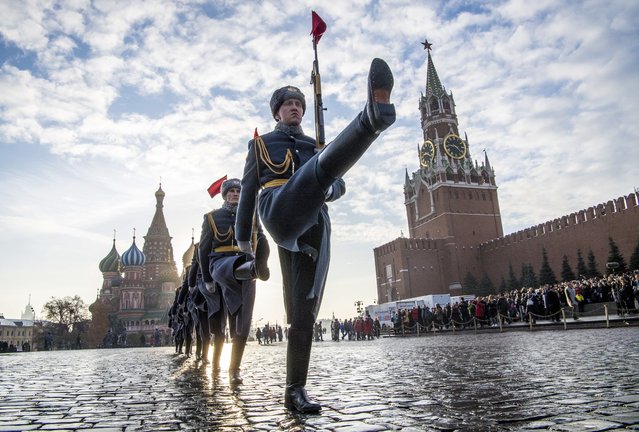
Russian honour guards march during the military parade at Red Square in Moscow on November 7, 2018. Russia marks the 77th anniversary of the 1941 historical parade, when Red Army soldiers marched past the Kremlin walls towards the front line to fight Nazi Germany troops during World War Two. (Photo by Mladen Antonov/AFP Photo)
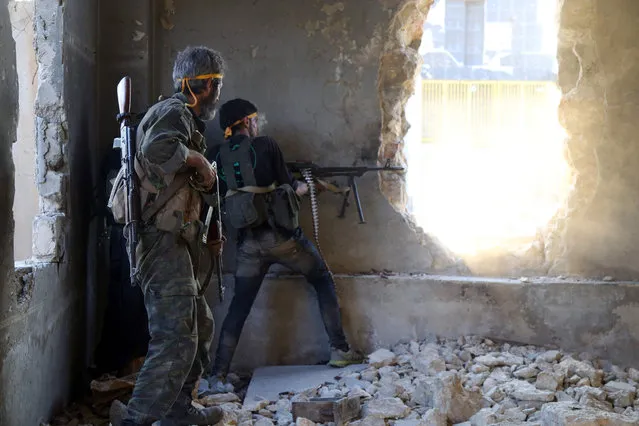
Rebel fighters fire towards positions of regime forces in Ramussa on the southwestern edges of Syria's northern city of Aleppo on August 6, 2016. Syrian rebels said they have broken a three-week government siege of second city Aleppo, turning the tables on Russian-backed regime forces who are now on the defensive. (Photo by Fadi Al-Halabi/AFP Photo)
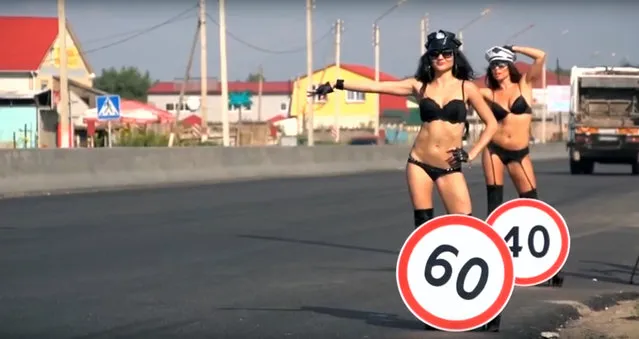
Half-naked girls against speed driving in Nizhny, Novgorod Region, Russia on September 5, 2016. Russian drivers are getting quite an eyeful in a bid to make them slow down thanks to topless women flashing speed limit signs at an accident blackspot. A trial of the road safety campaign demonstrated that it helped lower the speed of traffic near a pedestrian crossing in Severny village. (Photo by YouTube)
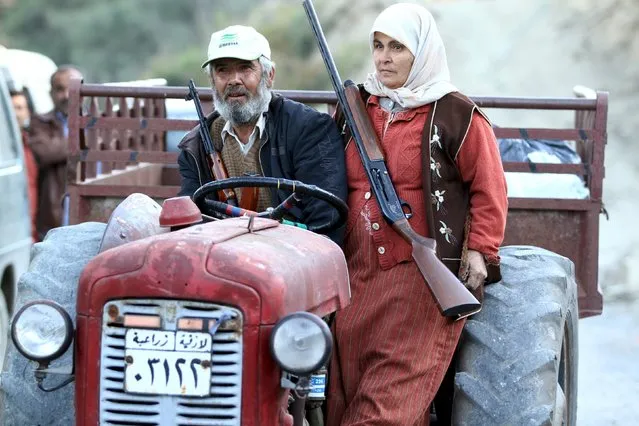
Armed Syrian Turkmen villagers are seen near the northern Syrian village of Yamadi, near the Turkish-Syrian border, Syria, November 24, 2015. Turkey shot down a Russian warplane near the Syrian border on Tuesday saying it had repeatedly violated its air space, one of the most serious publicly acknowledged clashes between a NATO member country and Russia for half a century. (Photo by Reuters/Stringer)