Loading...
Done
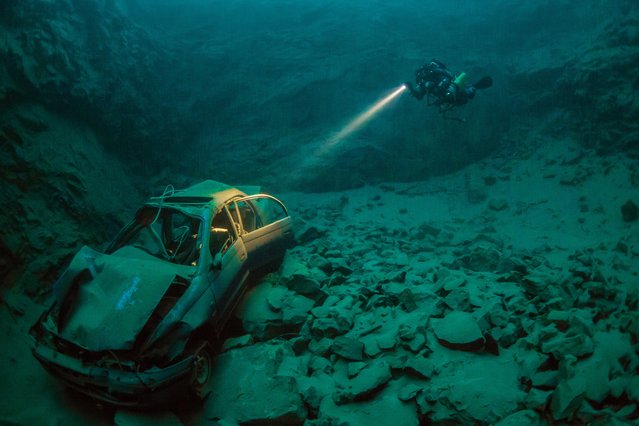
Wide-angle category winner. Part of the Illusion by Marcus Blatchford (UK). Location: National Dive & Activity Centre, Chepstow, Wales. “This is the deepest inland dive centre in the UK. The dive plan was to explore the deep end, but this time I dived ‘unplugged’ (without my strobes). With the exception of this change to my camera technique, there were no planned shots I wanted to achieve – just a fun dive with ad-hoc photos along the way. Shortly after this photo was captured, in 6C water and two hours of decompression ahead of us, we turned and started the long ascent back to the surface”. (Photo by Marcus Blatchford/Underwater Photographer of the Year 2016)

Wide-angle category winner. Part of the Illusion by Marcus Blatchford (UK). Location: National Dive & Activity Centre, Chepstow, Wales. “This is the deepest inland dive centre in the UK. The dive plan was to explore the deep end, but this time I dived ‘unplugged’ (without my strobes). With the exception of this change to my camera technique, there were no planned shots I wanted to achieve – just a fun dive with ad-hoc photos along the way. Shortly after this photo was captured, in 6C water and two hours of decompression ahead of us, we turned and started the long ascent back to the surface”. (Photo by Marcus Blatchford/Underwater Photographer of the Year 2016)
Details
18 Feb 2016 13:44:00
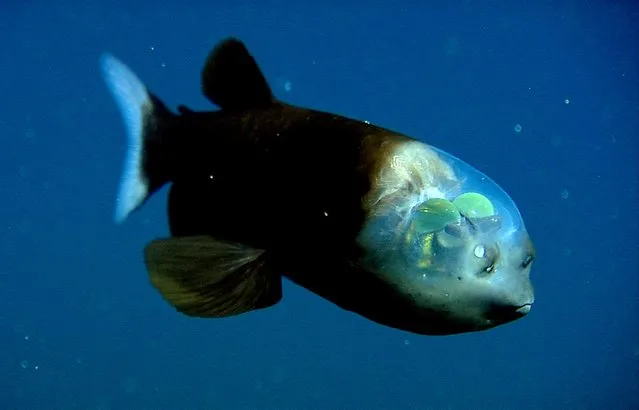
Macropinna Microstoma

Macropinna microstoma is the only species of fish in the genus Macropinna, belonging to Opisthoproctidae, the barreleye family. It is recognized for a highly unusual transparent, fluid-filled dome on its head, through which the lenses of its eyes can be seen. The eyes have a barrel shape and can be rotated to point either forward or straight up, looking through the fish's transparent dome. M. microstoma has a tiny mouth and most of its body is covered with large scales.
Details
08 Jan 2013 17:42:00
1967: A Viet Cong suspect holds his hands up after a Vietnamese Ranger from the 21st Vietnam Infantry Division routed him from his hiding place

A Viet Cong suspect holds his hands up after a Vietnamese Ranger from the 21st Vietnam Infantry Division routed him from his hiding place. (Photo by Keystone/Getty Images). 7th November 1967
Details
13 Mar 2011 11:32:00
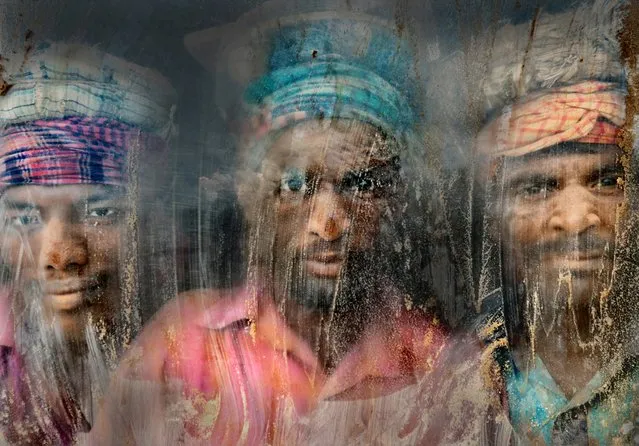
Gravel Workmen of Chittagong, Bangladesh, by Faisal Azim. Gravel workmen look through a glass window at a gravel-crushing yard in Chittagong. Full of dust and sand, it is an extremely unhealthy environment for working, but still hundreds of people work here for their livelihoods. (Photo by Faisal Azim/2016 Atkins CIWEM Environmental Photographer of the Year)

From Tibetan monks playing basket ball with ice thawing high up in the Himalayas, to the pollution that hides behind the Taj Mahal, here’s pick from 60 exceptional environmental photographs, by photographers and filmmakers from 70 countries, that will go on show at the Royal Geographical Society in London from 29 June to 21 August. The winners will be announced on 28 June. Here: Gravel Workmen of Chittagong, Bangladesh, by Faisal Azim. Gravel workmen look through a glass window at a gravel-crushing yard in Chittagong. Full of dust and sand, it is an extremely unhealthy environment for working, but still hundreds of people work here for their livelihoods. (Photo by Faisal Azim/2016 Atkins CIWEM Environmental Photographer of the Year)
Details
01 Jun 2016 12:25:00
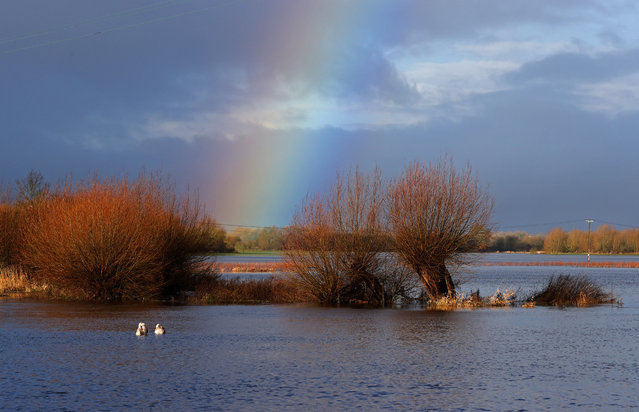
A rainbow rises over flooded fields after the Rivers Thames and Churn burst their banks, in Cricklade, western England on January 3, 2024, following Storm Henk which brought strong winds and heavy rain across much of the country. (Photo by Adrian Dennis/AFP Photo)

A rainbow rises over flooded fields after the Rivers Thames and Churn burst their banks, in Cricklade, western England on January 3, 2024, following Storm Henk which brought strong winds and heavy rain across much of the country. (Photo by Adrian Dennis/AFP Photo)
Details
08 Mar 2024 07:39:00
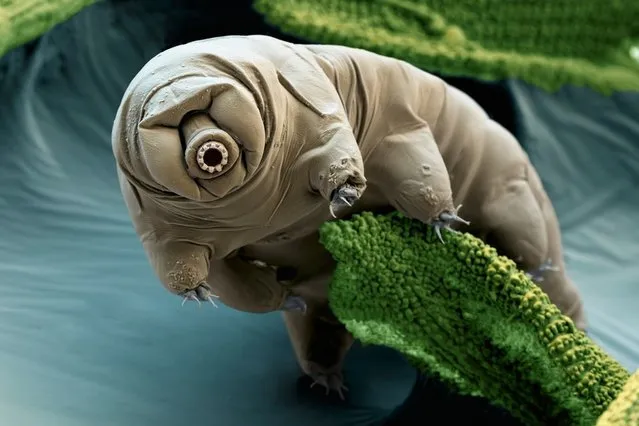
Tardigrades (commonly known as waterbears or moss piglets). (Photo by SPL/East News)

“Tardigrades (commonly known as waterbears or moss piglets) are small, water-dwelling, segmented animals with eight legs. Tardigrades were first discovered in 1773 by Johann August Ephraim Goeze, who called them kleiner Wasserbär, meaning “little water bear” in German. The name Tardigrada means “slow walker” and was given by Lazzaro Spallanzani in 1777. The name water bear comes from the way they walk, reminiscent of a bear's gait. The biggest adults may reach a body length of 1.5 millimetres (0.059 in), the smallest below 0.1 mm. Freshly hatched tardigrades may be smaller than 0.05 mm”. – Wikipedia. Photo: Tardigrades. (Photo by SPL/East News)
Details
26 Sep 2012 09:55:00
An Orangutan named “Pacquiao” and zoo owner Manny Tangco, wearing Santa costumes, embrace in front of Brown Philippine Deer while giving school children a tour ahead of the next week's Christmas celebration Thursday, December 18, 2014 in suburban Malabon city, north of Manila, Philippines. The yearly treat is aimed at encouraging residents to be sensitive to the feelings of animals especially when exploding firecrackers for the raucous celebration. (Photo by Bullit Marquez/AP Photo)

An Orangutan named “Pacquiao” and zoo owner Manny Tangco, wearing Santa costumes, embrace in front of Brown Philippine Deer while giving school children a tour ahead of the next week's Christmas celebration Thursday, December 18, 2014 in suburban Malabon city, north of Manila, Philippines. The yearly treat is aimed at encouraging residents to be sensitive to the feelings of animals especially when exploding firecrackers for the raucous celebration. (Photo by Bullit Marquez/AP Photo)
Details
19 Dec 2014 13:04:00
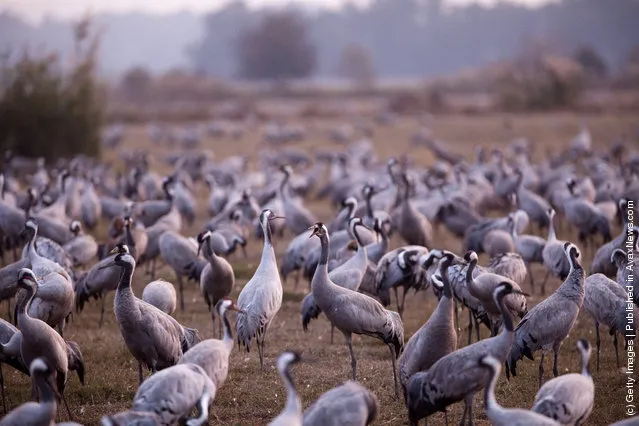
Migrating gray cranes fly over the Hula Lakes in in northern Israel

Migrating gray cranes, on November 30, 2009 around the Hula Lakes in northern Israel. (Photo by Uriel Sinai/Getty Images)
Details
01 Dec 2011 12:49:00