Loading...
Done
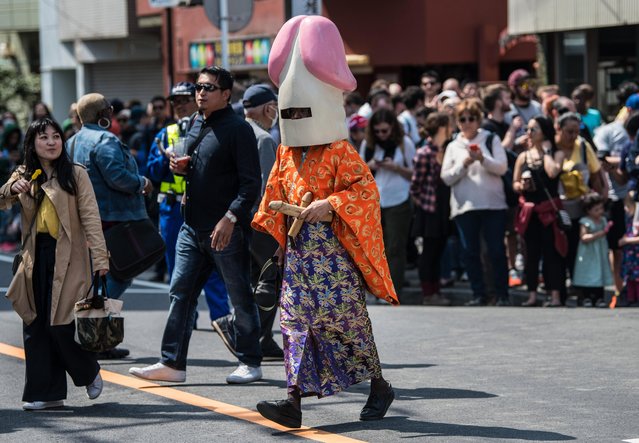
A man wear a phallic-shaped hat during Kanamara Matsuri (Festival of the Steel Phallus) on April 1, 2018 in Kawasaki, Japan. The Kanamara Festival is held annually on the first Sunday of April. The pen*s is the central theme of the festival, focused at the local pen*s-venerating shrine which was once frequented by prostitutes who came to pray for business prosperity and protection against sexually transmitted diseases. Today the festival has become a popular tourist attraction and is used to raise money for HIV awareness and research. (Photo by Carl Court/Getty Images)

A man wear a phallic-shaped hat during Kanamara Matsuri (Festival of the Steel Phallus) on April 1, 2018 in Kawasaki, Japan. The Kanamara Festival is held annually on the first Sunday of April. The pen*s is the central theme of the festival, focused at the local pen*s-venerating shrine which was once frequented by prostitutes who came to pray for business prosperity and protection against sexually transmitted diseases. Today the festival has become a popular tourist attraction and is used to raise money for HIV awareness and research. (Photo by Carl Court/Getty Images)
Details
04 Apr 2018 09:41:00
A girl adorned as a Living Goddess smiles as she takes part in a mass Kumari Puja prayer rituals during Indra Jatra festival in Kathmandu, Nepal on Friday, September 5, 2025. Hundreds of young girls under the age of nine gathered around the temple to offer worship for good luck, protection from evil and prevent from diseases. (Photo by Skanda Gautam/ZUMA Press Wire via Alamy Live News)

A girl adorned as a Living Goddess smiles as she takes part in a mass Kumari Puja prayer rituals during Indra Jatra festival in Kathmandu, Nepal on Friday, September 5, 2025. Hundreds of young girls under the age of nine gathered around the temple to offer worship for good luck, protection from evil and prevent from diseases. (Photo by Skanda Gautam/ZUMA Press Wire via Alamy Live News)
Details
13 Sep 2025 03:03:00
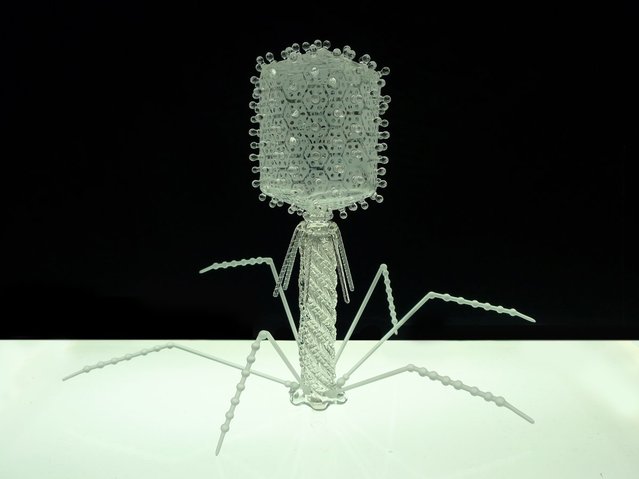
Luke Jerram’s Glass Microbiology Sculptures

British artist Luke Jerram’s glass sculptures represent a variety of viruses, such as Smallpox and HIV, and are made to encourage viewers to contemplate the global impact of each disease.
Details
18 Feb 2013 10:59:00
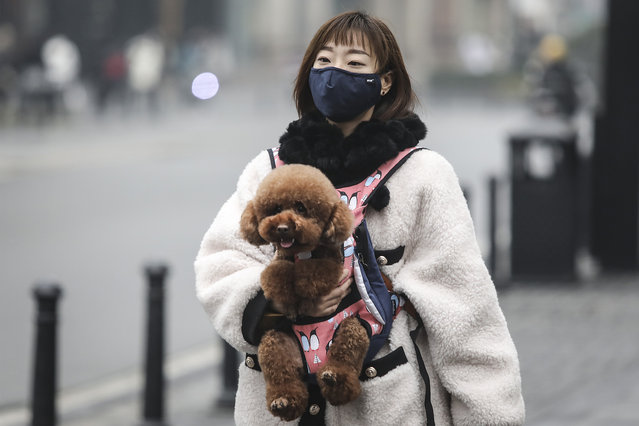
A woman wears a mask while carrying a dog in the street on January 22, 2020 in Wuhan, Hubei province, China. A new infectious coronavirus known as “2019-nCoV” was discovered in Wuhan as the number of cases rose to over 400 in mainland China. Health officials stepped up efforts to contain the spread of the pneumonia-like disease which medicals experts confirmed can be passed from human to human. The death toll has reached 17 people as the Wuhan government issued regulations today that residents must wear masks in public places. Cases have been reported in other countries including the United States, Thailand, Japan, Taiwan, and South Korea. (Photo by Getty Images/China Stringer Network)

A woman wears a mask while carrying a dog in the street on January 22, 2020 in Wuhan, Hubei province, China. A new infectious coronavirus known as “2019-nCoV” was discovered in Wuhan as the number of cases rose to over 400 in mainland China. Health officials stepped up efforts to contain the spread of the pneumonia-like disease which medicals experts confirmed can be passed from human to human. The death toll has reached 17 people as the Wuhan government issued regulations today that residents must wear masks in public places. Cases have been reported in other countries including the United States, Thailand, Japan, Taiwan, and South Korea. (Photo by Getty Images/China Stringer Network)
Details
31 Dec 2020 00:01:00
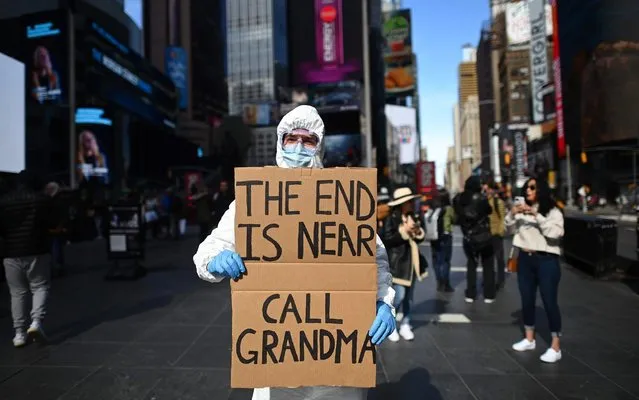
A man wearing a hazmat suit and a mask holds a sign reading “The end is near – call grandma” at Times Square on March 14, 2020 in New York City. The World Health Organization said March 13, 2020 it was not yet possible to say when the COVID-19 pandemic, which has killed more than 5,000 people worldwide, will peak. “It's impossible for us to say when this will peak globally”, Maria Van Kerkhove, who heads the WHO's emerging diseases unit, told a virtual press conference, adding that “we hope that it is sooner rather than later”. (Photo by Johannes Eisele/AFP Photo)

A man wearing a hazmat suit and a mask holds a sign reading “The end is near – call grandma” at Times Square on March 14, 2020 in New York City. The World Health Organization said March 13, 2020 it was not yet possible to say when the COVID-19 pandemic, which has killed more than 5,000 people worldwide, will peak. “It's impossible for us to say when this will peak globally”, Maria Van Kerkhove, who heads the WHO's emerging diseases unit, told a virtual press conference, adding that “we hope that it is sooner rather than later”. (Photo by Johannes Eisele/AFP Photo)
Details
16 Mar 2020 00:07:00
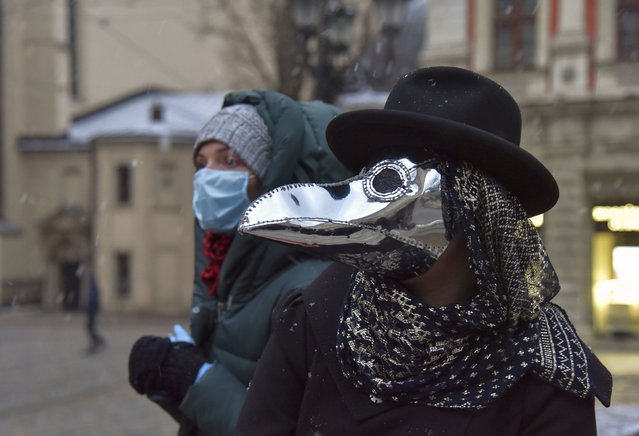
A woman wearing a protective mask is seen behind a girl dressed in a Plague Doctor Mask in Western-Ukrainian city of Lviv, Ukraine, 22 March 2020. Ukrainian Designer Anastasia Markovska sewed protective masks looking like Plague Doctor Masks, the traditional costume of Venice Carnival, for herself and her friends due to the ongoing pandemic of the COVID-19 disease caused by the SARS-CoV-2 coronavirus. In Ukraine had been 47 laboratory-confirmed cases of COVID-19, including three deaths and one recovery as Ukraine's Health Ministry announced. (Photo by Pavlo Palamarchuk/EPA/EFE)

A woman wearing a protective mask is seen behind a girl dressed in a Plague Doctor Mask in Western-Ukrainian city of Lviv, Ukraine, 22 March 2020. Ukrainian Designer Anastasia Markovska sewed protective masks looking like Plague Doctor Masks, the traditional costume of Venice Carnival, for herself and her friends due to the ongoing pandemic of the COVID-19 disease caused by the SARS-CoV-2 coronavirus. In Ukraine had been 47 laboratory-confirmed cases of COVID-19, including three deaths and one recovery as Ukraine's Health Ministry announced. (Photo by Pavlo Palamarchuk/EPA/EFE)
Details
02 May 2020 00:05:00
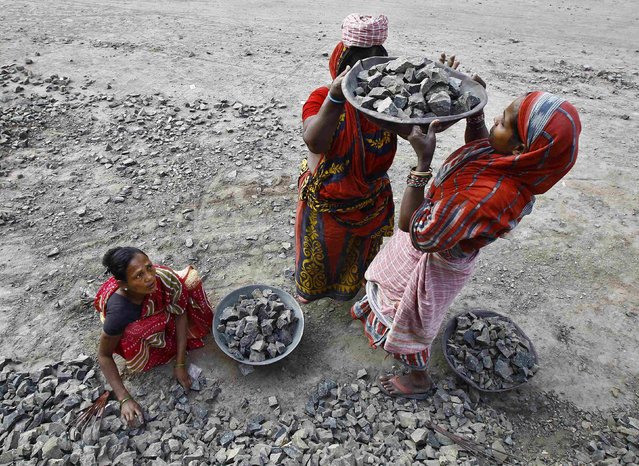
Women labourers work at the construction site of a road in Kolkata January 8, 2015. Across towns and cities in India, it is not uncommon to see women cleaning building sites, carrying bricks and or shoveling gravel - helping construct the infrastructure necessary for the country's economic and social development. (Photo by Rupak De Chowdhuri/Reuters)

Women labourers work at the construction site of a road in Kolkata January 8, 2015. Across towns and cities in India, it is not uncommon to see women cleaning building sites, carrying bricks and or shoveling gravel – helping construct the infrastructure necessary for the country's economic and social development. They help build roads, railway tracks, airports, and offices. They lay pipes for clean water supplies, cables for telecommunications, and dig the drains for sewage systems. But although women make up at least 20 percent of India's 40 million construction workers, they are less recognized than male workers with lower pay and often prone to safety hazards and sexual harassment. They are often unaware of their rights or scared to complain, say activists now trying to campaign for better treatment of women in the construction industry. (Photo by Rupak De Chowdhuri/Reuters)
Details
15 Jan 2015 13:47:00
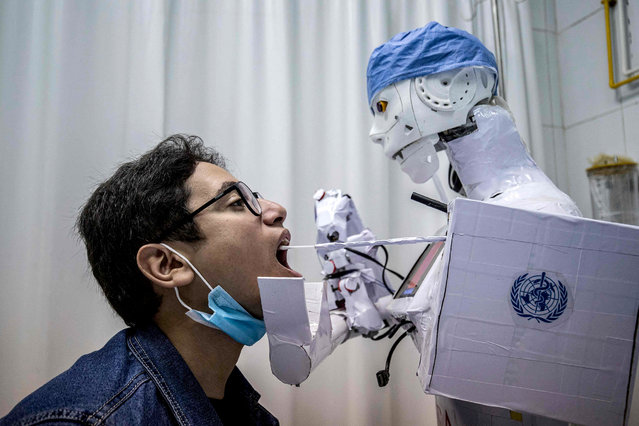
A prong extending from a remote-controlled robot prototype approaches the mouth of a volunteer to extract a throat swab sample, as part of a self-funded project to assist physicians in running tests on suspected COVID-19 coronavirus patients in a bid to limit human exposure to disease-carriers, at a private hospital in Egypt's Nile delta city of Tanta, on March 20, 2021. (Photo by Khaled Desouki/AFP Photo)

A prong extending from a remote-controlled robot prototype approaches the mouth of a volunteer to extract a throat swab sample, as part of a self-funded project to assist physicians in running tests on suspected COVID-19 coronavirus patients in a bid to limit human exposure to disease-carriers, at a private hospital in Egypt's Nile delta city of Tanta, on March 20, 2021. (Photo by Khaled Desouki/AFP Photo)
Details
24 Apr 2021 08:47:00