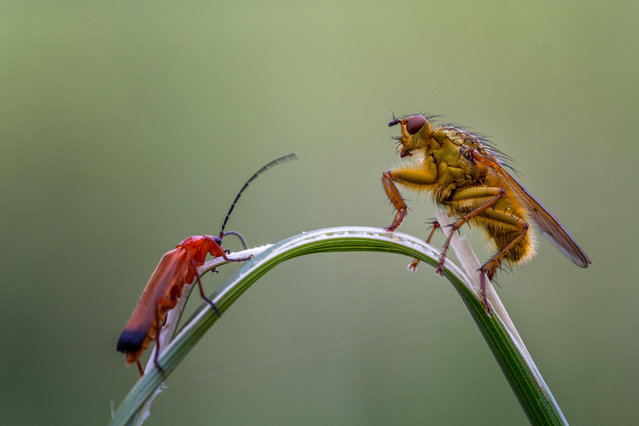
A hogweed bonking beetle and yellow dung fly in a stalk standoff (the fly gave in), in Burley-in-Wharfedale, Yorkshire, England. (Photo by Rebecca Cole/Alamy Stock Photo)
Winner. “I took this picture of a woman in traditional clothing in Cartagena, Colombia”. PAUL GOLDSTEIN, JUDGE: “The blaze of colour from every angle, the boldness of the picture, taken from behind, which gives it so much more allure and frankly a superb get up. Did I mention the colours? Oh, and that looks suspiciously like a Nokia”. (Photo by Stanislav Shmelev/The Guardian)
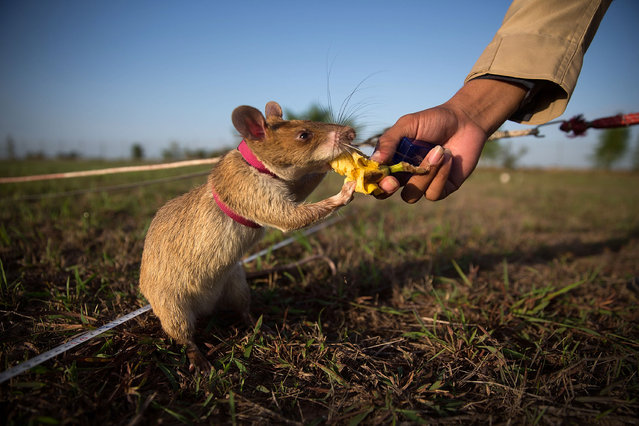
A mine detection rat is given banana as a reward after successfully identifying an inactive mine on July 2, 2015 in Siem Reap, Cambodia. The Cambodian Mine Action Center (CMAC) working with the Belgian NGO APOPO has recently begun testing the feasability of using large mine detection rats from Tanzania to help clear fields of mines and unexploded ordnance in one of the most bombed and mined countries in the world. (Photo by Taylor Weidman/Getty Images)
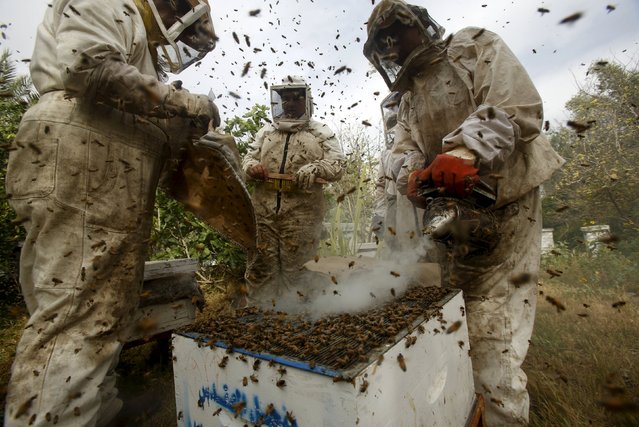
A Palestinian beekeeper uses smoke to calm bees in the process of collecting honey at a farm in Rafah, in the southern Gaza Strip April 11, 2016. Rateb Samour sees 250 patients a day, whose complaints range from hair loss to cerebral palsy and cancer. He is not a doctor and has never worked in a hospital. Samour inherited the skill of bee-sting therapy from his father. From 2003 the agricultural engineer dedicated all his time to study and develop the alternative-medicine treatment of apitherapy, which uses bee-related products from honey, propolis – or bee glue used to build hives – to venom. (Photo by Suhaib Salem/Reuters)
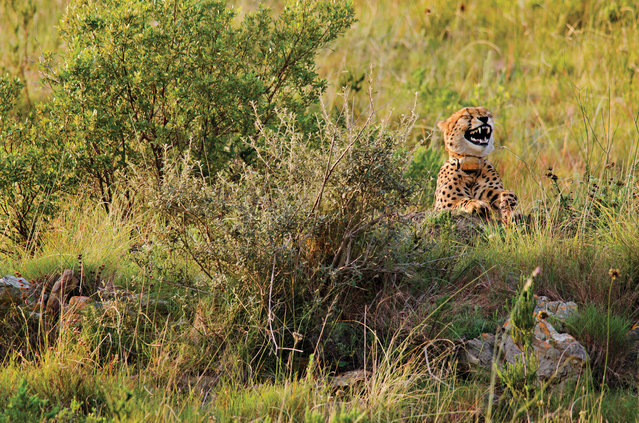
A comedic photo of a cheetah appearing to find something hilarious by Dutton Robert for the Comedy Wildlife Photo Awards 2016, South Africa, April, 2012. (Photo by Dutton Robert/Barcroft Images/Comedy Wildlife Photo Awards)
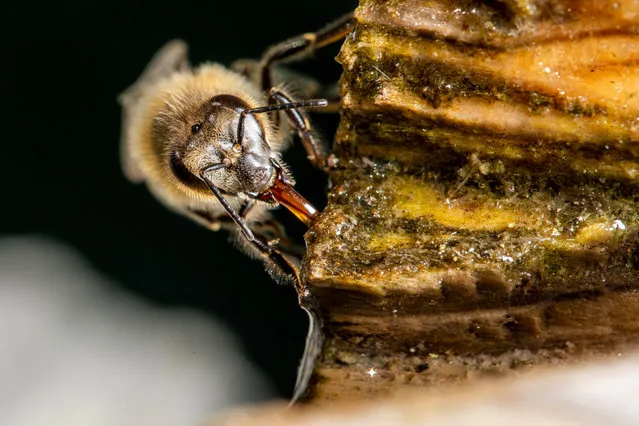
A Western honey bee feeds off acacia pollen at an apiary in Nagyszenas, eastern Hungary, 25 April 2020. The preparation of the bees for the acacia bloom began two weeks later than usual this year; due to the late frosts, this season's yield of Hungaricum acacia honey is expected to be lower. (Photo by Tibor Rosta/EPA/EFE)