Loading...
Done
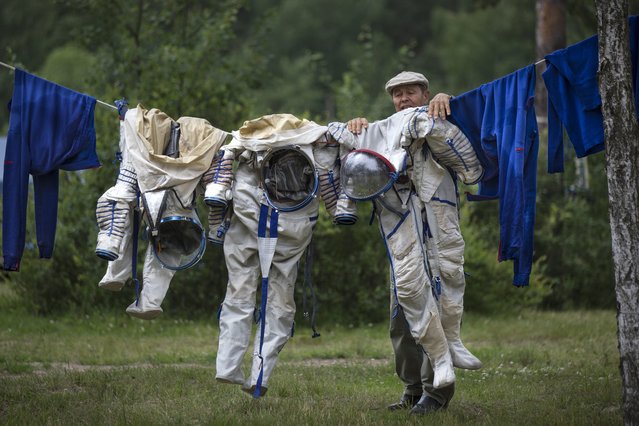
An employe of Russian Space Training Center hangs out to dry space suits of Russian cosmonaut Anatoly Ivanishin, NASA's U.S. flight engineer Kathleen Rubins, and Japanese space agency's flight engineer Takuya Onishi, right, after their undergoing  training near in Noginsk, 60 km (38 miles) east of Moscow, Russia, Wednesday, July 2, 2014. (Photo by Alexander Zemlianichenko/AP Photo)

An employe of Russian Space Training Center hangs out to dry space suits of Russian cosmonaut Anatoly Ivanishin, NASA's U.S. flight engineer Kathleen Rubins, and Japanese space agency's flight engineer Takuya Onishi, right, after their undergoing training near in Noginsk, 60 km (38 miles) east of Moscow, Russia, Wednesday, July 2, 2014. The training was intended to simulate the capsule landing on water. Russian cosmonaut Anatoly Ivanishin, Japanese space agency's flight engineer Takuya Onishi, and NASA's U.S. flight engineer Kathleen Rubins are being trained for a future mission to the International Space Station. (Photo by Alexander Zemlianichenko/AP Photo)
Details
05 Jul 2014 11:47:00
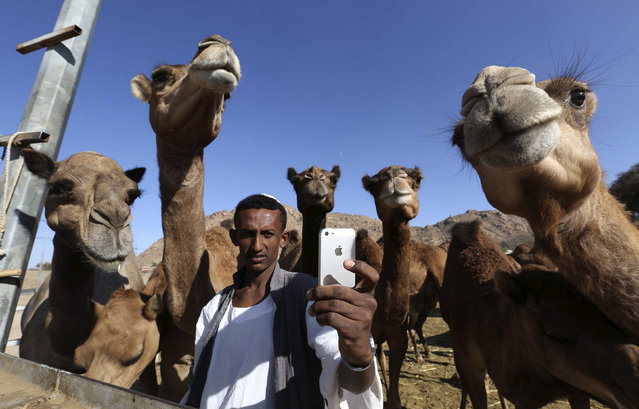
A man takes a “selfie” with camels at a farm in Taif November 1, 2014. Saudi Arabia said late on Wednesday it had detected six new cases of the deadly Middle East Respiratory Syndrome (MERS) in 24 hours, the biggest daily jump for months with officials blaming lax hospital procedures. (Photo by Mohamed Alhwaity/Reuters)

A man takes a “selfie” with camels at a farm in Taif November 1, 2014. Saudi Arabia said late on Wednesday it had detected six new cases of the deadly Middle East Respiratory Syndrome (MERS) in 24 hours, the biggest daily jump for months with officials blaming lax hospital procedures. Scientists are not sure of the origin of the virus, but several studies have linked it to camels and some experts think it is being passed to humans through close physical contact or through the consumption of camel meat or camel milk. (Photo by Mohamed Alhwaity/Reuters)
Details
08 Nov 2014 12:33:00
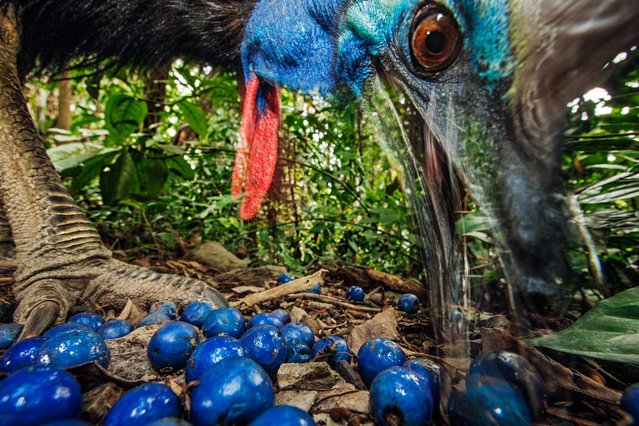
“Cassowaries are large, flightless birds related to emus and (more distantly) to ostriches, rheas, and kiwis”, writes Olivia Judson in the September issue of National Geographic magazine. (Photo by Christian Ziegler/National Geographic)

“Cassowaries are large, flightless birds related to emus and (more distantly) to ostriches, rheas, and kiwis”, writes Olivia Judson in the September issue of National Geographic magazine. How large? People-size: Adult males stand well over five foot five and top 110 pounds. Females are even taller, and can weigh more than 160 pounds. Dangerous when roused, they’re shy and peaceable when left alone. But even birds this big and tough are prey to habitat loss. The dense New Guinea and Australia rain forests where they live have dwindled. Today cassowaries might number 1,500 to 2,000. And because they help shape those same forests – by moving seeds from one place to another – “if they vanish”, Judson writes, “the structure of the forest would gradually change” too. (Photo by Christian Ziegler/National Geographic)
Details
06 Jan 2014 12:21:00
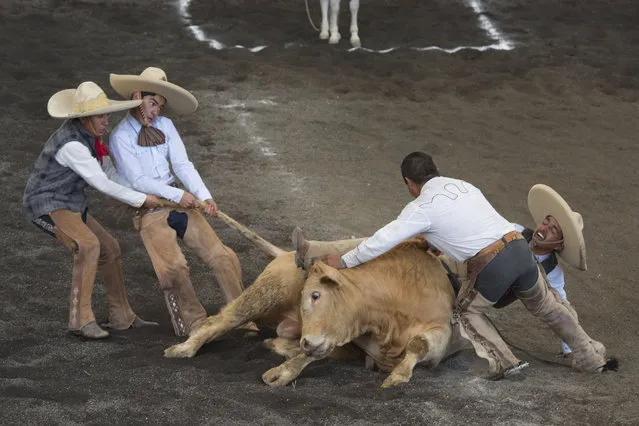
In this February 28, 2015 photo, teammates struggle to lift a bull off the trapped leg of a charro, during the bull riding event at a charreada in Mexico City. National Charros Association President Manuel Basurto Rojas said: “We in charreria are taking things into our own hands. We have codes, we have rules, for how to treat the animals. On the other hand, there is a lot of danger involved for the men doing these tricks”. (Photo by Rebecca Blackwell/AP Photo)

In this February 28, 2015 photo, teammates struggle to lift a bull off the trapped leg of a charro, during the bull riding event at a charreada in Mexico City. National Charros Association President Manuel Basurto Rojas said: “We in charreria are taking things into our own hands. We have codes, we have rules, for how to treat the animals. On the other hand, there is a lot of danger involved for the men doing these tricks”. (Photo by Rebecca Blackwell/AP Photo)
Details
15 Mar 2015 06:44:00
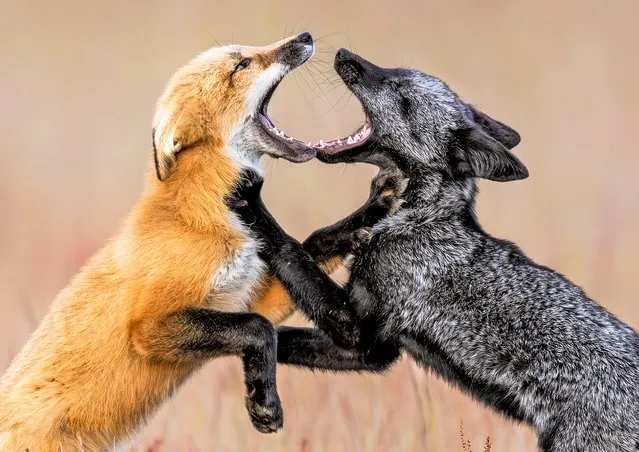
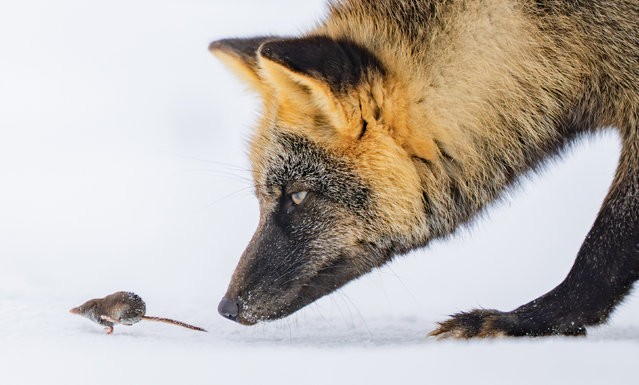
The rabbit population of San Juan Island, brought in to feed lighthouse keepers, got so big that in the 1930s foxes were introduced to kill them. Although they are red foxes, their coats can be orange, silver, black or multi-coloured. Picture date: September 2023. (Photo by Jun Zuo/Solent News)

The rabbit population of San Juan Island, brought in to feed lighthouse keepers, got so big that in the 1930s foxes were introduced to kill them. Although they are red foxes, their coats can be orange, silver, black or multi-coloured. Picture date: September 2023. (Photo by Jun Zuo/Solent News)
Details
08 Oct 2023 04:03:00
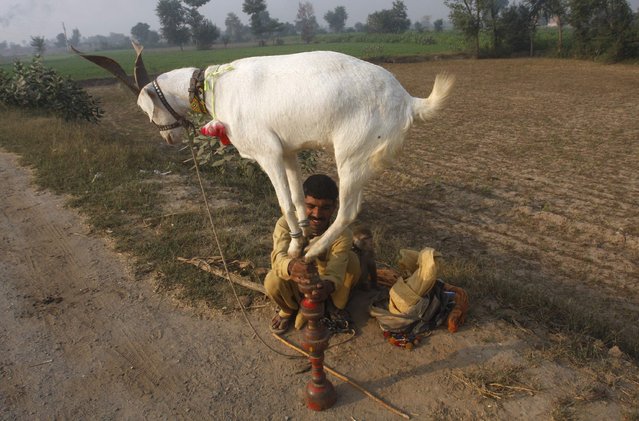
The goats are known to be good climbers, but this one is taking the climbing thing to a whole new level. It clambered on the tip of its owner’s stick, as a part of the roadside performance for a quick coin, on the outskirts of Faisalabad, Pakistan, November 5, 2012. (Photo by Fayyaz Hussain/Reuters)

The goats are known to be good climbers, but this one is taking the climbing thing to a whole new level. It clambered on the tip of its owner’s stick, as a part of the roadside performance for a quick coin, on the outskirts of Faisalabad, Pakistan, November 5, 2012. (Photo by Fayyaz Hussain/Reuters)
Details
10 Nov 2012 11:31:00
Fast food got a whole new meaning in Hokkaido, Japan, where a vole was captured fleeing from a fox in the first decade of January 2025. (Photo by Hiroki Inoue/Solent News)

Fast food got a whole new meaning in Hokkaido, Japan, where a vole was captured fleeing from a fox in the first decade of January 2025. (Photo by Hiroki Inoue/Solent News)
Details
19 Jan 2025 05:19:00
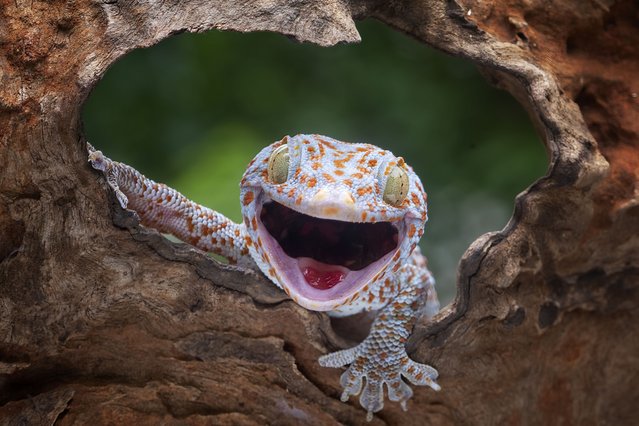
A smiling gecko bursts through a gap in the bark to surprise photographer in West Java, Indonesia in the last decade of March 2025. (Photo by Dzul Duzulfikri/Animal News Agency)

A smiling gecko bursts through a gap in the bark to surprise photographer in West Java, Indonesia in the last decade of March 2025. (Photo by Dzul Duzulfikri/Animal News Agency)
Details
06 Apr 2025 03:52:00