Loading...
Done
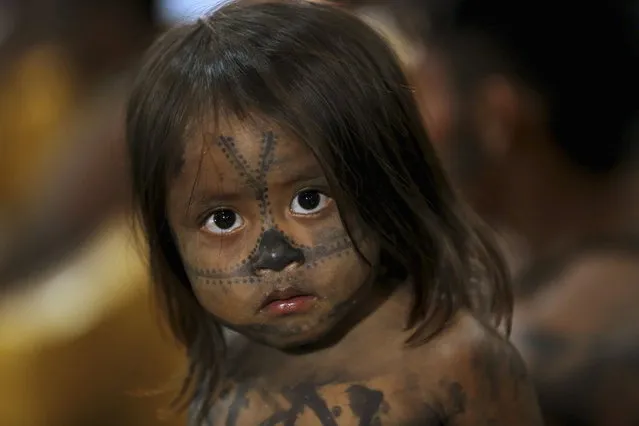
A Munduruku Indian child is pictured at the Planalto Palace, where a meeting with Minister of the General Secretariat of the Presidency of Brazil Gilberto Carvalho was being held with other Munduruku Indians, in Brasilia, June 4, 2013. (Photo by Ueslei Marcelino/Reuters)

A Munduruku Indian child is pictured at the Planalto Palace, where a meeting with Minister of the General Secretariat of the Presidency of Brazil Gilberto Carvalho was being held with other Munduruku Indians, in Brasilia, June 4, 2013. President Dilma Rousseff's government sought on Tuesday to defuse mounting conflicts with indigenous groups over its decision to stop setting aside farm land for Indians and plans to build more hydroelectric dams in the Amazon. The government flew 144 Munduruku Indians to Brasilia for talks to end a week-long occupation of the controversial Belo Monte dam on the Xingu river, a huge project aimed at feeding Brazil's fast-growing demand for electricity. (Photo by Ueslei Marcelino/Reuters)
Details
06 Jun 2013 09:25:00


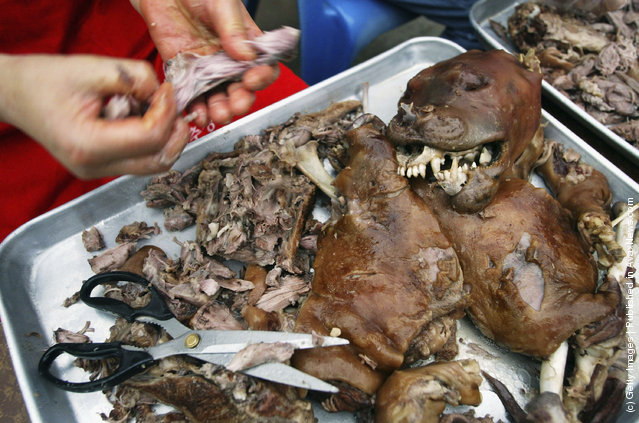
“Dog meat refers to edible parts and the flesh derived from (predominantly domestic) dogs. Human consumption of dog meat has been recorded in many parts of the world, including ancient China, ancient Mexico, and ancient Rome. According to contemporary reports, dog meat is consumed in a variety of countries such as Switzerland, China, Vietnam, the Philippines, and Korea. In addition, dog meat has also been used as survival food in times of war and/or other hardships”. – Wikipedia

Photo: A chef prepares dog meat at a restaurant on July 4, 2005 in Gwacheon, South Korea. Dog meat is a traditional dish in Korea dating back to the Samkuk period (period of the three kingdoms BC 57 – AD 668). Although many recipes existed historically for dog meat, now chefs only make soups, or dishes using boiled or roasted meat. Koreans traditionally eat dog meat on the hottest day of the summer, for it's reputed benefits of virility, invigoration and health. (Photo by Chung Sung-Jun/Getty Images)
Details
24 Jul 2011 13:21:00
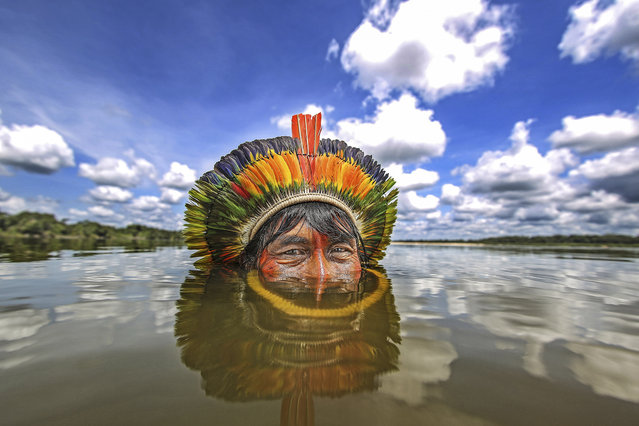
Bej indian in the Xingu river, state of Mato Grosso, Brazil on December 20, 2015 .(Photo by Ricardo Stuckert/Caters News Agency)

These images offer a rare glimpse of life within remote Brazilian tribes. Award winning photographer Ricardo, 47, said: “The pictures show the traditional way of life of these people who live in harmony with nature. The photos provide an overview of the contemporary situation of the indigenous people in Brazil”. Here: Bej indian in the Xingu river, state of Mato Grosso, Brazil on December 20, 2015 .(Photo by Ricardo Stuckert/Caters News Agency)
Details
12 Dec 2017 06:46:00
Talking Heads By Matthew Rolston

Matthew Rolston: Talking Heads presents monumental color portraits of dummies chosen from a collection of nearly seven hundred ventriloquists dolls (dating from 1820 –1980) housed at the Vent Haven Museum in Fort Mitchell, Kentucky.
Details
27 Sep 2015 10:08:00
Ice-Cream Paintings By Othman Toma

Baghdad-based artist Othman Toma uses multi-colored melting treats as a medium for his art, instead of normal paint. And it works incredibly well. In fact, to the untrained eye, his artworks seem painted with regular watercolors.
Details
26 Aug 2014 18:58:00
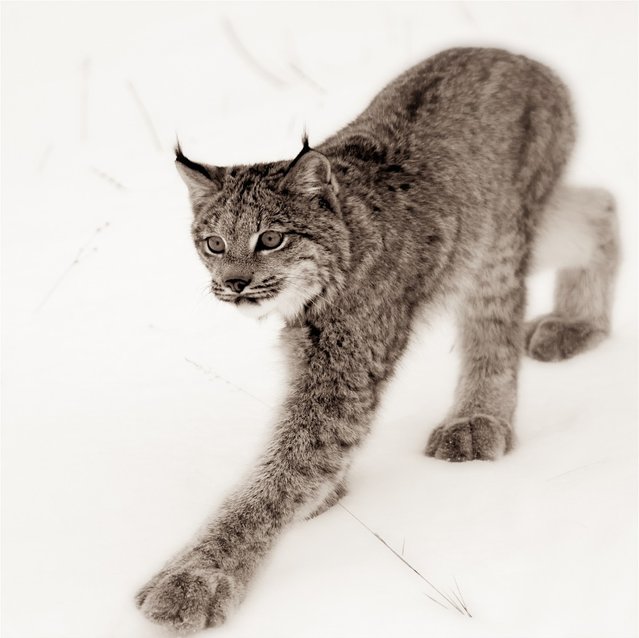
“Keep On Trucking, Mr. Lynx!”. Canadian Lynx Study.

“Keep On Trucking, Mr. Lynx!”. Canadian Lynx Study. (Photo by Josef)


Details
09 Nov 2012 11:39:00
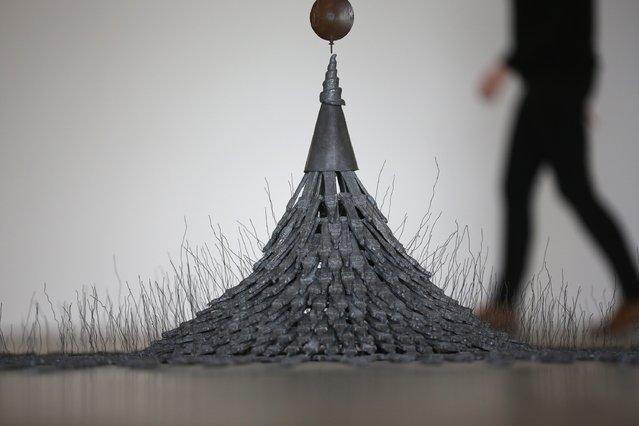
A gallery staff member walks past Fleeting Monument (1985)  by artist Cornelia Parker, one of the works on display at Yorkshire Sculpture Parks Longside Gallery as part of the “Making It: Sculpture in Britain 1977-1986” exhibition on March 27, 2015 in Barnsley, England. (Photo by Christopher Furlong/Getty Images)

A gallery staff member walks past Fleeting Monument (1985) by artist Cornelia Parker, one of the works on display at Yorkshire Sculpture Parks Longside Gallery as part of the “Making It: Sculpture in Britain 1977-1986” exhibition on March 27, 2015 in Barnsley, England. (Photo by Christopher Furlong/Getty Images)
Details
28 Mar 2015 11:04:00
Nguyen Manh Quan (top), 26, a civil servant, carries a girl using his throat area as he performs during a showcase of the traditional Thien Mon Dao kung fu at Du Xa Thuong village, southeast of Hanoi, Vietnam May 10, 2015. (Photo by Reuters/Kham)

Nguyen Manh Quan (top), 26, a civil servant, carries a girl using his throat area as he performs during a showcase of the traditional Thien Mon Dao kung fu at Du Xa Thuong village, southeast of Hanoi, Vietnam May 10, 2015. Thien Mon Dao, a traditional Vietnamese martial art, was formed by 18th century villagers in Du Xa Thuong village, who believed the art form could help improve health as well as fight against foreign invaders. There are currently about 3,000 practitioners including farmers, industry workers and state servants. These practitioners say they are able to bend metal against their bodies and carry heavy objects using their throats, eyes or tongues, as well as run across the surface of a river, according to Thien Mon Dao kung fu master Nguyen Khac Phan. (Photo by Reuters/Kham)
Details
11 May 2015 12:27:00