Brazil's team performs in the artistic swimming acrobatic routine final at the Pan American Games in Santiago, Chile, Friday, November 3, 2023. (Photo by Matias Delacroix/AP Photo)
“This Way Up”. Photographic section portfolio, first prize. A Chinook CH-47 weapon systems operator prepares his aircraft during a training exercise in June 2018. (Photo bu SAC Ed Wright/RAF)
Winner. “I took this picture of a woman in traditional clothing in Cartagena, Colombia”. PAUL GOLDSTEIN, JUDGE: “The blaze of colour from every angle, the boldness of the picture, taken from behind, which gives it so much more allure and frankly a superb get up. Did I mention the colours? Oh, and that looks suspiciously like a Nokia”. (Photo by Stanislav Shmelev/The Guardian)
Alison Brie and Betty Gilpin host in the Netflix comedy-drama“Glow” Season 1 TV Series, 2017. (Photo by Erica Parise/Netflix/Kobal/Rex Features/Shutterstock)
Women joke around as they pose for photographs in front of a large dragon made of flowers at the Sentosa Flowers festival on January 22, 2012 on Sentosa Island, Singapore. (Photo by Chris McGrath/Getty Images)
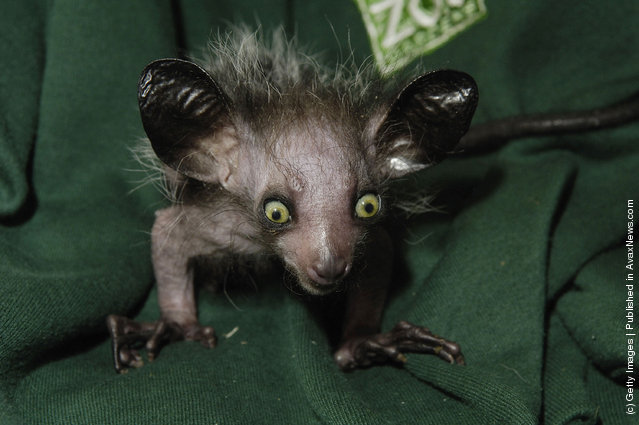
“The aye-aye (Daubentonia madagascariensis) is a lemur, a strepsirrhine primate native to Madagascar that combines rodent-like teeth and a special thin middle finger to fill the same ecological niche as a woodpecker. It is the world's largest nocturnal primate, and is characterized by its unusual method of finding food; it taps on trees to find grubs, then gnaws holes in the wood and inserts its narrow middle finger to pull the grubs out. The only other animal species known to find food in this way is the striped possum. From an ecological point of view the aye-aye fills the niche of a woodpecker as it is capable of penetrating wood to extract the invertebrates within”. – Wikipedia
Photo: In this handout image from Bristol Zoo is seen the first captive bred aye-aye in the UK named “Kintana” (meaning star in Malagasy) April 15, 2005 at Bristol Zoo Gardens, England. The zoo announced today only the second baby aye-aye to be hand-reared in the world (the first was in Jersey Zoo) and has now made his first public appearance since his birth on 11 February 2005. (Photo by Rob Cousins/Bristol Zoo via Getty Images)
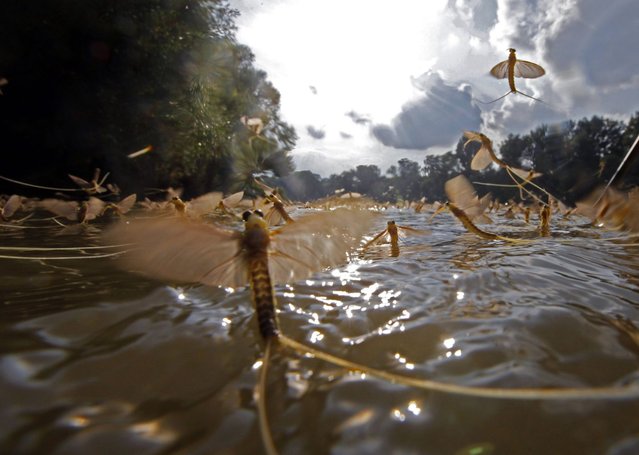
Long-tailed mayflies (Palingenia longicauda) at Tisza river near Tiszainoka 135km (84 miles) southeast of Budapest, June 23, 2013. Millions of these short-lived mayflies engage in a frantic rush to mate and reproduce before they perish in just a few hours during “Tiszaviragzas” or Tisza blooming season from late spring to early summer every year. (Photo by Laszlo Balogh/Reuters)