Loading...
Done
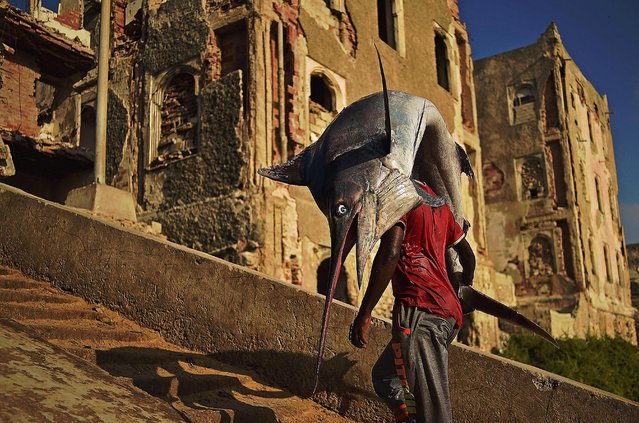
A man carrying a sailfish walks through Hamarweyne district in South Mogadishu on March 25, 2015. (Photo by Carl De Souza/AFP Photo)

A man carrying a sailfish walks through Hamarweyne district in South Mogadishu on March 25, 2015. (Photo by Carl De Souza/AFP Photo)
Details
28 Mar 2015 11:12:00
Fireworks explode over a floating Christmas tree in Lagoa Lake in Rio de Janeiro. (Photo by Victor R. Caivano/Associated Press)

Fireworks explode over a floating Christmas tree in Lagoa Lake in Rio de Janeiro. (Photo by Victor R. Caivano/Associated Press)
Details
13 Dec 2013 09:00:00
Women pose for a selfie at Ipanema Beach in Rio de Janeiro, Brazil on July 30, 2016. (Photo by Nacho Doce/Reuters)

Women pose for a selfie at Ipanema Beach in Rio de Janeiro, Brazil on July 30, 2016. (Photo by Nacho Doce/Reuters)
Details
31 Jul 2016 11:19:00
Revellers participate in the annual gay pride parade in Amsterdam, Netherlands on August 4, 2018. (Photo by Piroschka van de Wouw/Reuters)

Revellers participate in the annual gay pride parade in Amsterdam, Netherlands on August 4, 2018. (Photo by Piroschka van de Wouw/Reuters)
Details
06 Aug 2018 08:57:00
This aerial photo taken on December 28, 2018 shows commercial and residential buildings in Hong Kong. (Photo by Dale De La Rey/AFP Photo)

This aerial photo taken on December 28, 2018 shows commercial and residential buildings in Hong Kong. (Photo by Dale De La Rey/AFP Photo)
Details
24 Jan 2019 00:05:00
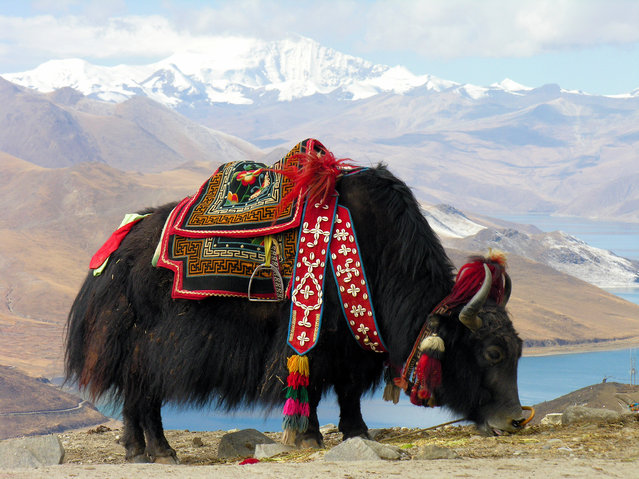
Yak near Yamdrok lake, Tibet. It is a long-haired bovinae found throughout the Himalayan region of south Central Asia, the Tibetan Plateau and as far north as Mongolia and Russia. The Tibetan economy is dominated by subsistence agriculture. Due to limited arable land, the primary occupation of the Tibetan Plateau is raising livestock, such as sheep, cattle, goats, camels, yaks, dzo, and horses. The Tibetan yak is an integral part of Tibetan life. (Photo by Dennis Jarvis)

Yak near Yamdrok lake, Tibet. It is a long-haired bovinae found throughout the Himalayan region of south Central Asia, the Tibetan Plateau and as far north as Mongolia and Russia. The Tibetan economy is dominated by subsistence agriculture. Due to limited arable land, the primary occupation of the Tibetan Plateau is raising livestock, such as sheep, cattle, goats, camels, yaks, dzo, and horses. The Tibetan yak is an integral part of Tibetan life. (Photo by Dennis Jarvis)

Details
10 Jun 2015 10:48:00
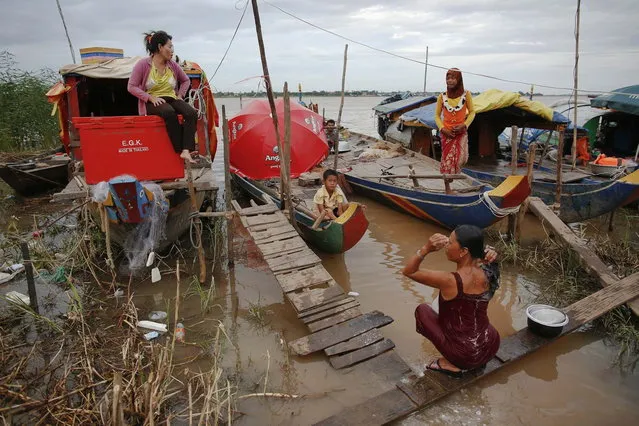
Ethnic Cham Muslim people pass the time near their boats on banks of Mekong river in Phnom Penh July 29, 2013. (Photo by Damir Sagolj/Reuters)

Ethnic Cham Muslim people pass the time near their boats on banks of Mekong river in Phnom Penh July 29, 2013. About 100 ethnic Cham families, made up of nomads and fishermen without houses or land who arrived at the Cambodian capital in search of better lives, live on their small boats on a peninsula where the Mekong and Tonle Sap rivers meet, just opposite the city's centre. The community has been forced to move several times from their locations in Phnom Penh as the land becomes more valuable. They fear that their current home, just behind a new luxurious hotel under construction at the Chroy Changva district is only temporary and that they would have to move again soon. (Photo by Damir Sagolj/Reuters)
Details
31 Jul 2013 06:34:00
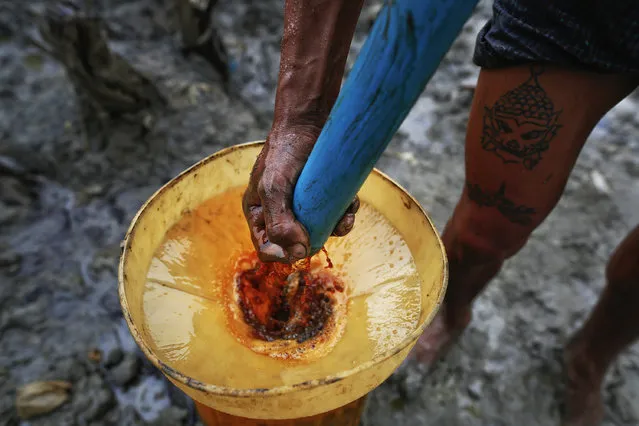
Ko Min, 26, manually extracts oil from one of three 300 feet deep wells he works on in the Minhla township of the Magwe district October 27, 2013. Everyday, Ko Min makes around $30 extracting crude oil from three small wells after he bought rights to use them for close to $1000 from a farmer who owns the land. (Photo by Damir Sagolj/Reuters)

Ko Min, 26, manually extracts oil from one of three 300 feet deep wells he works on in the Minhla township of the Magwe district October 27, 2013. Everyday, Ko Min makes around $30 extracting crude oil from three small wells after he bought rights to use them for close to $1000 from a farmer who owns the land. In Myanmar, an impoverished country rich with natural resources, people from poor communities find ways to supplement their income by exploiting such resources, such as the Minhla township, traditionally rich with oil, often using primitive and dangerous methods. (Photo by Damir Sagolj/Reuters)
Details
21 Apr 2014 10:06:00