Loading...
Done
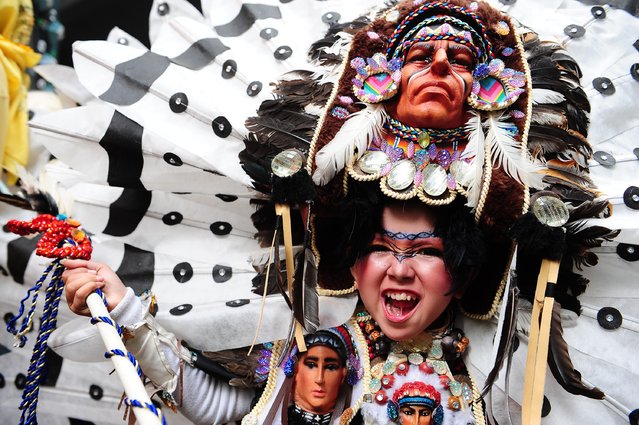
A model wears an Apache costume in the kids carnival during The 13th Jember Fashion Carnival 2014 on August 21, 2014 in Jember, Indonesia. (Photo by Robertus Pudyanto/Getty Images)

A model wears an Apache costume in the kids carnival during The 13th Jember Fashion Carnival 2014 on August 21, 2014 in Jember, Indonesia. The 13th Jember Fashion Carnival (JFC) 2014 theme is “Triangle, Dynamic in Harmony” and consists of ten parades which include Mahabharata, Tambora, Phoenix, Pine Forest, Apache, Borobudur, Flying Kite, Wild Deers, Stalagmite, and Chemistry. This street carnival is claimed to be one of the biggest in the world and comprises more than 850 performers parading along 3.6 km road used as the catwalk. (Photo by Robertus Pudyanto/Getty Images)
Details
24 Aug 2014 09:09:00
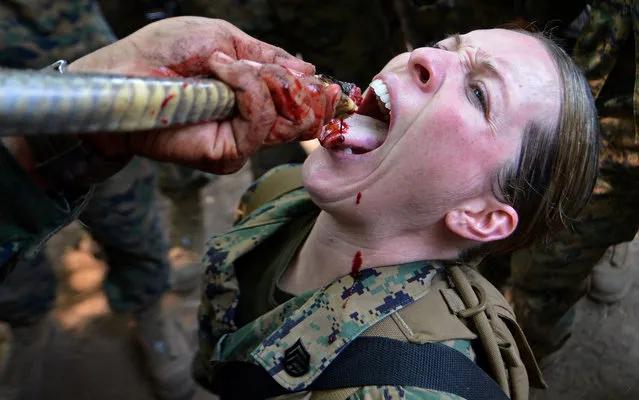
In a military base in the Thai province of Chon Buri February 20 U.S. Marines Navy with Thailand began their studies in jungle survival. The event is held in joint military exercises “Cobra Gold 2013”. During a jungle survival program February 20, 2013 taught by Royal Thai Special Forces in Sannapit, Thailand, U.S. Marines learned to catch cobras and drink their fresh blood, not to mention eat forest insects and pull the heads off of chicken. The training was part of Operation Cobra Gold 13, the 32nd edition of international military exercises hosted by the Thai. According to a U.S. Marines press release, Cobra Gold is the largest exercise of its kind in Asia and incorporates troops from five other nations in addition to the U.S. and Thailand. The Daily Mail reports that the Marines were invited to experience the local custom of drinking cobra blood after being taught to catch and kill cobras in the wild. As CNN notes, Cobra blood is believed to be a panacea and aphrodiasic in parts of Southeast Asia. In Jakarta, vendors can earn over $100 a night selling shots of cobra blood mixed with liquor. (Photo by Pornchai Kittiwongsakul/AFP Photo)

During a jungle survival program February 20, 2013 taught by Royal Thai Special Forces in Sannapit, Thailand, U.S. Marines learned to catch cobras and drink their fresh blood, not to mention eat forest insects and pull the heads off of chicken. The training was part of Operation Cobra Gold 13, the 32nd edition of international military exercises hosted by the Thai. According to a U.S. Marines press release, Cobra Gold is the largest exercise of its kind in Asia and incorporates troops from five other nations in addition to the U.S. and Thailand. The Daily Mail reports that the Marines were invited to experience the local custom of drinking cobra blood after being taught to catch and kill cobras in the wild. As CNN notes, Cobra blood is believed to be a panacea and aphrodiasic in parts of Southeast Asia. In Jakarta, vendors can earn over $100 a night selling shots of cobra blood mixed with liquor. (Photo by Pornchai Kittiwongsakul/AFP Photo)
Details
23 Feb 2013 11:52:00


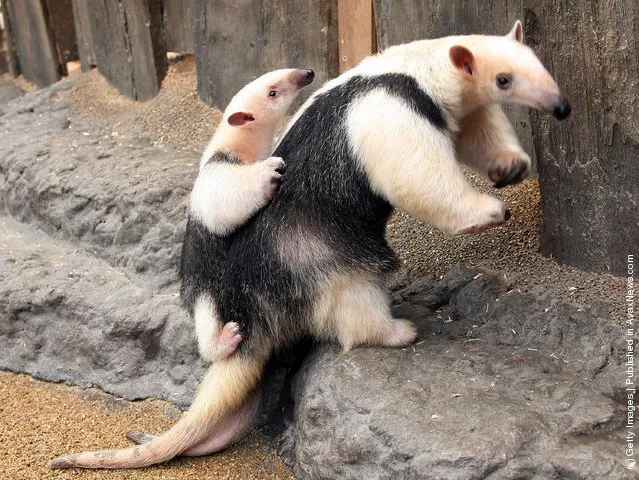
“The Southern Tamandua, Collared Anteater or Lesser Anteater (Tamandua tetradactyla) is a species of anteater from South America. It is a solitary animal, found in many habitats from mature to highly disturbed secondary forests and arid savannas. It feeds on ants, termites and bees. It has very strong foreclaws that can be used to break insect nests or to defend itself”. – Wikipedia

Photo: A three-month-old baby Southern Tamandua “Konbu” lies on its mother Tae's back at Sunshine International Aquarium on July 7, 2009 in Tokyo, Japan. Baby Southern Tamandua feels safe and comfortable holding onto something and normally stays on the mother's back until around 3 months old. (Photo by Junko Kimura/Getty Images)
Details
19 May 2011 10:31:00
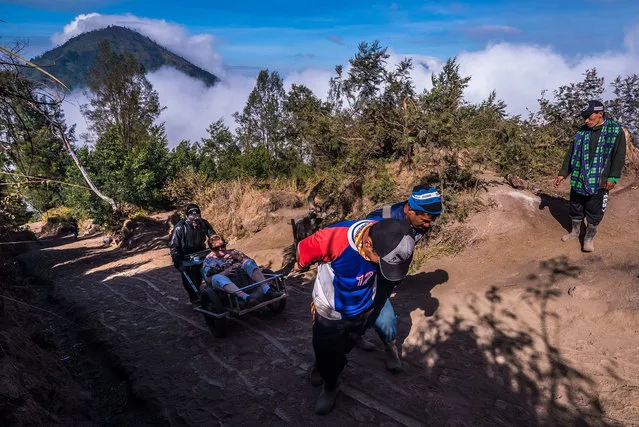
Miners pulling up lazy tourists to the rim of Kawah Ijen (Ijen Volcano), East Java, Indonesia on September 21, 2017. They will earn as much as they would bring down a load of sulfur. Nomadic Explorer, Cultural Lifestyle Photographer Claudio Sieber captured striking images of miners working at Ijen volcanic range in East Java, Indonesia. The sulphur miners risk their lives daily as they climb the active volcano carrying heavy loads, which they sell to sugar refineries. Shortly after midnight curious tourists are flocking in hundreds through the gate of Ijen's foothills to be right on time, driven by the images others took before them. Kawah Ijen is the one of the world's largest acidic volcanic crater lake; famous for its turquoise color as well as the unreal atmosphere it offers during darkness. A dusty path zigzags 3 kilometers up to the crater rim. This doesn't mean anything challenging; in particular, special sights have to be deserved anyway. The irritating smell of sulfur announces the near of the crater's existence. Arriving on the crater's rim the reward for the torture becomes visible. Blue fire darts its tongues through the fumes of sulfur dioxide. Somehow, the spectacle isn't as romantic as expected, since it is also the rough working space of approx. 150 sulfur miners who start their shift at 1 am. Lately, harvesting the abundance of devil's gold received international attention. This did obviously not really improve a miner's lifestyle; neither did it contribute to a better wage. (Photo by Claudio Sieber/Barcroft Images)

Miners pulling up lazy tourists to the rim of Kawah Ijen (Ijen Volcano), East Java, Indonesia on September 21, 2017. They will earn as much as they would bring down a load of sulfur. Nomadic Explorer, Cultural Lifestyle Photographer Claudio Sieber captured striking images of miners working at Ijen volcanic range in East Java, Indonesia. The sulphur miners risk their lives daily as they climb the active volcano carrying heavy loads, which they sell to sugar refineries. (Photo by Claudio Sieber/Barcroft Images)
Details
02 Oct 2017 08:31:00
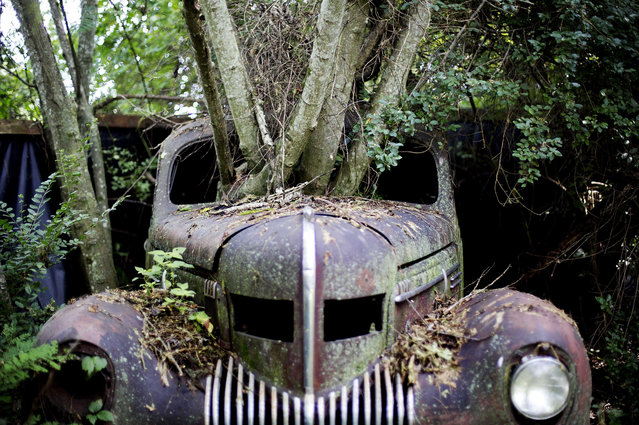
Trees grow through the windshield of a 1937 Chrysler Imperial as it sits at Old Car City, the world's largest known classic car junkyard Thursday, July 16, 2015, in White, Ga. Many of the cars have never moved in over 30 years and in some cases, trees now grow through them, even lifting some off the ground. (Photo by David Goldman/AP Photo)

Trees grow through the windshield of a 1937 Chrysler Imperial as it sits at Old Car City, the world's largest known classic car junkyard Thursday, July 16, 2015, in White, Ga. Over 4,000 classic cars decorate 32 acres of forest which have been turned into a junkyard museum by owner Walter Dean Lewis. The two grew up playing in the cars on the lot which started as a general store selling auto parts in 1931 by Lewis' parents. Lewis stopped selling parts about six years ago when he realized he could sustain the business more as a museum, charging $15 for visitors just looking, and $25 for photographers. Many of the cars have never moved in over 30 years and in some cases, trees now grow through them, even lifting some off the ground. (Photo by David Goldman/AP Photo)
Details
17 Jul 2015 13:14:00
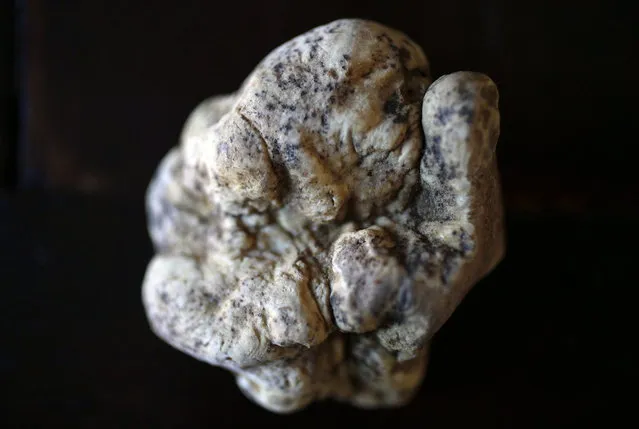
A truffle is seen on a table in Alba, north-western Italy November 11, 2013. Located in the heart of the Langhe – the hilly southern area of Italy's northwestern Piedmont region – Alba is the country's capital of white truffles, a variety of the prized fungus which grows underground. Truffles are found two to eight inches (5-20cm) below the ground near the roots of trees. (Photo by Stefano Rellandini/Reuters)

A truffle is seen on a table in Alba, north-western Italy November 11, 2013. Located in the heart of the Langhe – the hilly southern area of Italy's northwestern Piedmont region – Alba is the country's capital of white truffles, a variety of the prized fungus which grows underground. Truffles are found two to eight inches (5-20cm) below the ground near the roots of trees. They give off an odour which lasts for a limited period of time and can be detected with the assistance of well-trained dogs and experienced hunters. Output of white truffles, which are not cultivated and only grow naturally in forests, has fallen in Italy over the past few years, largely because climate change has brought a damaging mix of drought and torrential rains. (Photo by Stefano Rellandini/Reuters)
Details
31 Dec 2013 11:22:00
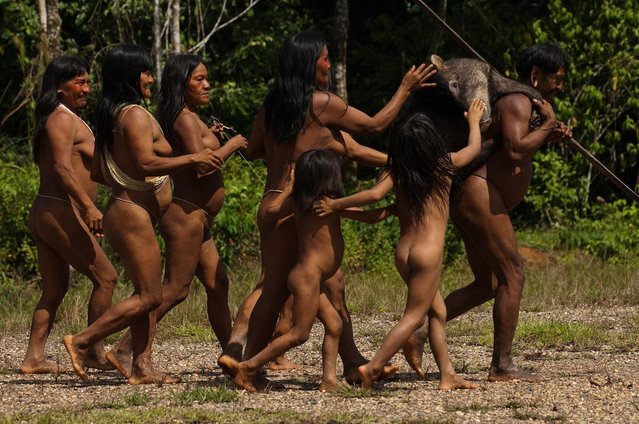
Spectacular images offering insight into the lives of the Huaorani people in the Ecuadorian Amazon have been revealed showing how they use traditional methods to hunt monkeys for food. The stunning pictures were taken by conservation photographer Pete Oxford from Torquay, Devon in the Ecuadorian Amazon. “The Huaorani Indians are a forest people highly in tune with their environment. Many are now totally acculturated since the 1950s by missionaries”, said Pete. “Today they face radical change to their culture to the proximity of oil exploration within their territory and the Yasuni National Park and Biosphere Reserve, they are vastly changed. Some still live very traditionally and for this shoot, through my Huaorani friend, a direct relative of those photographed he wanted to depict them as close to their original culture as possible. They still largely hunt with blow pipes and spears eating a lot of monkeys and peccaries”. The Huaorani are also known as the Waorani, Waodani or the Waos and are native Amerindians. Their lands are located between the Curaray and Napo rivers and speak the Huaorani language. Pete says that during his visit he was welcomed into the group and hopes that ancient cultures can be saved. Here: The tribe were seen celebrating after a hunter returned to camp with a wild pig. (Photo by Pete Oxford/Mediadrumworld.com)

Spectacular images offering insight into the lives of the Huaorani people in the Ecuadorian Amazon have been revealed showing how they use traditional methods to hunt monkeys for food. The stunning pictures were taken by conservation photographer Pete Oxford from Torquay, Devon in the Ecuadorian Amazon. Here: The tribe were seen celebrating after a hunter returned to camp with a wild pig. (Photo by Pete Oxford/Mediadrumworld.com)
Details
20 Jan 2017 07:58:00
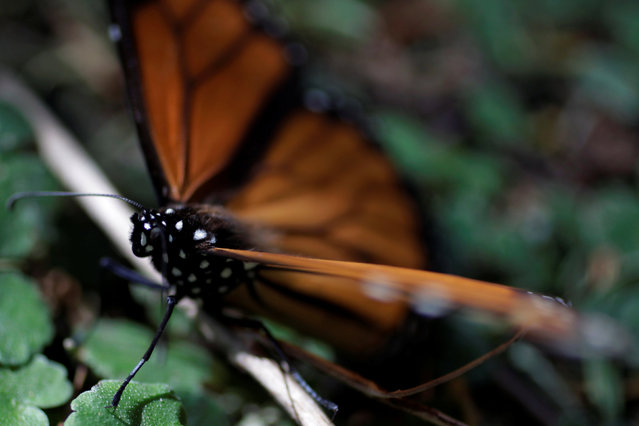
A monarch butterfly rests on the ground at the Sierra Chincua butterfly sanctuary on a mountain in Angangeo, Michoacan November 24, 2016. Angangueo is a town and municipality located in far eastern Michoacán state in central Mexico noted for its history of mining and its location in the Monarch Butterfly Biosphere Reserve. The Monarch Butterfly Biosphere Reserve is a World Heritage Site containing most of the over-wintering sites of the eastern population of the monarch butterfly. The reserve is located in the Trans-Mexican Volcanic Belt pine-oak forests ecoregion on the border of Michoacán and State of Mexico, 100 km (62 miles), northwest of Mexico City. Millions of butterflies arrive in the reserve annually. Butterflies only inhabit a fraction of the 56,000 hectares of the reserve from October–March. (Photo by Carlos Jasso/Reuters)

A monarch butterfly rests on the ground at the Sierra Chincua butterfly sanctuary on a mountain in Angangeo, Michoacan November 24, 2016. Angangueo is a town and municipality located in far eastern Michoacán state in central Mexico noted for its history of mining and its location in the Monarch Butterfly Biosphere Reserve. The Monarch Butterfly Biosphere Reserve is a World Heritage Site containing most of the over-wintering sites of the eastern population of the monarch butterfly. (Photo by Carlos Jasso/Reuters)
Details
26 Nov 2016 10:20:00