Loading...
Done
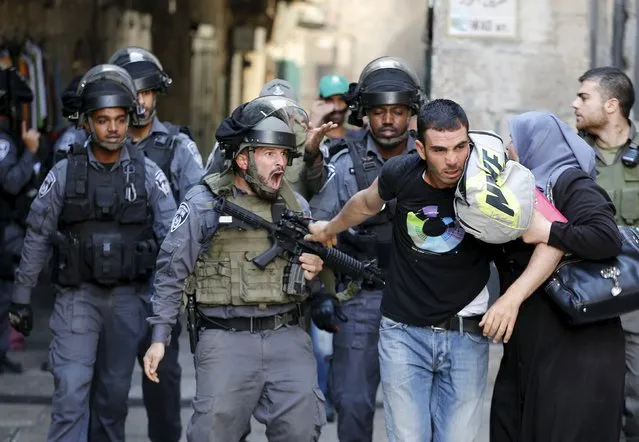
An Israeli policeman prevents a Palestinian man from entering the compound which houses al-Aqsa mosque, known by Muslims as the Noble Sanctuary and by Jews as the Temple Mount, in Jerusalem's Old City September 28, 2015. (Photo by Ammar Awad/Reuters)

An Israeli policeman prevents a Palestinian man from entering the compound which houses al-Aqsa mosque, known by Muslims as the Noble Sanctuary and by Jews as the Temple Mount, in Jerusalem's Old City September 28, 2015. (Photo by Ammar Awad/Reuters)
Details
01 Oct 2015 08:00:00
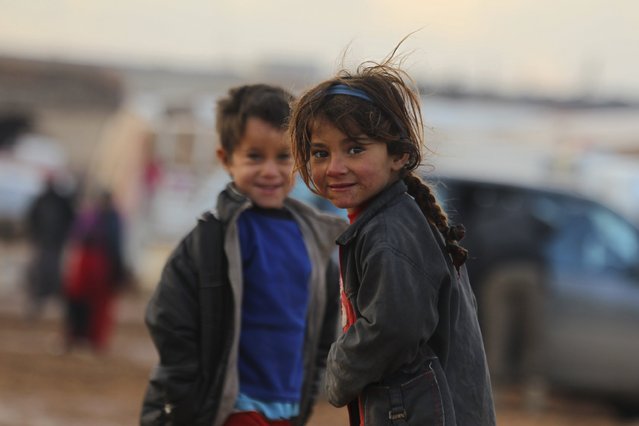
Internally displaced Syrian children play inside a refugee camp in the Hama countryside, Syria January 1, 2016. (Photo by Ammar Abdullah/Reuters)

Internally displaced Syrian children play inside a refugee camp in the Hama countryside, Syria January 1, 2016. (Photo by Ammar Abdullah/Reuters)
Details
03 Jan 2016 08:01:00
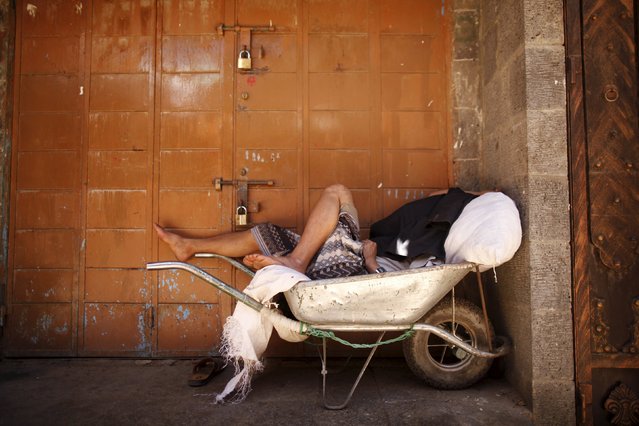
A man sleeps on a wheelbarrow outside a closed shop at a market during the first day of a ceasefire in Yemen's capital Sanaa April 11, 2016. (Photo by Khaled Abdullah/Reuters)

A man sleeps on a wheelbarrow outside a closed shop at a market during the first day of a ceasefire in Yemen's capital Sanaa April 11, 2016. (Photo by Khaled Abdullah/Reuters)
Details
13 May 2016 11:18:00
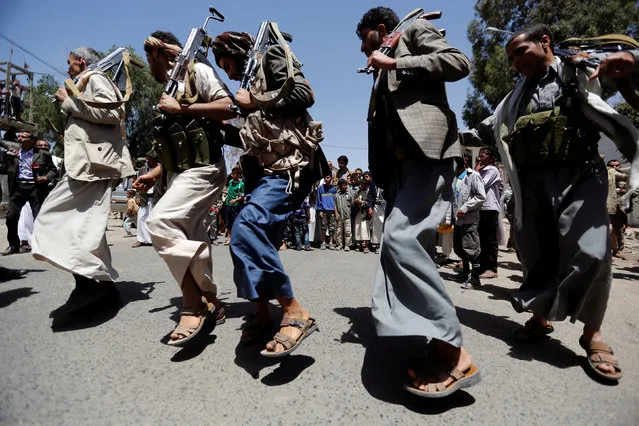
Tribesmen loyal to the Houthi movement perform the Baraa dance during a gathering to show support to the movement in Sanaa, Yemen, May 19, 2016. Bara or Baraa dance is one of the several traditional outdoor dances performed by men in the country of Yemen. Bara dance literally means a dagger dance, where each dancer holds a dagger. The style of the Bara dance differs from tribe to tribe. It is performed on special occasions. (Photo by Khaled Abdullah/Reuters)

Tribesmen loyal to the Houthi movement perform the Baraa dance during a gathering to show support to the movement in Sanaa, Yemen, May 19, 2016. Bara or Baraa dance is one of the several traditional outdoor dances performed by men in the country of Yemen. Bara dance literally means a dagger dance, where each dancer holds a dagger. The style of the Bara dance differs from tribe to tribe. It is performed on special occasions. (Photo by Khaled Abdullah/Reuters)
Details
20 May 2016 12:44:00
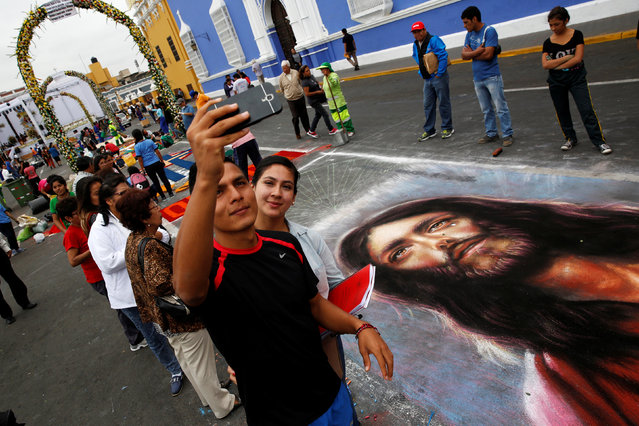
People take a selfie with a sawdust and flower carpet during the feast of Corpus Christi in downtown Trujillo, Peru, May 26, 2016. (Photo by Mariana Bazo/Reuters)

People take a selfie with a sawdust and flower carpet during the feast of Corpus Christi in downtown Trujillo, Peru, May 26, 2016. (Photo by Mariana Bazo/Reuters)
Details
28 May 2016 12:25:00
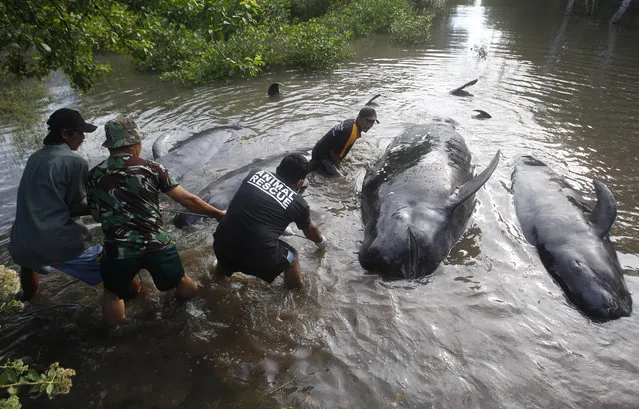
Rescuers pull dead whales ashore in Probolinggo, East Java, Indonesia, Thursday, June 16, 2016 during a mass rescue operation of stranded whales. Most of more than 30 stranded whales were managed to be pulled into the deep sea, an official said. (AP Photo/Trisnadi)

Rescuers pull dead whales ashore in Probolinggo, East Java, Indonesia, Thursday, June 16, 2016 during a mass rescue operation of stranded whales. Most of more than 30 stranded whales were managed to be pulled into the deep sea, an official said. (AP Photo/Trisnadi)
Details
17 Jun 2016 13:19:00
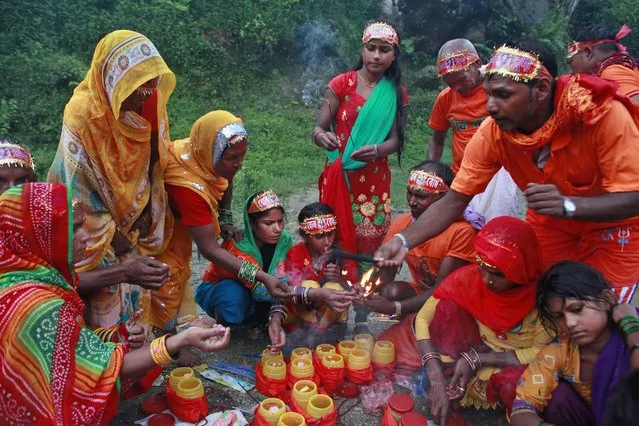
Hindu devotees perform rituals during the Bol Bom pilgrimage, on the outskirts of Kathmandu, Nepal, Monday, August 8, 2016. During this pilgrimage, devotees walk miles barefooted before offering water collected from Bagmati river, at the Pashupatinath temple in Katmandu. Shravan Somwar or Monday of Hindu calendar month of Shravan is considered auspicious for offering prayers to Lord Shiva, the god of destruction. (Photo by Niranjan Shrestha/AP Photo)

Hindu devotees perform rituals during the Bol Bom pilgrimage, on the outskirts of Kathmandu, Nepal, Monday, August 8, 2016. During this pilgrimage, devotees walk miles barefooted before offering water collected from Bagmati river, at the Pashupatinath temple in Katmandu. Shravan Somwar or Monday of Hindu calendar month of Shravan is considered auspicious for offering prayers to Lord Shiva, the god of destruction. (Photo by Niranjan Shrestha/AP Photo)
Details
09 Aug 2016 12:42:00
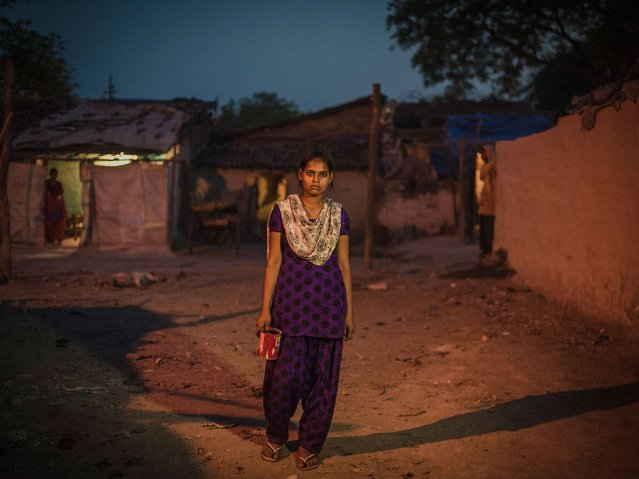
Some 300 girls and women in India still practise open defecation. Over half the country’s population, 800 million people, do not have access to a toilet that meets basic standards. (Photo by Poulomi Basu/WaterAid)

Some 300 girls and women in India still practise open defecation. Over half the country’s population, 800 million people, do not have access to a toilet that meets basic standards. (Photo by Poulomi Basu/WaterAid)
Details
24 Jun 2014 12:01:00