Loading...
Done
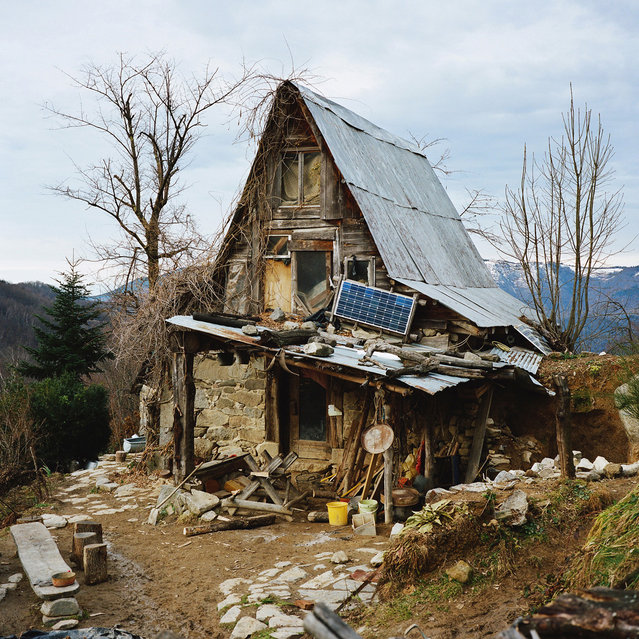
This property in the French Pyrenees is owned by a German man, who moved with his family here 25 years ago. He has since renovated the shack to be a completely self-sufficient house. There are no electrical appliances, but the solar panel powers small lights in the house. (Photo by Antoine Bruy)

Back in 2010, French photographer Antoine Bruy began hitchhiking around Europe without any fixed route. Along his travels, he met people who had entirely abandoned city life in favour of an isolated country existence they found more fulfilling. Bruy began seeking out people who lived off-the-grid. After three years on the road, staying in makeshift houses and on community farms, he has released Scrublands, a documentation of the lifestyle. While each living situation is different, Bruy found that all the people he met shared a common desire to escape the rat race and achieve a quieter life in harmony with nature. (Photo by Antoine Bruy)
Details
13 Aug 2014 09:45:00
Sue Bunclark, 40, from Rotherham poses for a photograph besides her 1964 first generation or T1, split-screen Volkswagen Transporter Samba van in Newquay on August 6, 2014 in Cornwall, England. The van, which she and her family have owned for five years is nicknamed Sammy. (Photo by Matt Cardy/Getty Images)

Sue Bunclark, 40, from Rotherham poses for a photograph besides her 1964 first generation or T1, split-screen Volkswagen Transporter Samba van in Newquay on August 6, 2014 in Cornwall, England. The van, which she and her family have owned for five years is nicknamed Sammy. The Volkswagen Transporter was first produced in 1950 and has sold over ten million units worldwide evolving through five generations of functional and practical body styles, each representing the ultimate multi-purpose vehicle of its time. To commemorate the model's 60th anniversary in the UK Volkswagen has launched a special edition of the Transporter dubbed the Sportline 60. (Photo by Matt Cardy/Getty Images)
Details
15 Aug 2014 08:58:00
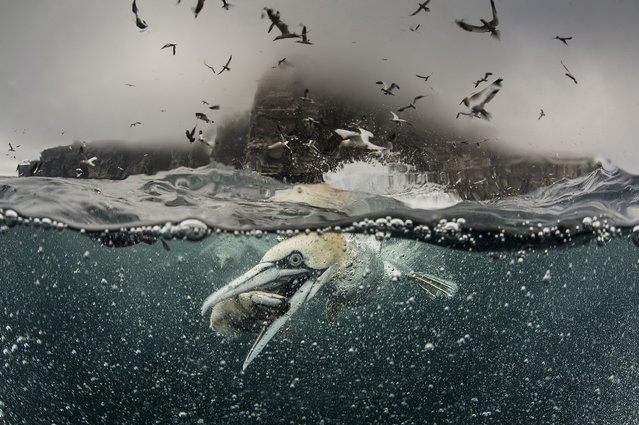
A gannet grabs a fish by its beak, 2014, in Shetland, Scotland. Hundreds of gannets crash into the sea in search of food – leaving a trail of air bubbles in their wake. Richard Shucksmith, 41, on the Shetland Isles, Scotland captured the remarkable scene as he took a boat to feed the large colony of seabirds that nested on the cliffs. The photographer has taken images of the gannets every summer for the last three years as the birds gather on the cliffs to breed. (Photo by Richard Shucksmith/Barcroft media)

A gannet grabs a fish by its beak, 2014, in Shetland, Scotland. Hundreds of gannets crash into the sea in search of food – leaving a trail of air bubbles in their wake. Richard Shucksmith, 41, on the Shetland Isles, Scotland captured the remarkable scene as he took a boat to feed the large colony of seabirds that nested on the cliffs. The photographer has taken images of the gannets every summer for the last three years as the birds gather on the cliffs to breed. (Photo by Richard Shucksmith/Barcroft media)
Details
26 Sep 2014 13:54:00
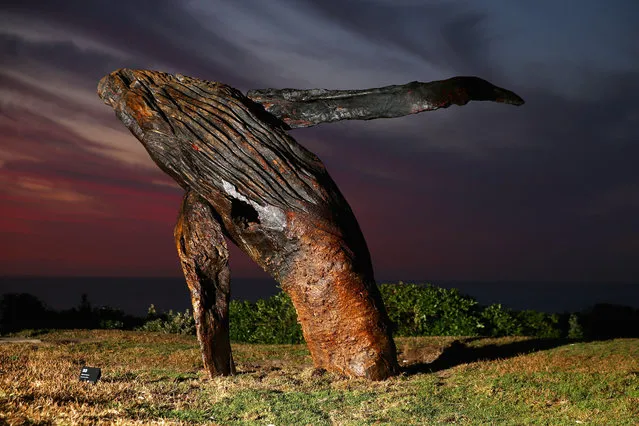
The annual Sculpture by the Sea exhibition in Sydney features dozens of sculptures on Bondi and Tamarama beaches and along the coastal path between them. The free outdoor exhibition, now in its 18th year, stretches for 2km along the coastline and includes work by artists from 16 countries. It runs from 23 October to 9 November 2014. Here: “Breaching” by Michael Greve is displayed during the 2014 Sculptures by the Sea exhibition at Marks Park on October 23, 2014 in Sydney, Australia. (Photo by Cameron Spencer/Getty Images)

The annual Sculpture by the Sea exhibition in Sydney features dozens of sculptures on Bondi and Tamarama beaches and along the coastal path between them. The free outdoor exhibition, now in its 18th year, stretches for 2km along the coastline and includes work by artists from 16 countries. It runs from 23 October to 9 November 2014. Here: “Breaching” by Michael Greve is displayed during the 2014 Sculptures by the Sea exhibition at Marks Park on October 23, 2014 in Sydney, Australia. (Photo by Cameron Spencer/Getty Images)
Details
24 Oct 2014 12:53:00
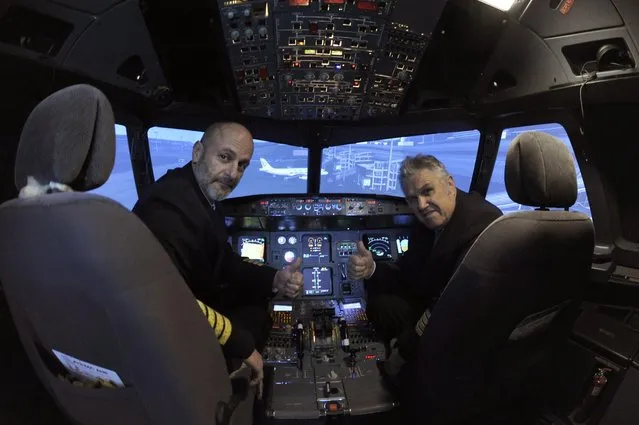
Igor Perne (L), 53, an electronic engineer and a member of the International Virtual Aviation Organisation (IVAO), and fellow virtual pilot Franc Lavric gesture for the camera before taking off on a virtual flight in a flight simulator in Nova Vas, Slovenia November 13, 2014. In 2011, Perne, a lifelong flying enthusiast, bought parts of a written-off Cyprus Airways airliner and then spent two and a half years turning the entire nose of the scrapped aircraft into an elaborate flight simulator. (Photo by Srdjan Zivulovic/Reuters)

Igor Perne (L), 53, an electronic engineer and a member of the International Virtual Aviation Organisation (IVAO), and fellow virtual pilot Franc Lavric gesture for the camera before taking off on a virtual flight in a flight simulator in Nova Vas, Slovenia November 13, 2014. In 2011, Perne, a lifelong flying enthusiast, bought parts of a written-off Cyprus Airways airliner and then spent two and a half years turning the entire nose of the scrapped aircraft into an elaborate flight simulator. (Photo by Srdjan Zivulovic/Reuters)
Details
16 Nov 2014 12:07:00
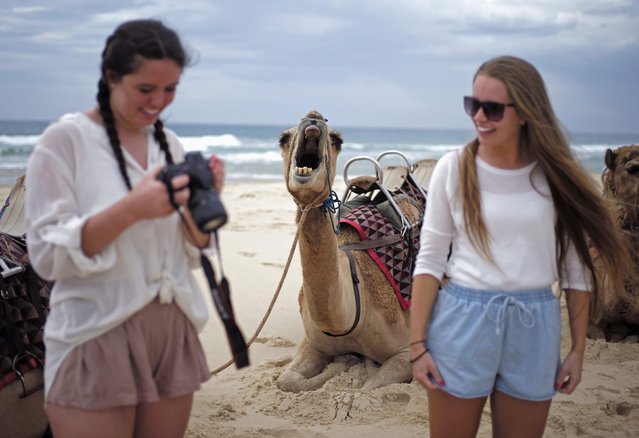
A camel yawns as a tourist checks images on her camera following a ride on a camel safari alongside the Pacific Ocean on Lighthouse Beach, north of Sydney, December 4, 2014. For 25 years camel rides on this beach have given visitors to Australia's holiday coast a rare experience available only in a handful of locations in the country. (Photo by Jason Reed/Reuters)

A camel yawns as a tourist checks images on her camera following a ride on a camel safari alongside the Pacific Ocean on Lighthouse Beach, north of Sydney, December 4, 2014. For 25 years camel rides on this beach have given visitors to Australia's holiday coast a rare experience available only in a handful of locations in the country. Australia's long history with the “ships of the desert” goes back to the 1800s when they were imported from Afghanistan and India for use as transportation across Australia's vast deserts before being released into the wild following their replacement by motorised transport. (Photo by Jason Reed/Reuters)
Details
06 Dec 2014 12:48:00
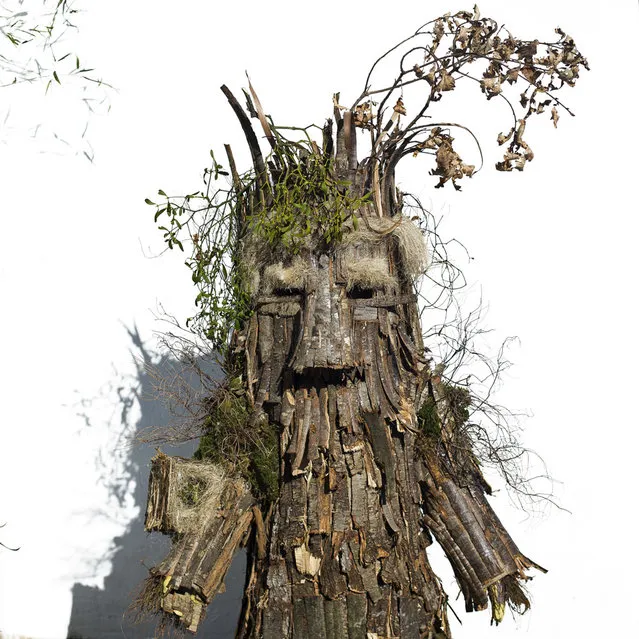
A man dressed as a  “Trapajon”, representing entities of nature, poses for a picture after taking part in the Vijanera Festival in Silio, northern Spain, Sunday, Jan. 6, 2013. The Vijanera masquerade, of pre-Roman origin, is the first carnival of the year in Europe symbolizing the triumph of good over evil and involving the participation of crowds of residents wearing different masks, animal skins and brightly colored clothing with its own complex function and symbolism and becoming the living example of the survival of archaic cults to nature. (Photo by Daniel Ochoa de Olza/AP Photo)

A man dressed as a “Trapajon”, representing entities of nature, poses for a picture after taking part in the Vijanera Festival in Silio, northern Spain, Sunday, Jan. 6, 2013. The Vijanera masquerade, of pre-Roman origin, is the first carnival of the year in Europe symbolizing the triumph of good over evil and involving the participation of crowds of residents wearing different masks, animal skins and brightly colored clothing with its own complex function and symbolism and becoming the living example of the survival of archaic cults to nature. (Photo by Daniel Ochoa de Olza/AP Photo)
Details
19 Jan 2013 13:01:00
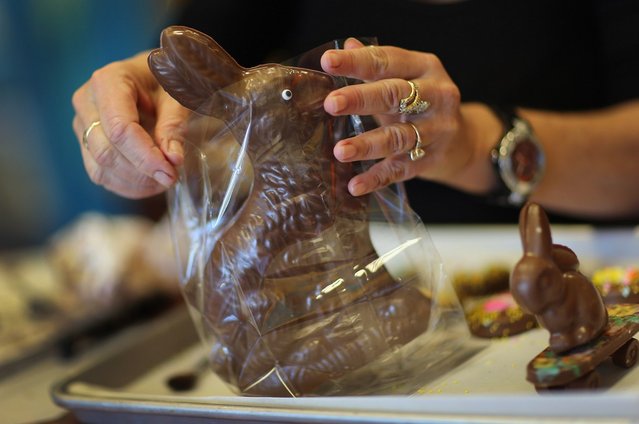
Darlene Eddy packages up a chocolate Easter bunny that she made in her store Amazing Chocolates on March 28, 2013 in Hollywood, Florida. As Easter Sunday approaches chocolatiers are busy manufacturing many different types of delights for the holiday when Americans spend roughly $1.9 billion on Easter candy, second only to Halloween in candy consumption. Around ninety million chocolate Easter bunnies are produced each year, from white to dark chocolate, and with an unlimited varieties of styles. (Photo by Joe Raedle)

Darlene Eddy packages up a chocolate Easter bunny that she made in her store Amazing Chocolates on March 28, 2013 in Hollywood, Florida. As Easter Sunday approaches chocolatiers are busy manufacturing many different types of delights for the holiday when Americans spend roughly $1.9 billion on Easter candy, second only to Halloween in candy consumption. Around ninety million chocolate Easter bunnies are produced each year, from white to dark chocolate, and with an unlimited varieties of styles. (Photo by Joe Raedle)
Details
29 Mar 2013 12:39:00