Loading...
Done
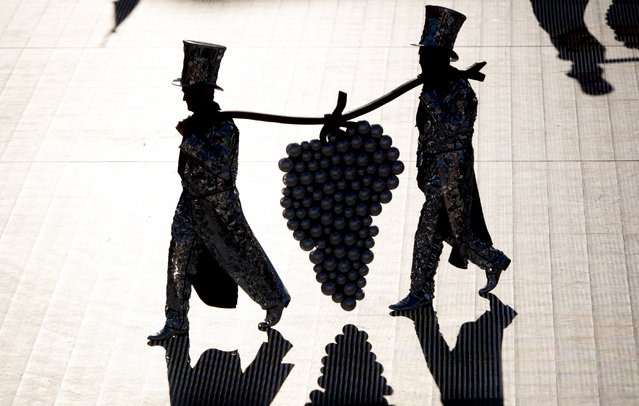
Extras in the arena of the “Fete des Vignerons” (winegrowers' festival in French), during the last rehearsal in Vevey, Switzerland, 17 July 2019. Organized by the brotherhood of winegrowers, the event will celebrate winemaking from 18 July to 11 August. The arena has a capacity of 20,000 spectators and hosts a giant central LED floor of approximately 800 square meters. (Photo by Laurent Gilliéron/EPA/EFE)

Extras in the arena of the “Fete des Vignerons” (winegrowers' festival in French), during the last rehearsal in Vevey, Switzerland, 17 July 2019. Organized by the brotherhood of winegrowers, the event will celebrate winemaking from 18 July to 11 August. The arena has a capacity of 20,000 spectators and hosts a giant central LED floor of approximately 800 square meters. (Photo by Laurent Gilliéron/EPA/EFE)
Details
19 Jul 2019 00:03:00
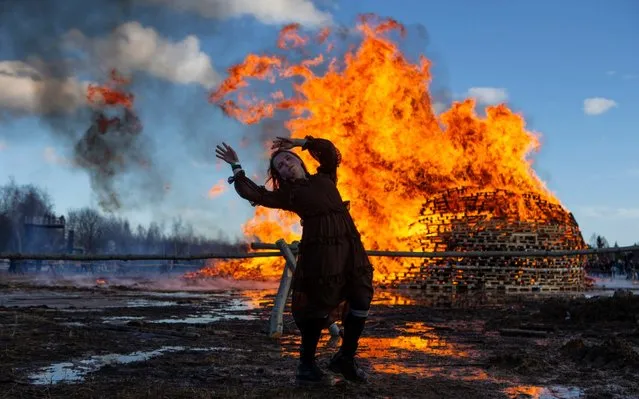
In this photo taken on Saturday, March 9, 2019, a visitor dances in front of a sculpture burning at the Maslenitsa (Shrovetide) festival at the Nikola-Lenivets art park in Nikola-Lenivets village, about 200 kilometers (125 miles) south-west of Moscow, Russia. As part of the celebrations of Maslenitsa (Shrovetide) Holiday in Russian, a folk holiday which heralds the beginning of spring, contemporary artist and park founder Nikolay Polissky built a giant sculpture made of wood and hay which was burnt to ashes during a traditional bonfire. (Photo by Alexander Zemlianichenko Jr./AP Photo)

In this photo taken on Saturday, March 9, 2019, a visitor dances in front of a sculpture burning at the Maslenitsa (Shrovetide) festival at the Nikola-Lenivets art park in Nikola-Lenivets village, about 200 kilometers (125 miles) south-west of Moscow, Russia. As part of the celebrations of Maslenitsa (Shrovetide) Holiday in Russian, a folk holiday which heralds the beginning of spring, contemporary artist and park founder Nikolay Polissky built a giant sculpture made of wood and hay which was burnt to ashes during a traditional bonfire. (Photo by Alexander Zemlianichenko Jr./AP Photo)
Details
27 Jul 2019 00:01:00
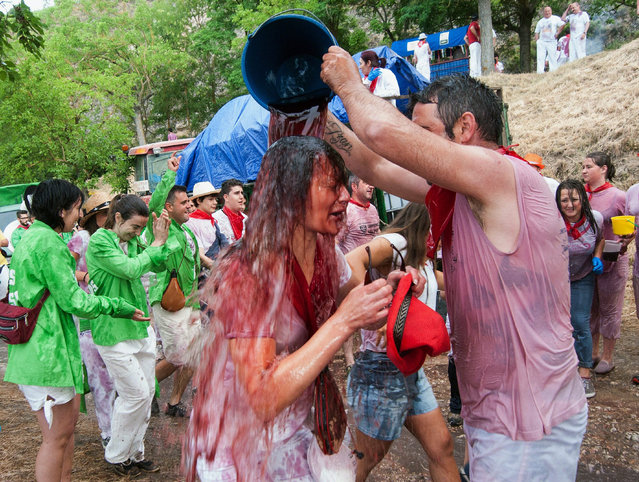
People pour wine at each other during the traditional “Battle of Wine” held as part of the Haro Wine Festival in the La Rioja region in Haro, Spain, 29 June 2016. Every year on 29 June inhabitants and tourists celebrate San Pedro's day by trowing at each other thousands of liters of Riojan wine. (Photo by Abel Alonso/EPA)

People pour wine at each other during the traditional “Battle of Wine” held as part of the Haro Wine Festival in the La Rioja region in Haro, Spain, 29 June 2016. Every year on 29 June inhabitants and tourists celebrate San Pedro's day by trowing at each other thousands of liters of Riojan wine. (Photo by Abel Alonso/EPA)
Details
30 Jun 2016 11:51:00
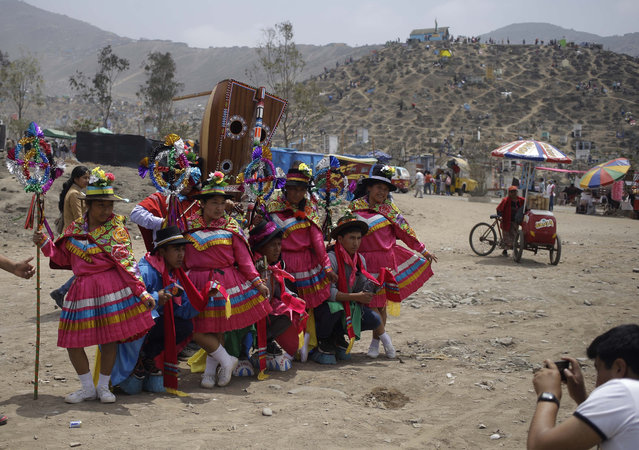
A group of dancers pose for a photo before their performance at the Nueva Esperanza cemetery in the shantytown Villa Maria, in Lima, Peru, Tuesday, November 1, 2016, as part of the Day of the Dead festivities. The holiday honors the deceased and coincides with All Saints Day, and All Souls Day celebrated on Nov. 1 and 2. Dancing, drinking alcohol, and eating with the deceased are part of Day of the Dead celebrations. (Photo by Martin Mejia/AP Photo)

A group of dancers pose for a photo before their performance at the Nueva Esperanza cemetery in the shantytown Villa Maria, in Lima, Peru, Tuesday, November 1, 2016, as part of the Day of the Dead festivities. The holiday honors the deceased and coincides with All Saints Day, and All Souls Day celebrated on Nov. 1 and 2. Dancing, drinking alcohol, and eating with the deceased are part of Day of the Dead celebrations. (Photo by Martin Mejia/AP Photo)
Details
02 Nov 2016 11:56:00
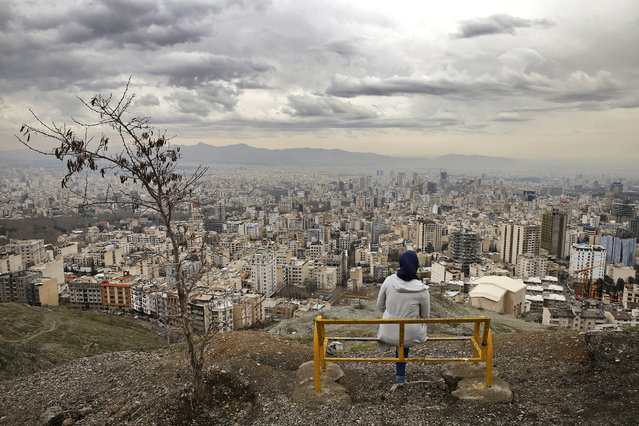
A woman spends her time outdoors to observe the ancient festival of Sizdeh Bedar, an annual public picnic day on the 13th day of the Iranian new year, at the Tochal mountainous area northern Tehran, Iran, Sunday, April, 2, 2017. Sizdeh Bedar, which comes from the Farsi words for “thirteen” and “day out”, is a legacy from Iran's pre-Islamic past that hard-liners in the Islamic Republic never managed to erase from calendars. (Photo by Ebrahim Noroozi/AP Photo)

A woman spends her time outdoors to observe the ancient festival of Sizdeh Bedar, an annual public picnic day on the 13th day of the Iranian new year, at the Tochal mountainous area northern Tehran, Iran, Sunday, April, 2, 2017. Sizdeh Bedar, which comes from the Farsi words for “thirteen” and “day out”, is a legacy from Iran's pre-Islamic past that hard-liners in the Islamic Republic never managed to erase from calendars. (Photo by Ebrahim Noroozi/AP Photo)
Details
21 Apr 2017 07:38:00
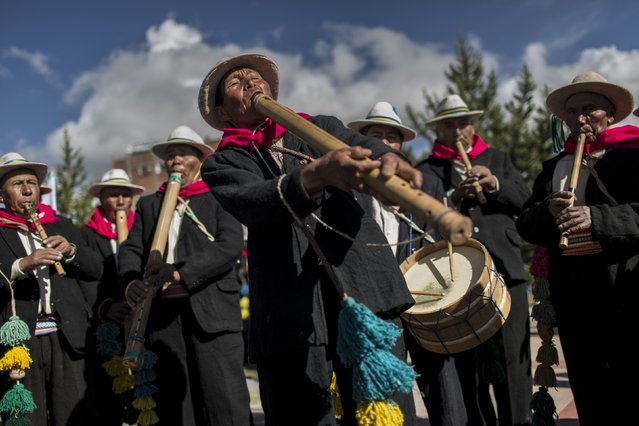
In this January 29, 2017 photo, musicians perform for dancers on the shores of Lake Titicaca, as they practice before their presentation for the Virgin of Candelaria celebrations in Puno, Peru. Dancers in colorful masks and elaborate costume celebrate the Virgin of Candelaria, patron saint of communities along the shore of Lake Titicaca, in what's considered the largest Catholic festival in the Andes. (Photo by Rodrigo Abd/AP Photo)

In this January 29, 2017 photo, musicians perform for dancers on the shores of Lake Titicaca, as they practice before their presentation for the Virgin of Candelaria celebrations in Puno, Peru. Dancers in colorful masks and elaborate costume celebrate the Virgin of Candelaria, patron saint of communities along the shore of Lake Titicaca, in what's considered the largest Catholic festival in the Andes. (Photo by Rodrigo Abd/AP Photo)
Details
03 Feb 2017 06:50:00
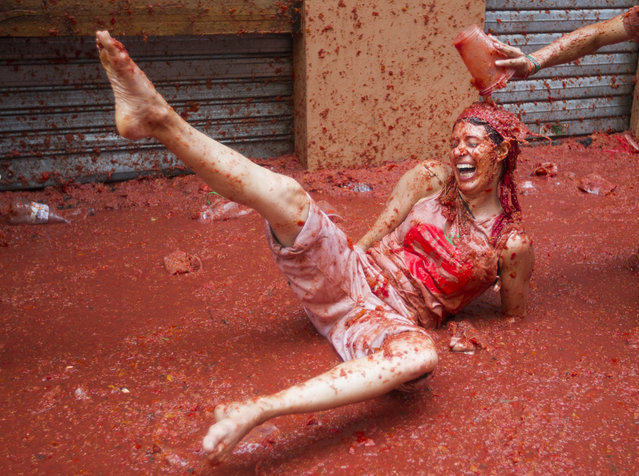
A reveller covered in tomato pulp takes part in the annual “Tomatina” festival in the eastern town of Bunol, on August 30, 2017. The iconic fiesta – which celebrates its 72nd anniversary and is billed at “the world's biggest food fight” – has become a major draw for foreigners, in particular from Britain, Japan and the United States. (Photo by Jaime Reina/AFP Photo)

A reveller covered in tomato pulp takes part in the annual “Tomatina” festival in the eastern town of Bunol, on August 30, 2017. The iconic fiesta – which celebrates its 72nd anniversary and is billed at “the world's biggest food fight” – has become a major draw for foreigners, in particular from Britain, Japan and the United States. (Photo by Jaime Reina/AFP Photo)
Details
31 Aug 2017 10:11:00
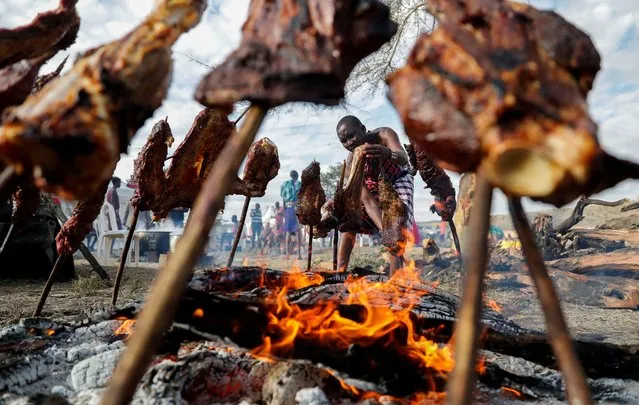
David Pariken 46, of the indigenous Maasai community, roasts meat at the inaugural Maa Cultural Week dubbed The Maa-Festival aimed to promote peace, tourism, and cultural exchange as the wildebeests (Connochaetes taurinus) make their annual cross border migration at the Sekenani village, in the Maasai Mara National Reserve, in Narok County, Kenya on August 22, 2023. (Photo by Thomas Mukoya/Reuters)

David Pariken 46, of the indigenous Maasai community, roasts meat at the inaugural Maa Cultural Week dubbed The Maa-Festival aimed to promote peace, tourism, and cultural exchange as the wildebeests (Connochaetes taurinus) make their annual cross border migration at the Sekenani village, in the Maasai Mara National Reserve, in Narok County, Kenya on August 22, 2023. (Photo by Thomas Mukoya/Reuters)
Details
07 Sep 2023 02:53:00