Loading...
Done
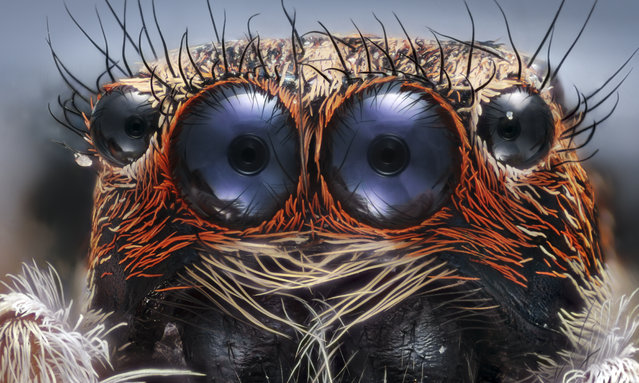
Honorable Mention by Emre Can Alagöz, Istanbul, Turkey: The eyes of a jumping spider, magnified 6x. (Photo by Emre Can Alagöz/2017 Nikon Small World Photomicrography Competition)

A competition, now in its 43rd year, dedicated to showcasing the beautiful and bizarre as seen under a light microscope attracted over 2,000 entries from 88 countries. Here: Honorable Mention by Emre Can Alagöz, Istanbul, Turkey: The eyes of a jumping spider, magnified 6x. (Photo by Emre Can Alagöz/2017 Nikon Small World Photomicrography Competition)
Details
09 Oct 2017 07:52:00
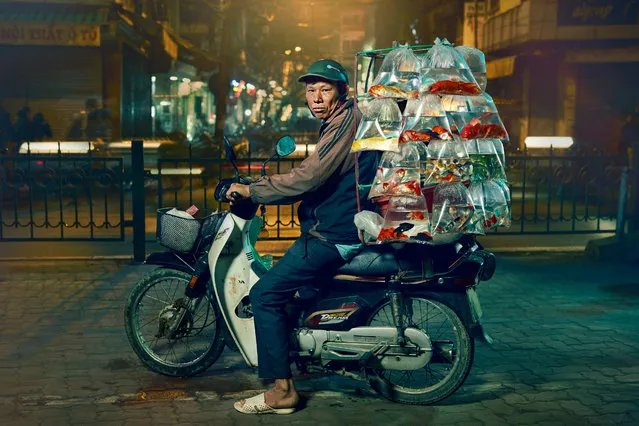
Live fish. Vietnam has the highest number of motorbikes in all of south-east Asia – Hanoi alone has 5m of them, and only half a million cars. Now the city is planning to ban them by 2030 to cut pollution. (Photo by Jon Enoch/The Guardian)

From footballs to live fish, delivery mopeds piled high with unwieldy, unlikely goods are one of the Vietnamese capital’s most distinctive sights. As the city plans to ban motorbikes altogether, photographer Jon Enoch captured the drivers at work. (Photo by Jon Enoch/The Guardian)

Details
11 May 2019 00:05:00
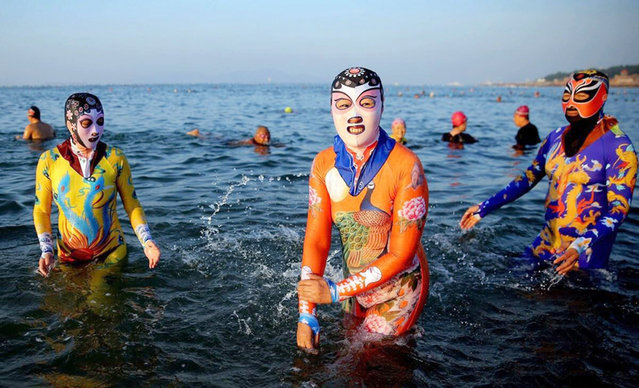
Zhang Shifan's sixth-generation facekinis in Shandong Province, Qingdao, East China. (Photo by CEN)

Zhang Shifan's sixth-generation facekinis in Shandong Province, Qingdao, East China. A woman credited with inventing the bizarre swimwear known as the “facekini” has now proudly presented the sixth generation of the iconic beach clothing. The new facekini models are not only more comfortable, they also come in a wider variety of colours and patterns, bringing both style and practicality to beach-goers in Qingdao City, in East China's Shandong Province, who fear tan lines. (Photo by CEN)
Details
02 Sep 2016 13:29:00
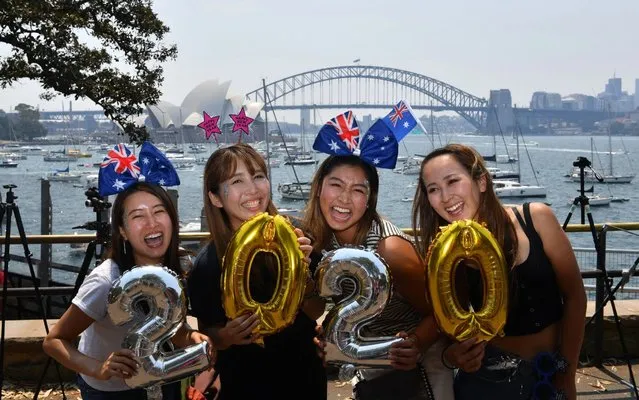
New Year's Eve revellers from Asia with Australian flags and balloons in the shape of the new year 2020 in Sydney, Australia on December 31, 2019. (Photo by Richard Milnes/Rex Features/Shutterstock)

New Year's Eve revellers from Asia with Australian flags and balloons in the shape of the new year 2020 in Sydney, Australia on December 31, 2019. (Photo by Richard Milnes/Rex Features/Shutterstock)
Details
01 Jan 2020 00:07:00
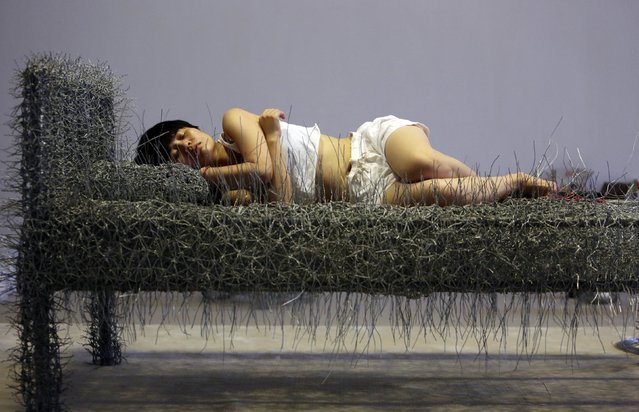
Chinese artist Zhou Jie takes a nap on an unfinished iron wire bed, one of her sculpture works, after lunch at Beijing Now Art Gallery, in Beijing August 11, 2014. Zhou started her art project titled “36 Days” on August 9, in which she would live inside an exhibition hall with an unfinished iron wire bed, some iron wire sculptures in the shape of stuffed animal dolls, a certain amount of food and her mobile phone, for 36 days. (Photo by Jason Lee/Reuters)

Chinese artist Zhou Jie takes a nap on an unfinished iron wire bed, one of her sculpture works, after lunch at Beijing Now Art Gallery, in Beijing August 11, 2014. Zhou started her art project titled “36 Days” on August 9, in which she would live inside an exhibition hall with an unfinished iron wire bed, some iron wire sculptures in the shape of stuffed animal dolls, a certain amount of food and her mobile phone, for 36 days. The entire process is open to visitors and she may also interact with them, according to Zhou. (Photo by Jason Lee/Reuters)
Details
22 Aug 2014 12:04:00
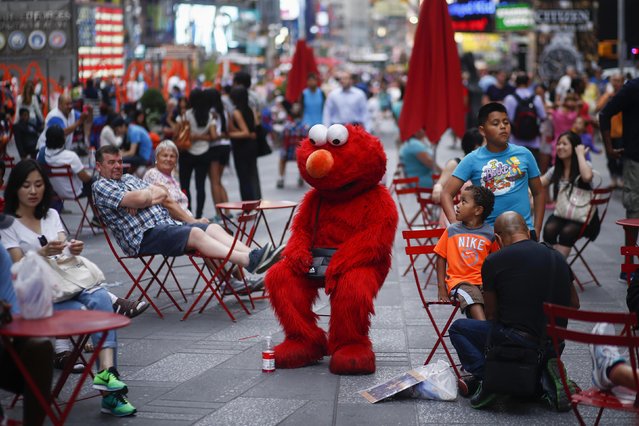
Jorge, an immigrant from Mexico, dressed as the Sesame Street character Elmo rests in Times Square, New York July 29, 2014.  Elmo and Cookie Monster have long delighted young viewers on TV's “Sesame Street”, but the recent antics of New York street performers dressed as the beloved characters have drawn the ire of city officials and now the show's producers. (Photo by Eduardo Munoz/Reuters)

Jorge, an immigrant from Mexico, dressed as the Sesame Street character Elmo rests in Times Square, New York July 29, 2014. Elmo and Cookie Monster have long delighted young viewers on TV's “Sesame Street”, but the recent antics of New York street performers dressed as the beloved characters have drawn the ire of city officials and now the show's producers. Sesame Workshop, which owns the rights to Big Bird, Ernie and the assorted puppet monsters on the 45-year-old program, said on July 29, 2014 it was drafting plans to stop performers who dress up as the characters from appearing in Times Square, where they pose for photos with tourists and then demand tips. (Photo by Eduardo Munoz/Reuters)
Details
02 Aug 2014 13:25:00
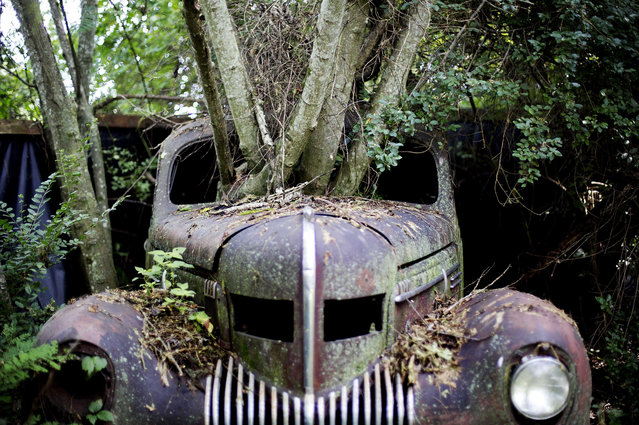
Trees grow through the windshield of a 1937 Chrysler Imperial as it sits at Old Car City, the world's largest known classic car junkyard Thursday, July 16, 2015, in White, Ga. Many of the cars have never moved in over 30 years and in some cases, trees now grow through them, even lifting some off the ground. (Photo by David Goldman/AP Photo)

Trees grow through the windshield of a 1937 Chrysler Imperial as it sits at Old Car City, the world's largest known classic car junkyard Thursday, July 16, 2015, in White, Ga. Over 4,000 classic cars decorate 32 acres of forest which have been turned into a junkyard museum by owner Walter Dean Lewis. The two grew up playing in the cars on the lot which started as a general store selling auto parts in 1931 by Lewis' parents. Lewis stopped selling parts about six years ago when he realized he could sustain the business more as a museum, charging $15 for visitors just looking, and $25 for photographers. Many of the cars have never moved in over 30 years and in some cases, trees now grow through them, even lifting some off the ground. (Photo by David Goldman/AP Photo)
Details
17 Jul 2015 13:14:00
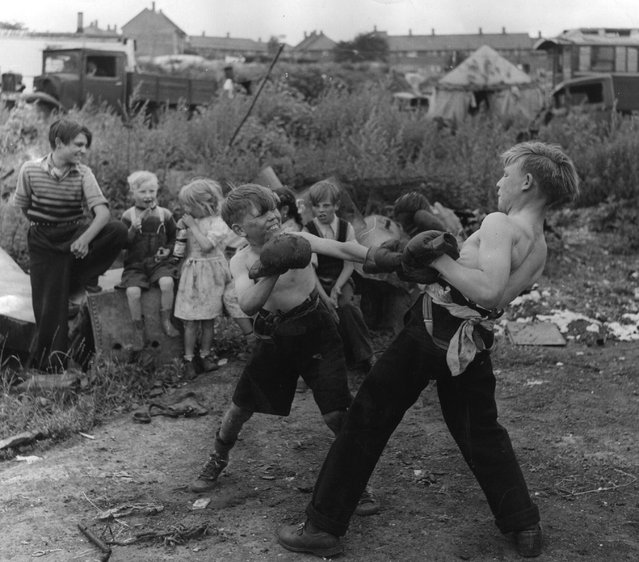
The unromantic gypsies. Children boxing in a gypsy camp in Kent, England on July 1, 1951. Like all boys these gypsy lads like to try their hand at boxing. Encouraged by their friends they fight it out on Corke's Meadow. Few Romanies now live a life of wandering romance. Most are like the three hundred squatters of Corke's Meadow, Kent, which is part of a “gypsy problem” that involves about 100,000 today. Of those about 25,000 can be rightly called gypsies, the rest are Mumpers and Posh-rats and Hobos. Corke's Meadow has both kinds. “Picture Post” cameraman Bert Hardy photographs the Corke's Meadow gypsies in their encampment. (Photo by Hulton-Deutsch Collection/Corbis via Getty Images)

The unromantic gypsies. Children boxing in a gypsy camp in Kent, England on July 1, 1951. Like all boys these gypsy lads like to try their hand at boxing. Encouraged by their friends they fight it out on Corke's Meadow. Few Romanies now live a life of wandering romance. Most are like the three hundred squatters of Corke's Meadow, Kent, which is part of a “gypsy problem” that involves about 100,000 today. Of those about 25,000 can be rightly called gypsies, the rest are Mumpers and Posh-rats and Hobos. Corke's Meadow has both kinds. “Picture Post” cameraman Bert Hardy photographs the Corke's Meadow gypsies in their encampment. (Photo by Hulton-Deutsch Collection/Corbis via Getty Images)
Details
12 Mar 2017 00:01:00