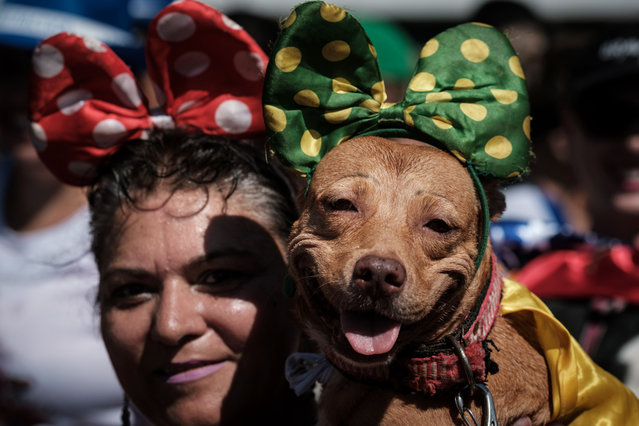
A reveller holds her dog dressed in costume, during the Rio Dog Carnival, known as the Blocao – with “bloco” meaning street party and “cao” dog, during pre- carnival celebrations at Copacabana beach in Rio de Janeiro, Brazil, on February 19, 2017. (Photo by Yasuyoshi Chiba/AFP Photo)
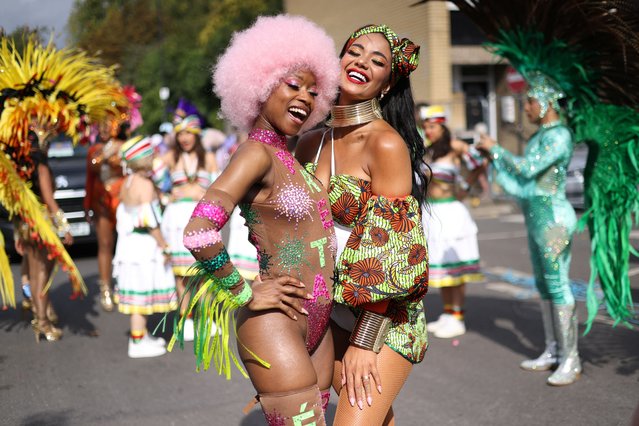
A reveler attends the “Volta, Alice” celebrations before Rio Carnival, in Rio de Janeiro, Brazil, 17 February 2019. The Carnival in Rio de Janeiro runs from 02 to 09 March 2019. (Photo by António Lacerda/EPA/EFE)
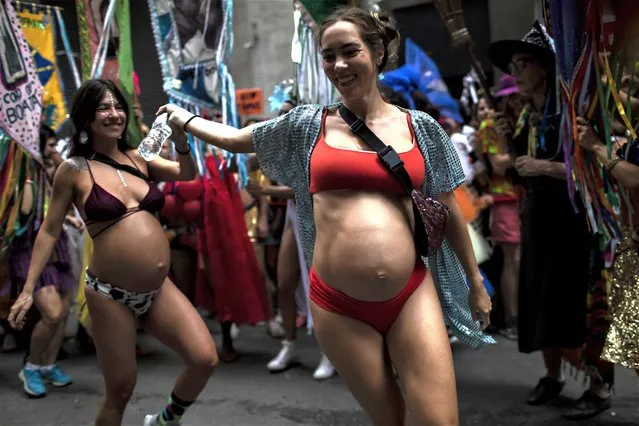
Pregnant revelers dance during a street pre-carnival party by the “Cordao do Boitata” Block, in Rio de Janeiro, Brazil, Sunday, February 12, 2023. Revelers are taking to the streets for the open-air block parties, leading up to Carnival's official Feb. 17th opening. (Photo by Bruna Prado/AP Photo)
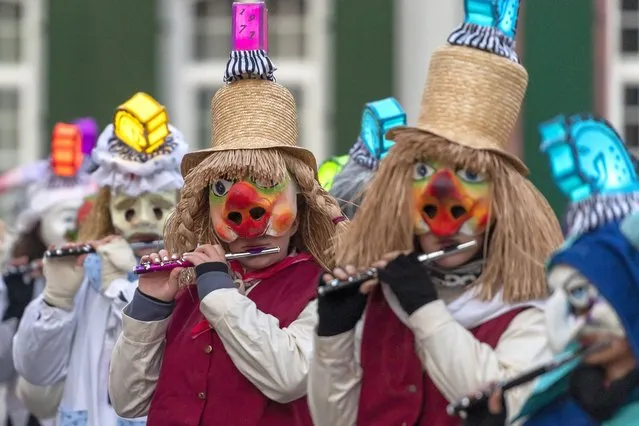
Members of carnival marching bands in costumes parade through the streets during the so-called “Morgestraich” carnival parade in Basel, Switzerland, on Monday, early 07 March 2022. The traditional “Morgenstraich” parade with colorful lanterns and revelers in traditional costumes is starting early morning at 4 a.m. and marks the kick-off for the Basel carnival. It was not held in its usual form in the past two years because of the measures against the Covid-19 pandemic. (Photo by Georgios Kefalas/EPA/EFE)
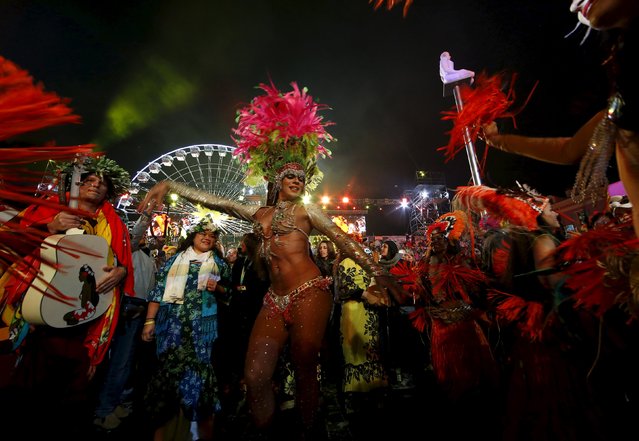
A reveller dances during “Lou Queernaval” parade, the first lesbian, gay, bisexual and transgender (LGBT) carnival in France, as part of the Carnival of Nice February 19, 2016. (Photo by Eric Gaillard/Reuters)
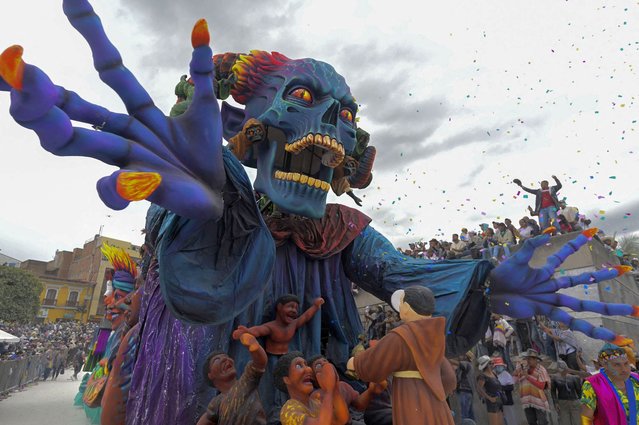
Picture of a float taking part in the “White Day” parade during the Carnival of Blacks and Whites in Pasto, Colombia on January 6, 2024. The Blacks and Whites carnival has its origins in a mix of Andean, Amazonian and Pacific cultural expressions, and it celebrates the ethnic diversity in the region and was proclaimed by UNESCO as intangible cultural heritage in 2009. (Photo by Joaquín Sarmiento/AFP Photo)