Loading...
Done
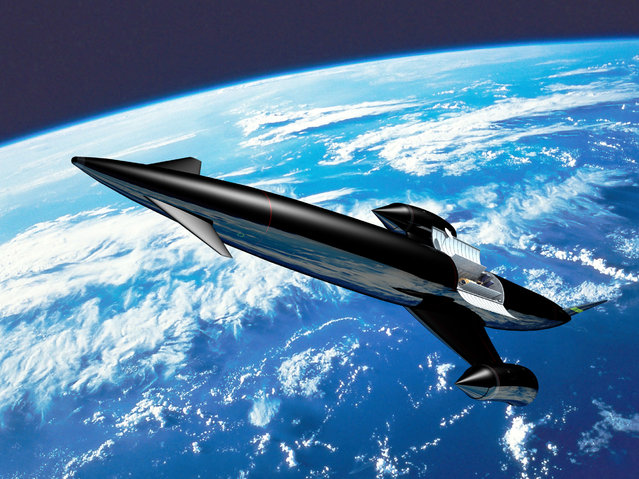
Artist's impression of Skylon. (Photo by Reaction Engines Ltd)

“A small British company with a dream of building a re-usable space plane has won an important endorsement from the European Space Agency (ESA) after completing key tests on its novel engine technology. Reaction Engines Ltd believes its Sabre engine, which would operate like a jet engine in the atmosphere and a rocket in space, could displace rockets for space access and transform air travel by bringing any destination on Earth to no more than four hours away”. – Chris Wickham via Reuters. Photo: Artist's impression of Skylon. (Photo by Reaction Engines Ltd)
Details
29 Nov 2012 10:31:00
Nuclear power station Temelin, Czech Republic. (Photo by Radek Kalhous/Caters News)

“You wouldn’t normally associate power stations with beautiful scenic shots but one photographer has traveled nearly 2000 to track down the ugliest energy plants and show them in a whole new light. Czech snapper, Radek Kalhous, uses Google Earth to find the perfect locations for his unique pictures and arrives at each site after sunset to create the atmospheric shots”. – Caters News. Photo: Nuclear power station Temelin, Czech Republic. (Photo by Radek Kalhous/Caters News)
Details
27 Jul 2014 11:30:00
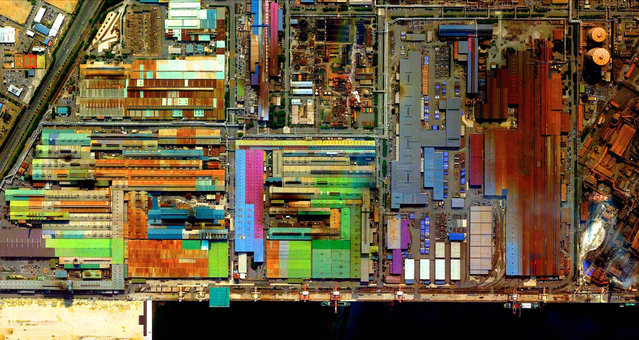
Industrial Sector, Tokai, Japan. (Photo by Benjamin Grant/Digital Globe/Caters News)

This series of pictures shot by satellite, show the man-made world as astronauts see it. Artist Benjamin Grant uses Google Earth to find the most compelling satellite images of human civilization. The stunning pictures of sprawling metropolises and vast reservoirs are sometimes unidentifiable until zoomed in. In order to find an extraordinary picture in the practically endless supply of satellite data, Benjamin focuses on the themes of current events or environmental issues. Here: Industrial Sector, Tokai, Japan. (Photo by Benjamin Grant/Digital Globe/Caters News)
Details
04 Feb 2015 12:21:00
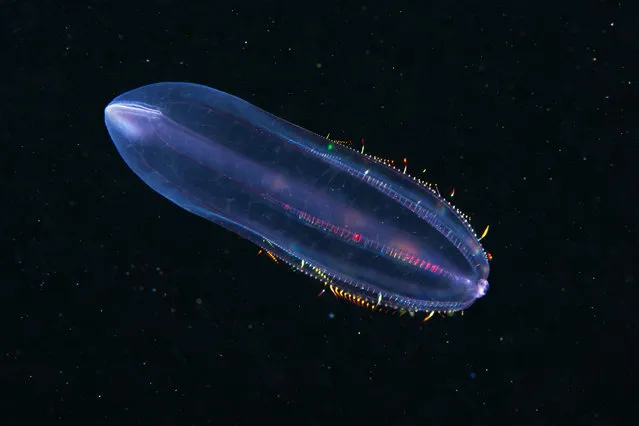
A Comb jelly – Beroe cucumis. (Photo by Alexander Semenovs/Caters News)

Underwater photographer Alexander Semenovs has snapped some of the most stunning, fragile life forms anywhere on planet Earth. Shot in deep, dark conditions, the images continue to provide an insight into what lies beneath, with glowing creatures appearing a lot like aliens in the pitch-black water. Semenovs has shot the likes of bioluminescent jellyfish, aggressive-looking worms and many species that leave a lot to the imagination. The 30-year-old from Moscow does the majority of his work in the White Sea, near the Arctic Circle. Here: A Comb jelly – Beroe cucumis. (Photo by Alexander Semenovs/Caters News)
Details
23 Nov 2015 08:06:00
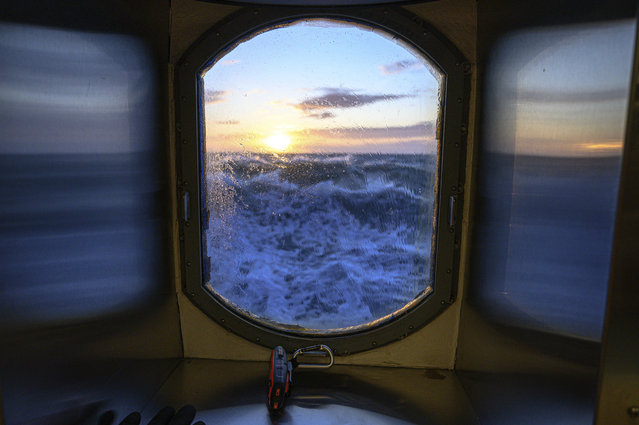
This November 8, 2019, photo provided by John Guillote shows a view from the main lab of the Sikuliaq in the Chukchi Sea. University of Washington scientists onboard the research vessel are studying the changes and how less sea ice will affect coastlines, which already are vulnerable to erosion because increased waves delivered by storms. More erosion would increase the chance of winter flooding in villages and danger to hunters in small boats. (Photo by John Guillote via AP Photo)

This November 8, 2019, photo provided by John Guillote shows a view from the main lab of the Sikuliaq in the Chukchi Sea. University of Washington scientists onboard the research vessel are studying the changes and how less sea ice will affect coastlines, which already are vulnerable to erosion because increased waves delivered by storms. More erosion would increase the chance of winter flooding in villages and danger to hunters in small boats. (Photo by John Guillote via AP Photo)
Details
26 Aug 2021 08:22:00
A pro-Palestinian demonstrator reacts as she is escorted by security personnel after scuffling with an observer, as protesters in support of Palestinians in Gaza and pro-Israel counter-protesters gather at the encampment on the campus of the University of California Los Angeles (UCLA), amid the ongoing conflict between Israel and the Palestinian Islamist group Hamas, in Los Angeles, California, U.S. April 29, 2024. (Photo by David Swanson/Reuters)

A pro-Palestinian demonstrator reacts as she is escorted by security personnel after scuffling with an observer, as protesters in support of Palestinians in Gaza and pro-Israel counter-protesters gather at the encampment on the campus of the University of California Los Angeles (UCLA), amid the ongoing conflict between Israel and the Palestinian Islamist group Hamas, in Los Angeles, California, U.S. April 29, 2024. (Photo by David Swanson/Reuters)
Details
06 May 2024 03:59:00
Five-year-old sniffing dog “Vine” wears protection goggles against the sun and dust as he poses together with Giulia Gausemann for photographers, at the sniffing dogs school of the German Army (Bundeswehr) in Daun, Germany, July 24, 2020. The Bundeswehr sniffing dogs school and the veterinarian university of Hanover are developing a training programme to sniff out the coronavirus disease (COVID-19) with dogs at airports, border crossings and other highly frequented places. (Photo by Wolfgang Rattay/Reuters)

Five-year-old sniffing dog “Vine” wears protection goggles against the sun and dust as he poses together with Giulia Gausemann for photographers, at the sniffing dogs school of the German Army (Bundeswehr) in Daun, Germany, July 24, 2020. The Bundeswehr sniffing dogs school and the veterinarian university of Hanover are developing a training programme to sniff out the coronavirus disease (COVID-19) with dogs at airports, border crossings and other highly frequented places. (Photo by Wolfgang Rattay/Reuters)
Details
26 Jul 2020 00:01:00
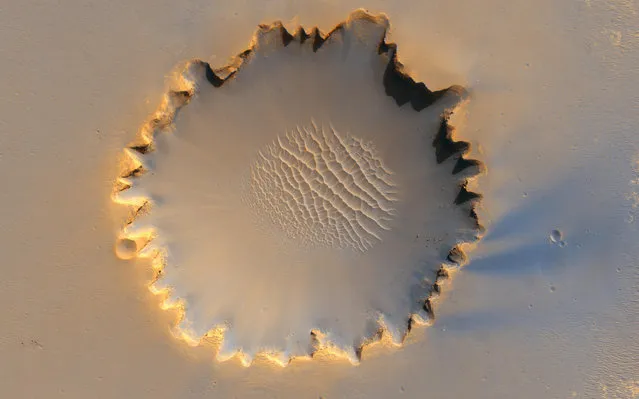
NASA's rover Opportunity visits Victoria Crater, viewed from orbit by the High Resolution Imaging Science Experiment on NASA's Mars Reconnaissance Orbiter in october of 2006. Opportunity is a small dot on the crater's lip, at top right. Opportunity first reached the crater's rim on September 27, 2006. (Photo by NASA/JPL-Caltech/University of Arizona/The Atlantic)

“NASA's Mars rover Opportunity just celebrated its ninth anniversary on Mars – a mission that was originally meant to last just 90 days...” – The Atlantic. Photo: NASA's rover Opportunity visits Victoria Crater, viewed from orbit by the High Resolution Imaging Science Experiment on NASA's Mars Reconnaissance Orbiter in october of 2006. Opportunity is a small dot on the crater's lip, at top right. Opportunity first reached the crater's rim on September 27, 2006. (Photo by NASA/JPL-Caltech/University of Arizona via The Atlantic)


Details
14 Feb 2013 10:58:00