Loading...
Done
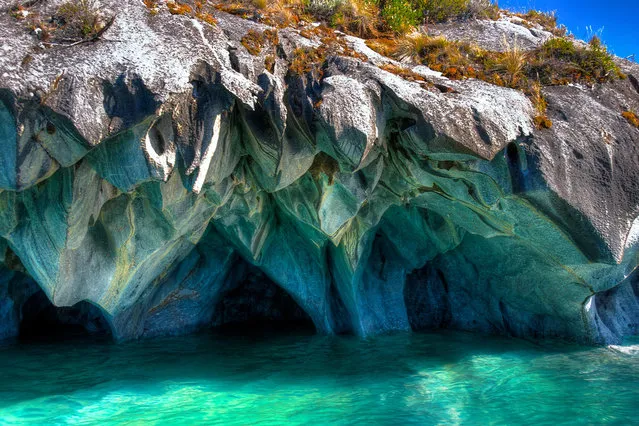
 Marble Caves, Patagonia, Chile

The Marble Caves of Patagonia, Chile, are beautiful vibrant blue caverns, partially submerged in the equally stunning turquoise waters of Carrera Lake. The lake itself is on the border of Argentina and Chile, with the caves located on the Chilean side. The caves are comprised of three main caverns: the Chapel (La Capilla), the Cathedral (El Catedral), and the Cave (La Cueva). Visitors to the caves can explore them in a small boat or kayak, but only when Carrera Lake’s waters are calm and gentle. A rare and invaluable natural wonder, the existence of these caves is currently threatened by plans to build five large dams in the area. If you visit these caves, please treat them with the utmost respect and care.
Details
15 Aug 2012 11:25:00
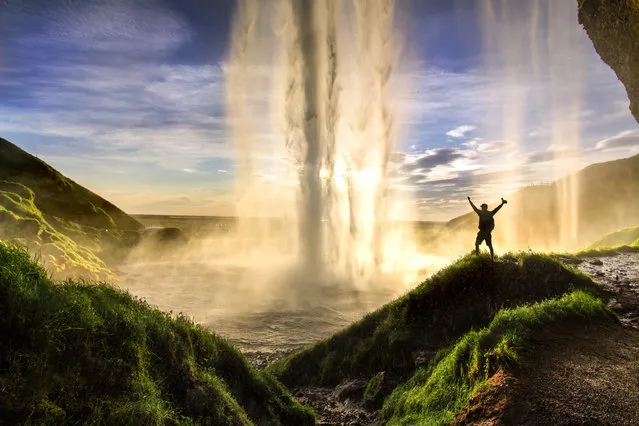
A mesmerising waterfall in the Icelandic country-side. (Photo by Arnar Kristjansson/Caters News)

These stunning pictures of beautiful Icelandic waterfalls will take your breath away. The mesmerizing shots show the striking waterfalls set against the night sky and the hypnotic green glow of the northern lights, as well as the picturesque Icelandic scenery and stunning sunrises. Here: A mesmerising waterfall in the Icelandic country-side. (Photo by Arnar Kristjansson/Caters News)
Details
01 Dec 2015 08:05:00
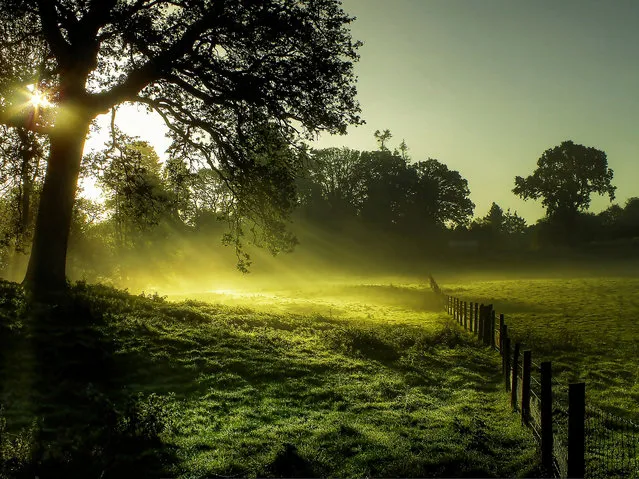
Let the light enter. (Eric Goncalves)

“I'm very lucky to be in a wonderful part of England , where the ever changing sky's are always a new opportunity for a good shot. To me photography is the art of using light to one's advantage”. – Eric Goncalves. Photo: “Let the light enter”. (Photo by Eric Goncalves)
Details
20 May 2013 11:09:00
The Luminous Lantern Parade on June 10, 2016 in Brisbane, Australia. (Photo by Glenn Hunt/Getty Images)

The Luminous Lantern Parade on June 10, 2016 in Brisbane, Australia. The Luminous Lantern Parade was held at Brisbane’s South Bank on Friday, featuring a parade of glowing animals and characters of all shapes and sizes lighting up the night sky. (Photo by Glenn Hunt/Getty Images)
Details
11 Jun 2016 12:26:00
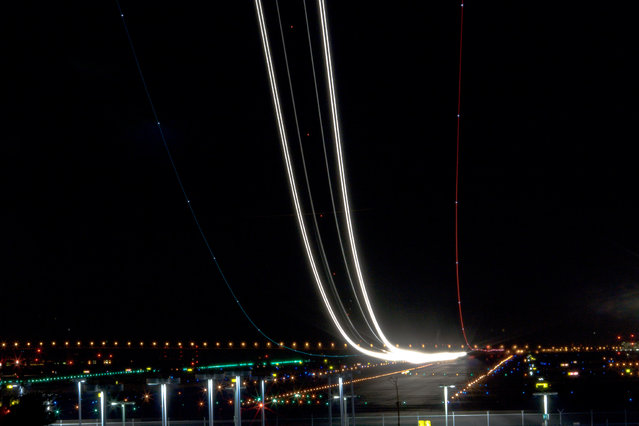
Long Exposure Airport Photos ByTerence Chang

Terence Chang's (aka exxonvaldez) long exposure photographs, capturing only streaks of light as airplanes arrive and depart from the San Francisco airport, certainly are stunning. There's just something so magical about seeing the various patterns created in the sky, even over a relatively short amount of time.
Details
08 Nov 2013 11:23:00
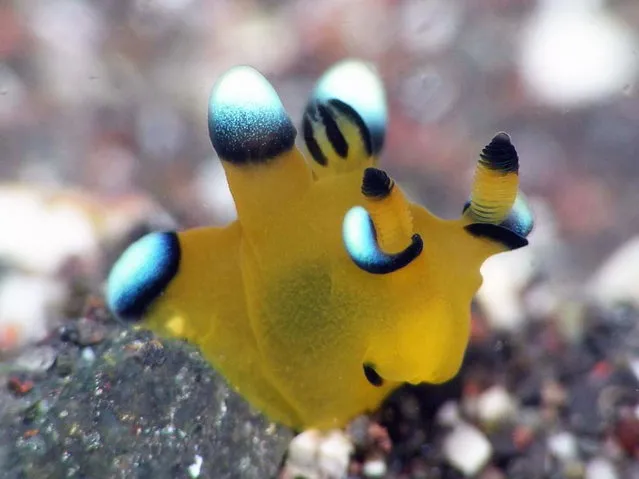
Thecacera Pacifica AKA Pikachu

If you ever wanted to meet a live Pikachu, you might have a hard time finding one. However, there is a creature on this Earth that kind of looks like one. That creature’s name is Thecacera pacifica and it is a species of a sea slug. These little critters can be found in the Indian Ocean from African coast to Indonesia and Vanuatu. Their vibrant orange and blue colors look gorgeous, making it look like some sort of anemone. Also, as you might have guessed from the striking colors of the sea slug, just like most of anemones, this creature is very toxic. Thus, keeping it as a pet isn’t an option.

Details
19 Dec 2014 12:51:00
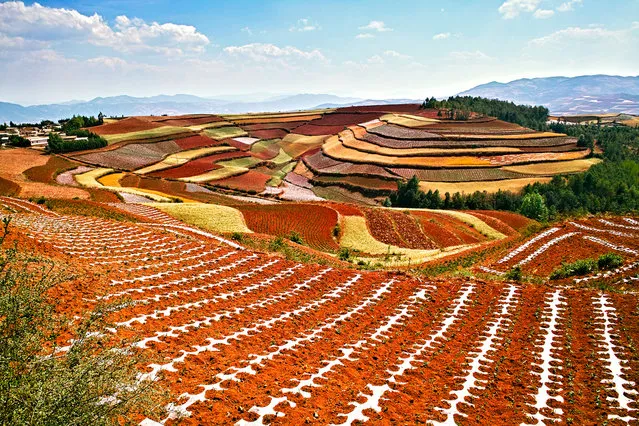
Dongchuan Red Lands, China

Dongchuan is a rural place located in the area of Wumeng Mountains. This place became one of the most favored destination spots for Chinese photographers all because of its red soil. The Wumeng’s scenery was first discovered in mid-90s. The first photographers who came here shot some award-winning photos, which made them keep the location of this place a secret. With time, however, more people found out about this place, making them want to visit these arid mountains. The contrasting red soil, yellow buckwheat, and brilliant blue skies make this place a paradise for photographers.
Details
29 Jan 2015 10:59:00
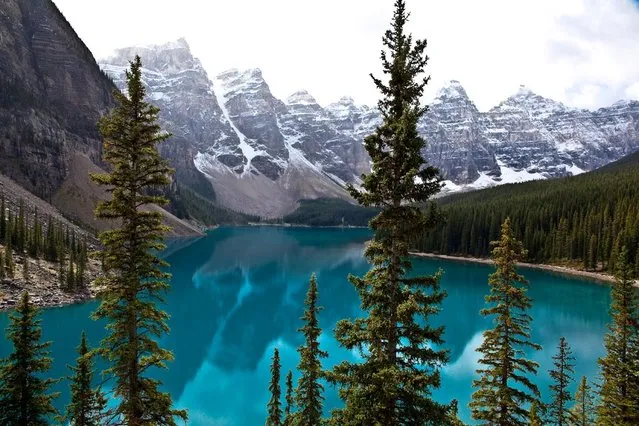
Moraine Lake Canada

Moraine Lake is a glacially-fed lake in Banff National Park, 14 kilometres (8.7 mi) outside the Village of Lake Louise, Alberta, Canada. It is situated in the Valley of the Ten Peaks, at an elevation of approximately 6,183 feet (1,885 m). The lake has a surface area of .5 square kilometres (0.19 sq mi). The lake, being glacially fed, does not reach its crest until mid to late June. When it is full, it reflects a distinct shade of blue. The colour is due to the refraction of light off the rock flour deposited in the lake on a continual basis.
Details
15 Oct 2013 11:56:00