Loading...
Done
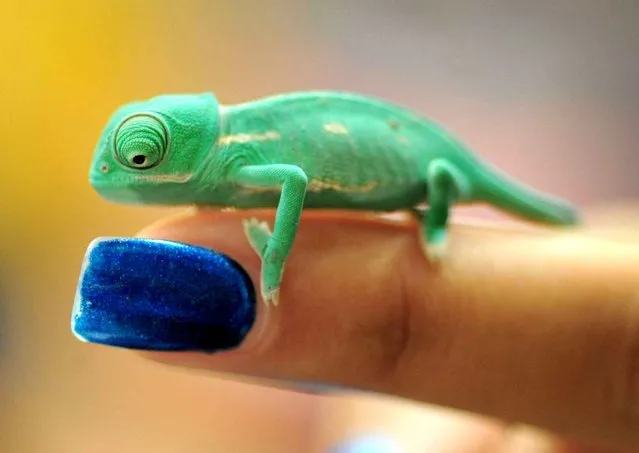
A one month old Turquoise colored Green Veiled Chameleon perches on a finger in the Cardin's Chameleons boothat Repticon 2014 Sunday, August 3, 2014 in Jacksonville, Fla. The vendor specializes in captive bred and born Veiled Chameleons and this particular specimen cost $40.00. (Photo by Bob Self/AP Photo/The Florida Times-Union)

A one month old Turquoise colored Green Veiled Chameleon perches on a finger in the Cardin's Chameleons boothat Repticon 2014 Sunday, August 3, 2014 in Jacksonville, Fla. The vendor specializes in captive bred and born Veiled Chameleons and this particular specimen cost $40.00. The Repticon reptile and Exotic Animal show made its stop in Jacksonville over Saturday and Sunday offering a variety of cold blooded critters and related supplies for sale at the University Center on the University of North Florida campus. The show, which travels nationally stops in Jacksonville several times a year according to event vendor team leader Patty Healey. (Photo by Bob Self/AP Photo/The Florida Times-Union)
Details
09 Aug 2014 11:36:00
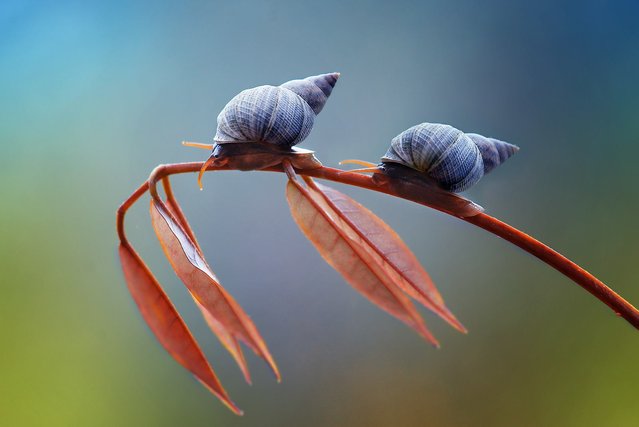
You rarely get the opportunity to get up close and personal with a tiny insect. Indonesian photographer Nordin Seruyan helps us to look past the creepy-crawlies of insects and focus on their delicate beauty. In brilliant color and sharp focus, Seruyan captures the insects in his garden. From butterflies and mantises to beetles and snails, the creatures of Southeast Asian get your full focus. (Photo by Nordin Seruyan)

You rarely get the opportunity to get up close and personal with a tiny insect. Indonesian photographer Nordin Seruyan helps us to look past the creepy-crawlies of insects and focus on their delicate beauty. In brilliant color and sharp focus, Seruyan captures the insects in his garden. From butterflies and mantises to beetles and snails, the creatures of Southeast Asian get your full focus. (Photo by Nordin Seruyan)
Details
12 May 2014 12:00:00
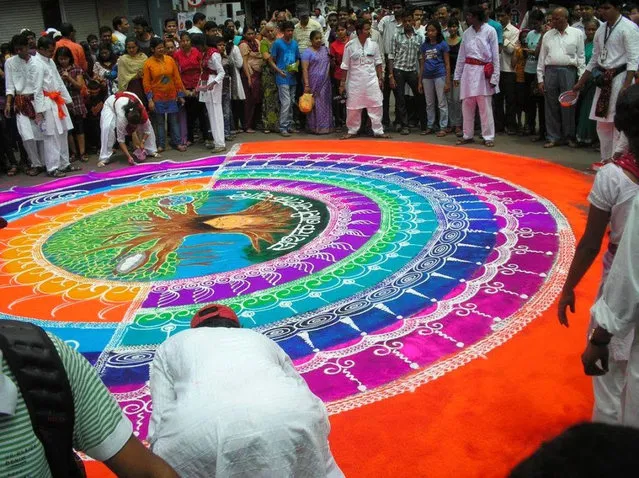
Rangoli Folk Art From India

Rangoli, also known as kolam or Muggu, is a folk art from India in which patterns are created on the floor in living rooms or courtyards using materials such as colored rice, dry flour, colored sand or flower petals. It is usually made during Diwali, Onam, Pongal and other Indian festivals. They are meant to be sacred welcoming areas for the Hindu deities. The ancient symbols have been passed down through the ages, from each generation to the next, keeping both the art form and the tradition alive. Similar practices are followed in different Indian states: in Tamil Nadu, there is Kolam in Tamil Nadu; Mandana in Rajasthan; Chaookpurna in Chhattisgarh; Alpana in West Bengal; Aripana in Bihar; Chowk pujan in Uttar Pradesh; Muggu in Andhra Pradesh and others.
Details
16 Jun 2014 10:37:00
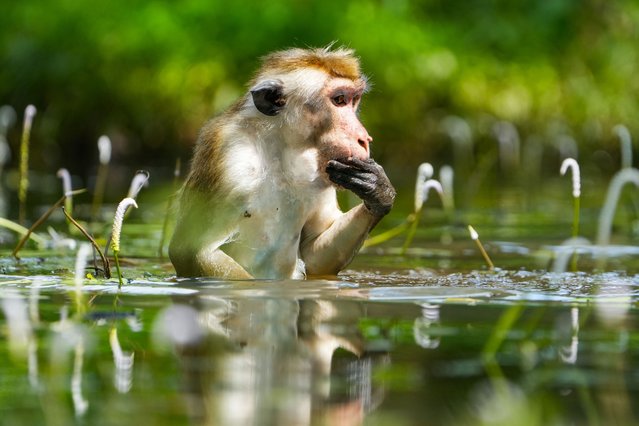
A toque macaque is eating flowers in the water at the pilgrimage site in Polonnaruwa, Sri Lanka, on January 13, 2024. The toque macaque (Macaca sinica), a reddish-brown-colored Old World monkey, is endemic to Sri Lanka, where it is known as the rilewa or rilawa. It is named for the whorl of hair at the crown of its head, which resembles a brimless toque cap. (Photo by Thilina Kaluthotage/NurPhoto/Rex Features/Shutterstock)

A toque macaque is eating flowers in the water at the pilgrimage site in Polonnaruwa, Sri Lanka, on January 13, 2024. The toque macaque (Macaca sinica), a reddish-brown-colored Old World monkey, is endemic to Sri Lanka, where it is known as the rilewa or rilawa. It is named for the whorl of hair at the crown of its head, which resembles a brimless toque cap. (Photo by Thilina Kaluthotage/NurPhoto/Rex Features/Shutterstock)
Details
10 Feb 2024 09:30:00
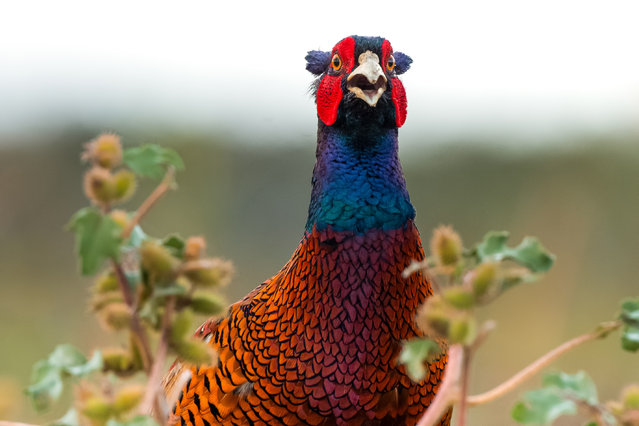
A pheasant is seen among grasses in Bursa, Turkiye on October 07, 2024. Pheasants mostly live in forested areas, thickets and wetlands. Unlike females, male pheasants have a much more remarkable structure with their long tails and feathers in bright and variable colors. Also, they feed on fruits, grains, seeds and invertebrates. (Photo by Alper Tuydes/Anadolu via Getty Images)

A pheasant is seen among grasses in Bursa, Turkiye on October 07, 2024. Pheasants mostly live in forested areas, thickets and wetlands. Unlike females, male pheasants have a much more remarkable structure with their long tails and feathers in bright and variable colors. Also, they feed on fruits, grains, seeds and invertebrates. (Photo by Alper Tuydes/Anadolu via Getty Images)
Details
27 Oct 2024 04:43:00
In this Saturday, February 16, 2019 photo, carnival revelers dressed as characters from the movie “La Casa de Papel” pose for a picture during the “Desliga da Justica” block party in Rio de Janeiro, Brazil. “Desliga” means in Portuguese to turn something off, and this street party is a parody of the Justice League. (Photo by Leo Correa/AP Photo)

In this Saturday, February 16, 2019 photo, carnival revelers dressed as characters from the movie “La Casa de Papel” pose for a picture during the “Desliga da Justica” block party in Rio de Janeiro, Brazil. “Desliga” means in Portuguese to turn something off, and this street party is a parody of the Justice League. (Photo by Leo Correa/AP Photo)
Details
24 Feb 2019 00:07:00
Revellers take part in an annual block party before Carnival in downtown Rio de Janeiro, Brazil, January 16, 2016. The Rio de Janeiro Carnival will be held from February 5 to February 9. (Photo by Pilar Olivares/Reuters)

Revellers take part in an annual block party before Carnival in downtown Rio de Janeiro, Brazil, January 16, 2016. The Rio de Janeiro Carnival will be held from February 5 to February 9. (Photo by Pilar Olivares/Reuters)
Details
19 Jan 2016 08:04:00
Arcelia Aguilar, a resident of “Hogar Jardin De Los Abuelitos”, receives a hug from her niece Maria Aguilar through “El muro de los Abrazos” (The Wall of Hugs) which is a wall made from plastic sheets to protect against the coronavirus, in San Salvador, El Salvador on September 1, 2020. (Photo by Jose Cabezas/Reuters)

Arcelia Aguilar, a resident of “Hogar Jardin De Los Abuelitos”, receives a hug from her niece Maria Aguilar through “El muro de los Abrazos” (The Wall of Hugs) which is a wall made from plastic sheets to protect against the coronavirus, in San Salvador, El Salvador on September 1, 2020. (Photo by Jose Cabezas/Reuters)
Details
03 Sep 2020 00:07:00