Loading...
Done
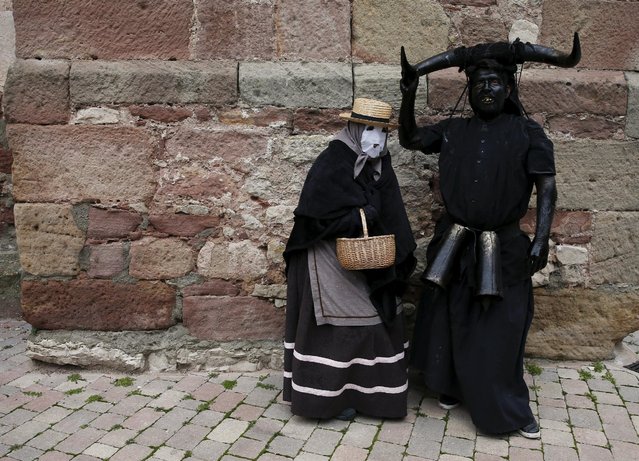
A reveller (R), dressed as “Diablos de Luzon” (Luzon Devils), stands next to a person dressed as a “Mascaritas” during carnival celebrations in the village of Luzon, Spain, February 6, 2016. (Photo by Sergio Perez/Reuters)

A reveller (R), dressed as “Diablos de Luzon” (Luzon Devils), stands next to a person dressed as a “Mascaritas” during carnival celebrations in the village of Luzon, Spain, February 6, 2016. The “Diablos” cover themselves in a mixture of soot and oil and adorn their heads with black-stained bull horns as they parade throughout the village with cowbells clanging around their waists to expel the evil spirits. (Photo by Sergio Perez/Reuters)
Details
08 Feb 2016 11:49:00
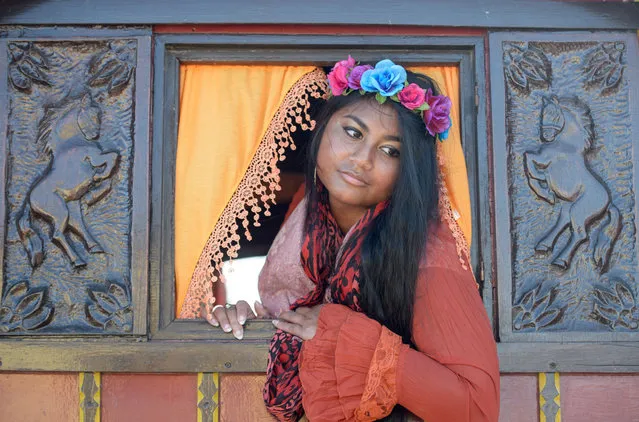
Marie Lou looks out of the window of gypsy folklore wagon on May 24, 2016 in Staintes Maries de la Mere near Arles, France. (Photo by Thomas Lohnes/Getty Images)

Marie Lou looks out of the window of gypsy folklore wagon on May 24, 2016 in Staintes Maries de la Mere near Arles, France. Gypsies from all over Europe worship “Sara the Black”, their Saint and patroness, for one week. Sara's statue is situated in the crypt of the church. She wears a multicoloured dress and will carried by the gypsies to the sea at this afternoon. (Photo by Thomas Lohnes/Getty Images)
Details
25 May 2016 13:06:00
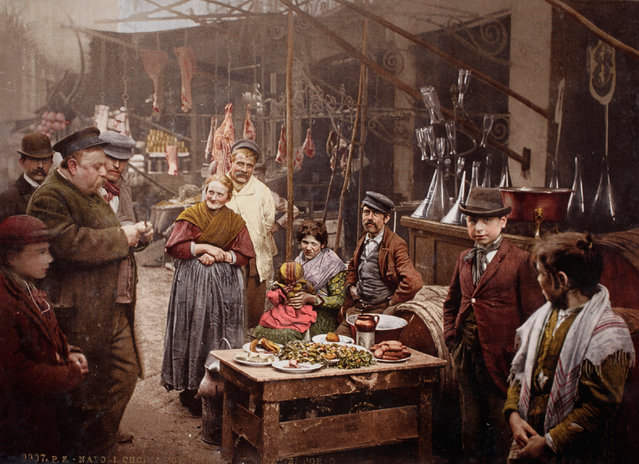
The finished photochromes were produced using at least six different tint stones, although many more were often used. Here: Street food in the Strada del Porto in Naples, Italy, 1899. (Photo by Swiss Camera Museum/The Guardian)

Photochromes are vibrant and nuanced prints hand-coloured from black-and-white negatives. Created using a process pioneered in the 1880s, these images offer a fascinating insight into the world when colour photography was still in its infancy. A Tour of the World in Photochromes is at the Swiss Camera Museum, Vevey, until 21 August. Here: Street food in the Strada del Porto in Naples, Italy, 1899. (Photo by Swiss Camera Museum/The Guardian)
Details
07 Jul 2016 10:56:00
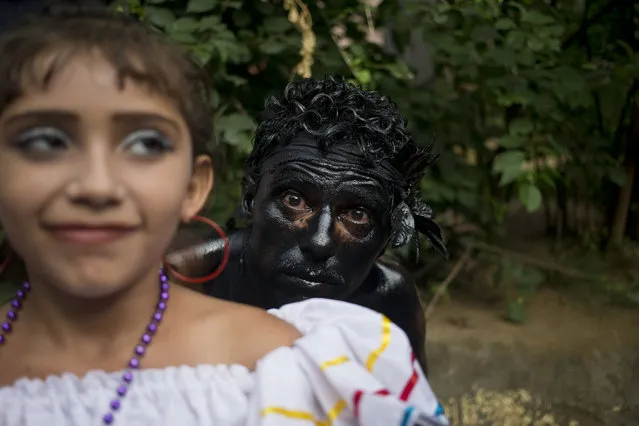
A man covered in motor oil, poses for a picture next to a girl dress a traditional clothes during a festivities in honor of Santo Domingo de Guzman in Managua, Nicaragua, Saturday, August 1, 2015. (Photo by Esteban Felix/AP Photo)

A man covered in motor oil, poses for a picture next to a girl dress a traditional clothes during a festivities in honor of Santo Domingo de Guzman in Managua, Nicaragua, Saturday, August 1, 2015. Some of the faithful coat their bodies in a black motor oil, red paint and wear traditional clothes as a promise for a prayer or miracle they believe was performed or answered by Managua's patron saint, Santo Domingo de Guzman. (Photo by Esteban Felix/AP Photo)
Details
02 Aug 2015 12:41:00
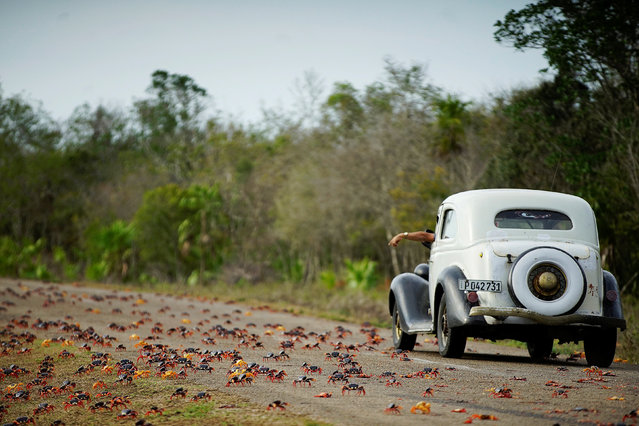
A man driving a vintage car reacts as he passes by crabs crossing a highway on their way to spawn in the sea in Playa Giron, Cuba on April 25, 2017. (Photo by Alexandre Meneghini/Reuters)

A man driving a vintage car reacts as he passes by crabs crossing a highway on their way to spawn in the sea in Playa Giron, Cuba on April 25, 2017. Each year, after the first spring rains, millions of red, yellow and black landcrabs march for days from the surrounding forests to the bay on Cuba's southern coast to spawn in the sea. (Photo by Alexandre Meneghini/Reuters)
Details
26 Apr 2017 08:40:00
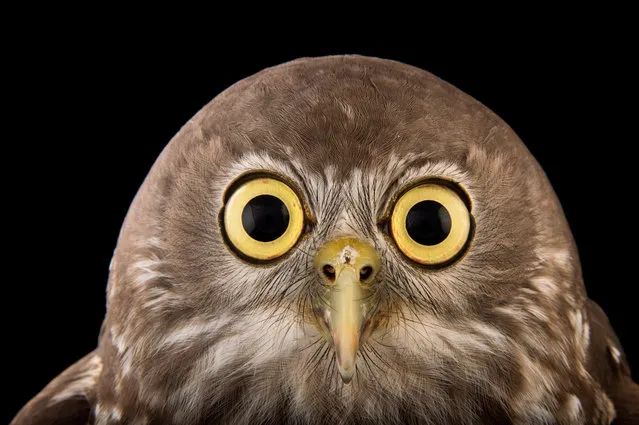
The National Geographic Photo Ark is a travelling exhibition of photographer Joel Sartore’s quest to create a photo archive of biodiversity around the world. So far, Sartore has captured studio portraits of more than 6,000 species – a number that he hopes to double. On 1 July, the ark will open at Melbourne zoo – the first time it has been exhibited in the southern hemisphere. More than 50 portraits will be on display, including many of Australian endangered animals being protected by programs at the zoo itself. These captions have been edited from text supplied by Melbourne zoo. Here: Barking owl. So-named because its call sounds like a barking dog, these birds are native to Australia, Indonesia and Papua New Guinea. In Victoria they are listed as an endangered species, and in 2003 there were estimated to be fewer than 50 breeding pairs. The main threat to the species in Victoria is loss of habitat, especially large trees with hollows in which they can nest and on which many of their prey depend. Apart from a bark, they may utter a chilling scream when they feel threatened. (Photo by Joel Sartore/National Geographic Photo Ark/The Guardian)

The National Geographic Photo Ark is a travelling exhibition of photographer Joel Sartore’s quest to create a photo archive of biodiversity around the world. So far, Sartore has captured studio portraits of more than 6,000 species – a number that he hopes to double. On 1 July, the ark will open at Melbourne zoo – the first time it has been exhibited in the southern hemisphere. More than 50 portraits will be on display, including many of Australian endangered animals being protected by programs at the zoo itself. These captions have been edited from text supplied by Melbourne zoo. Here: Barking owl. (Photo by Joel Sartore/National Geographic Photo Ark/The Guardian)
Details
01 Jul 2017 07:45:00
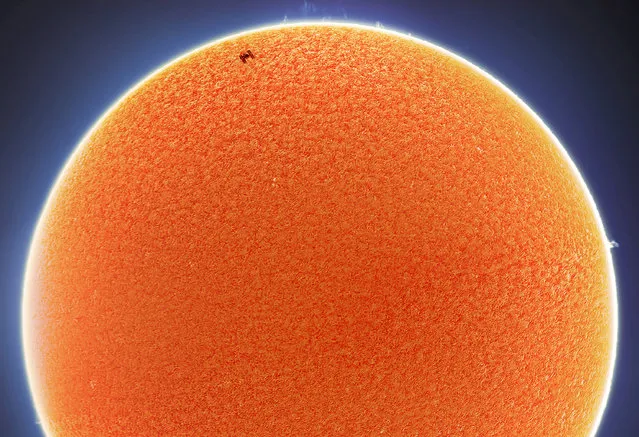
The International Space Station (ISS) moving in front of the sun in November 2020 by astrophotographer Andrew McCarthy. These incredible photos capture the clearest images ever taken of the International Space Station (ISS) moving in front of both the moon and the sun. The photos, taken within days of one another, were captured in the space of less than a second, as the space station could be clearly seen zooming across against the bright backdrops of both moon and sun. Photographer Andrew McCarthy, from California, USA, said the photo of the ISS in front of the sun, in broad daylight, was “one of my trickiest shots ever”. (Photo by Andrew McCarthy/South West News Service)

The International Space Station (ISS) moving in front of the sun in November 2020 by astrophotographer Andrew McCarthy. These incredible photos capture the clearest images ever taken of the International Space Station (ISS) moving in front of both the moon and the sun. The photos, taken within days of one another, were captured in the space of less than a second, as the space station could be clearly seen zooming across against the bright backdrops of both moon and sun. Photographer Andrew McCarthy, from California, USA, said the photo of the ISS in front of the sun, in broad daylight, was “one of my trickiest shots ever”. (Photo by Andrew McCarthy/South West News Service)
Details
28 Nov 2020 00:05:00
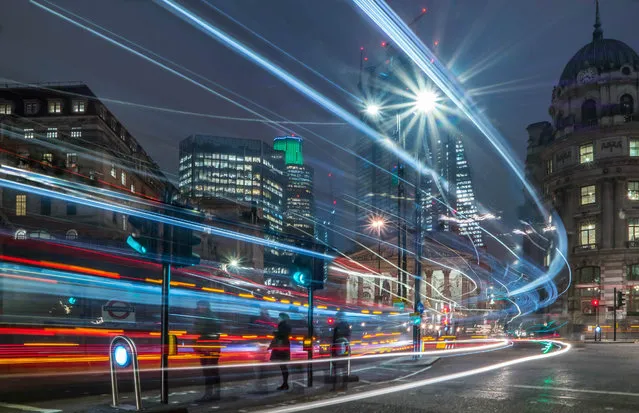
Runner-up. “The City of London, looking towards the Royal Exchange and the Bank of England. The ever-changing London skyline provides many excellent opportunities for cityscape photography, none more exciting than the ebb and flow of traffic at night”. MICK RYAN, JUDGE: “Sophisticated new camera sensors, sharp lenses and the ability to take hundreds of shots in a session and check your work have made night photography much easier than it ever used to be. The results, like this scene, can be spectacular”. (Photo by Mark Caldon/The Guardian)

Runner-up. “The City of London, looking towards the Royal Exchange and the Bank of England. The ever-changing London skyline provides many excellent opportunities for cityscape photography, none more exciting than the ebb and flow of traffic at night”. (Photo by Mark Caldon/The Guardian)
Details
10 Dec 2018 00:03:00