Loading...
Done
This Thursday, January 22, 2015 photo made with a long exposure shows the glow from a Noctiluca scintillans algal bloom along the seashore in Hong Kong. The luminescence, also called Sea Sparkle, is triggered by farm pollution that can be devastating to marine life and local fisheries, according to University of Georgia oceanographer Samantha Joye. (Photo by Kin Cheung/AP Photo)

This Thursday, January 22, 2015 photo made with a long exposure shows the glow from a Noctiluca scintillans algal bloom along the seashore in Hong Kong. The luminescence, also called Sea Sparkle, is triggered by farm pollution that can be devastating to marine life and local fisheries, according to University of Georgia oceanographer Samantha Joye. Noctiluca itself does not produce neurotoxins like other similar organisms do. But its role as both prey and predator tends can eventually magnify the accumulation of toxins in the food chain, according to R. Eugene Turner at Louisiana State University. (Photo by Kin Cheung/AP Photo)
Details
23 Jan 2015 13:12:00
Wooden Churches - Travelling In The Russian North By Richard Davies Part 2

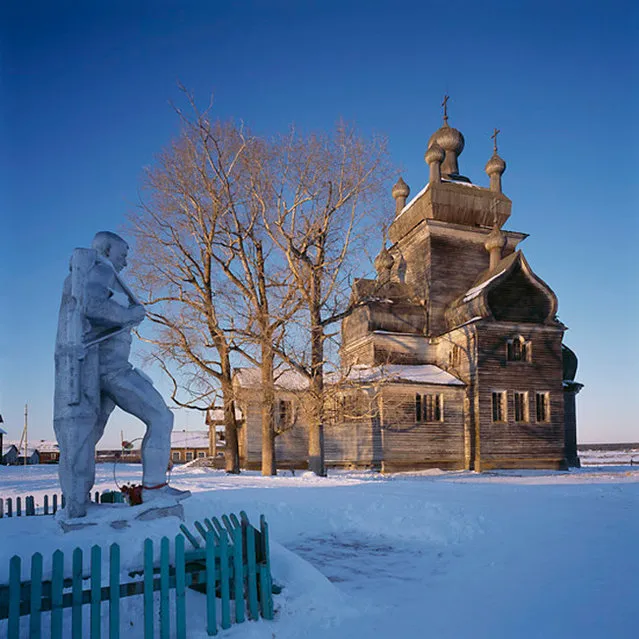
While communism, collectivism, worms, dry rot and casual looting failed to destroy the majestic wooden churches of Russia, it may be ordinary neglect that finally does them in. Dwindled now to several hundred remaining examples, these glories of vernacular architecture lie scattered amid the vastness of the world’s largest country. Just over a decade ago, Richard Davies, a British architectural photographer, struck out on a mission to record the fragile and poetic structures. Austerely beautiful and haunting, “Wooden Churches: Traveling in the Russian North” (White Sea Publishing; $132) is the result. Covering thousands of miles, Mr. Davies described how he and the writer Matilda Moreton tracked down the survivors from among the thousands of onion-domed structures built after Prince Vladimir converted to Christianity in 988.

See also: Wooden Churches Part1
Details
28 Nov 2013 12:13:00
Vinyl Clock By Pavel Sidorenko Part 1

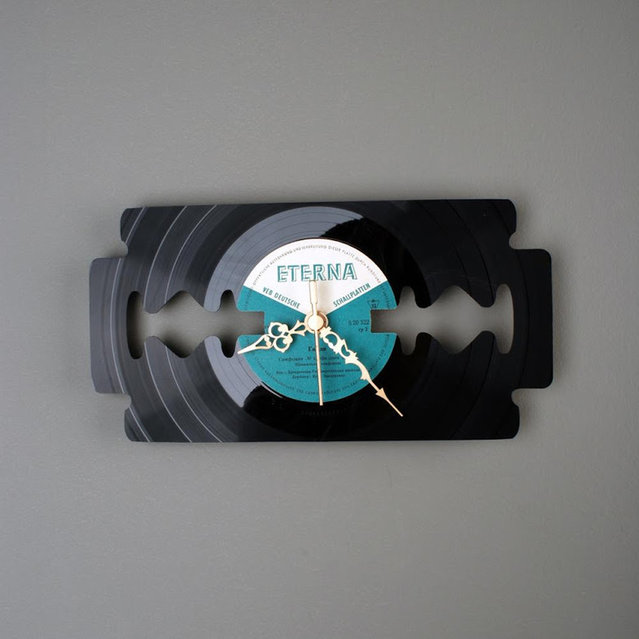
Pavel Sidorenko is an award winning Estonian designer who was born in 1980 in Tallinn and studied product design at Estonian Academy of Arts and Graduated in 2006. Not only does he incorporate pragmatic necessity, but also transmits an emotional qualities within the everyday environment. His fantastic collection of Re Vinyl designs are a result of upcycling a product fashioned from old vinyl records. Beautifully crafted and working with a range of themes from scenography to animal creatures, there is sure to be something for everyone with these stylish selection of recycled vinyl clocks!


See also:Part 2
Details
28 Feb 2014 08:55:00
Michael Bosanko By Light Artist

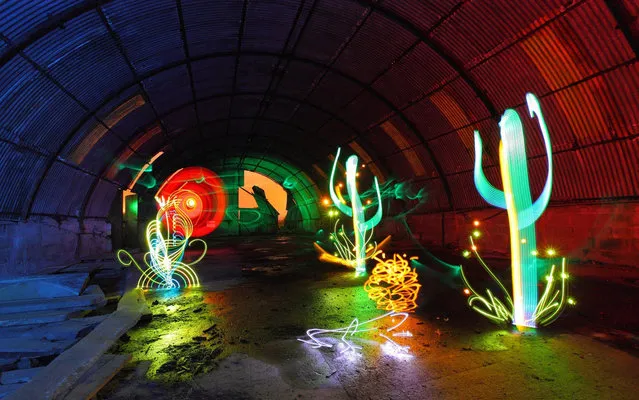
Light painting photographer Michael Bosanko has been capturing light since 2004. He discovered light painting on accident, Michael says this of his moment of discovery, “the moon formed part of the scene, but the camera shake caused the moon to make a streak.

Details
18 Feb 2013 10:45:00
Venus the Chimera Cat

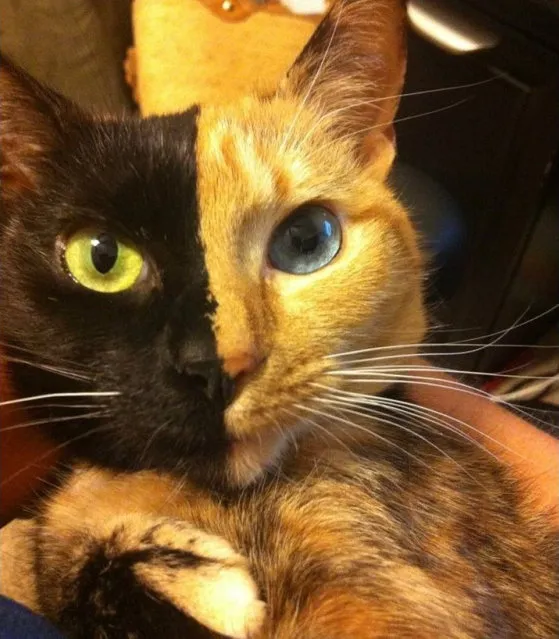
Venus is not necessarily a chimera, or an animal whose cells contain two sets of DNA caused when two embryos fuse together during development. But to find out for sure whether or not Venus is a chimera, she’d need to perform genetic testing.
Details
24 Oct 2012 08:58:00
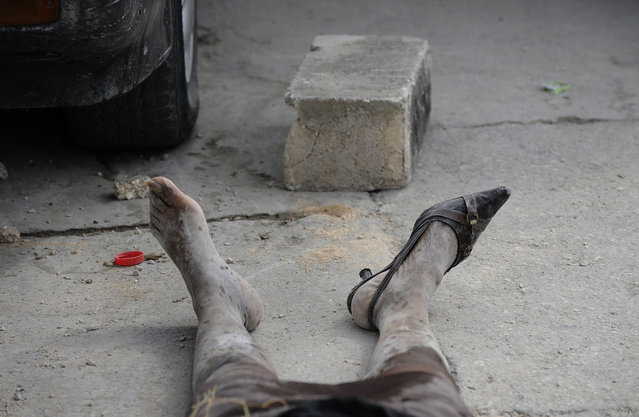
In this photo submitted by the Washington Post tilted “The Moment Time Stopped”, survivors piled bodies of the dead outside for weeks after earthquake on January 14, 2010 in Port-au-Prince, Haiti. The Washington Post has won a Pulitzer Prize for breaking news photography on Monday, April 18, 2011 for images taken in Haiti following the earthquake there.(Photo by Carol Guzy/AP Photo/The Washington Post)

In this photo submitted by the Washington Post tilted “The Moment Time Stopped”, survivors piled bodies of the dead outside for weeks after earthquake on January 14, 2010 in Port-au-Prince, Haiti. The 7.0 magnitude earthquake struck in 2010, and the Haitian government has said more than 300,000 people were killed. The exact toll is unknown because there was no systematic effort to count bodies among the chaos and destruction. (Photo by Carol Guzy/AP Photo/The Washington Post)
Details
13 Jan 2015 14:17:00
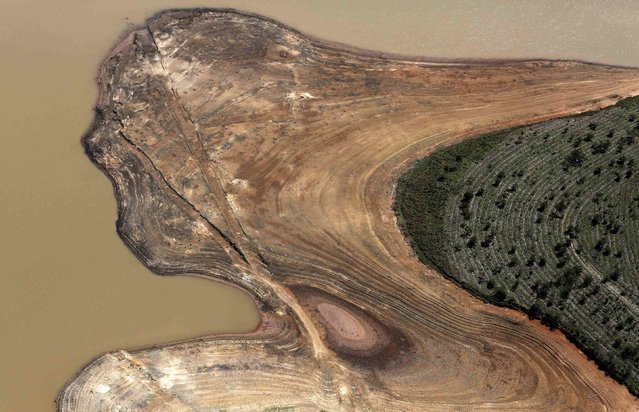
An aerial view of the Atibainha dam, part of the Cantareira reservoir, during a drought in Nazare Paulista, Sao Paulo state November 18, 2014. (Photo by Nacho Doce/Reuters)

An aerial view of the Atibainha dam, part of the Cantareira reservoir, during a drought in Nazare Paulista, Sao Paulo state November 18, 2014. Brazil's worst drought in 80 years has left the Cantareira system, that provides greater Sao Paulo with most of its water, with the lowest water level on record, with daily rationing becoming common in the region's smaller cities, according to the state authorities and the two main reservoirs serving metropolitan Sao Paulo, South America's largest city, could dry out by February if relief does not arrive in the upcoming rainy season. (Photo by Nacho Doce/Reuters)
Details
20 Nov 2014 12:19:00
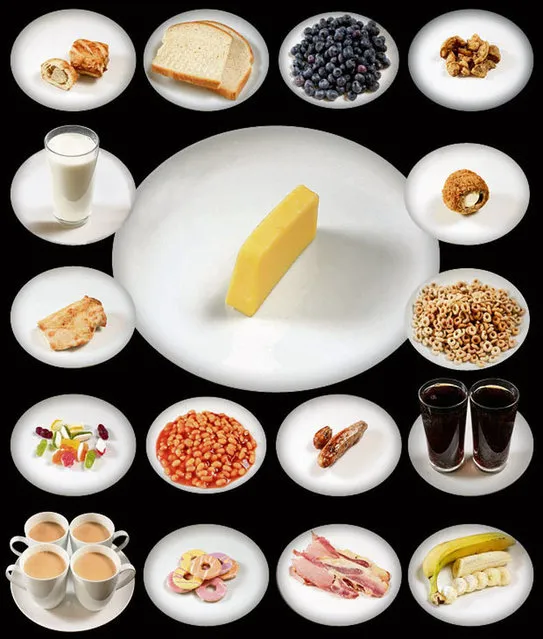
What 200 Calories Looks Like In Different Foods Part 3

Some foods have significantly more Calories than others but what does the difference actually look like. Each of the photographs below represents 200 Calories of the particular type of food; the images are sorted from low to high calorie density. When you consider that an entire plate of broccoli contains the same number of Calories as a small spoonful of peanut butter, you might think twice the next time you decide what to eat. According to the U.S. Department of Agriculture, the average adult needs to consume about 2000 – 2500 Calories to maintain their weight. In other words, you have a fixed amount of Calories to "spend" each day; based on the following pictures, which would you eat?


See Also: Ppart 1 _ Part 2
Details
02 Aug 2014 09:53:00