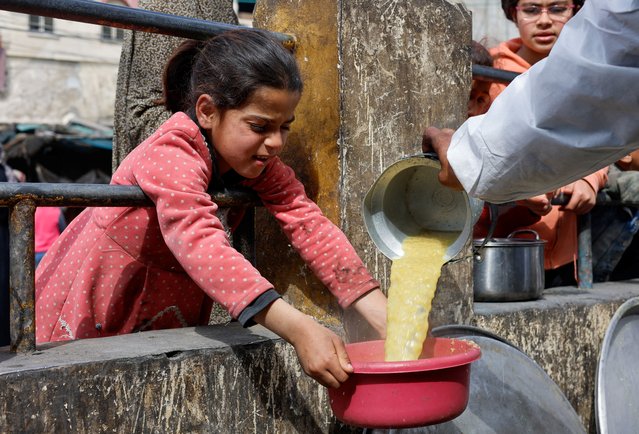
A Palestinian child receives food cooked by a charity kitchen amid shortages of food supplies in Rafah, in the southern Gaza Strip on February 20, 2024. (Photo by Mohammed Salem/Reuters)
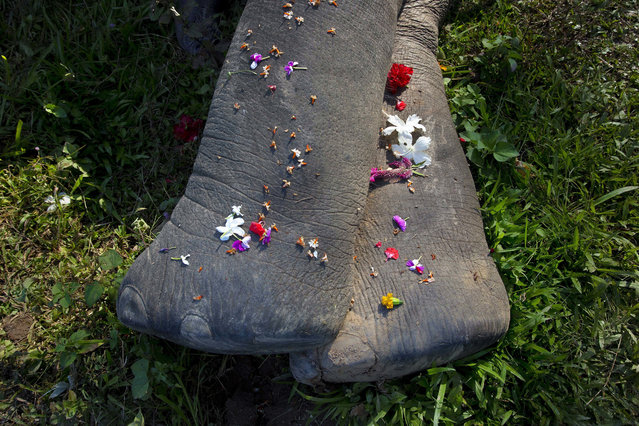
Villagers offer flowers to a wild tusker, laying dead in a field in Panbari villagein Panbari village on the outskirts of Gauhati, India, Thursday, November 2, 2017. According to a veterinarian the tusker died of food poisoning. Scarcity of food and illegal encroachment of forest areas have forced these wild elephant to move to populated areas for food. (Photo by Anupam Nath/AP Photo)
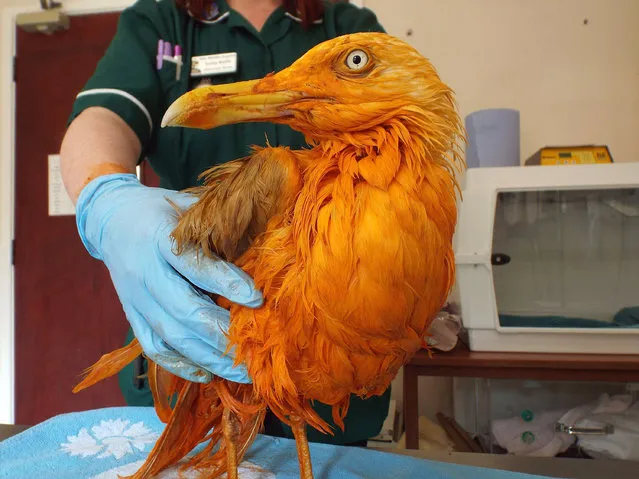
A seagull who turned bright orange after he plunged into a vat of chicken tikka masala in Beckford, England on June 9, 2016. The bird fell into a container of the food while trying to scavenge a piece of meat from a food factory bin in Wales. (Photo by Vale Wildlife Hospital/PA Wire)
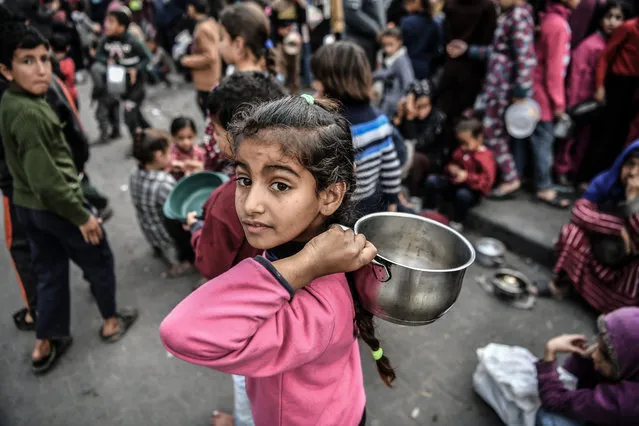
Palestinian children, with empty containers, wait in a line for food, distributed by charity organizations, since Palestinians are unable to obtain basic food supplies due to the embargo imposed by Israeli forces in Rafah, Gaza on February 25, 2024. (Photo by Abed Zagout/Anadolu via Getty Images)
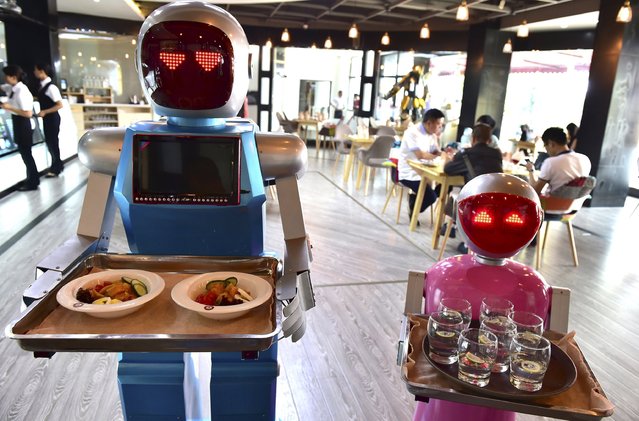
Robot couple Xiaolan (L) and Xiaotao carry trays of food at a restaurant in Jinhua, Zhejiang province, China, May 18, 2015. The restaurant, which opened on Monday, has two robots delivering food for customers. The robots were designed as a couple, Xiaolan and Xiaotao, according to local media. (Photo by Reuters/Stringer)
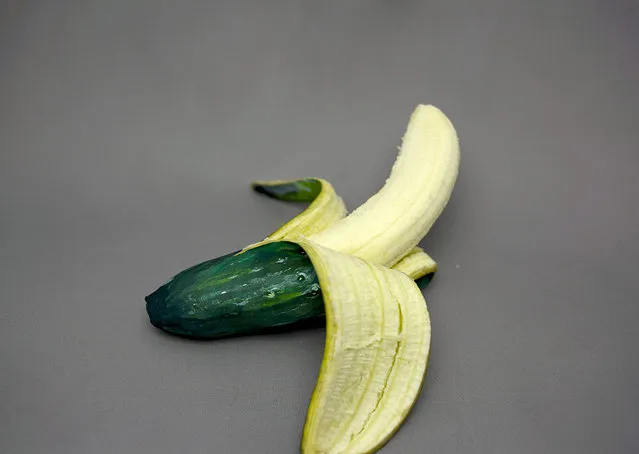
Japanese artist Hikaru Cho is already well-known for her bizarre and realistic body paintings, but now the Tokyo-based artist has applied her talent to everyday food items as well. In her playful “It’s Not What It Seems” series, she turns common foods into other kinds of food using only acrylic paint and her extraordinary talent.
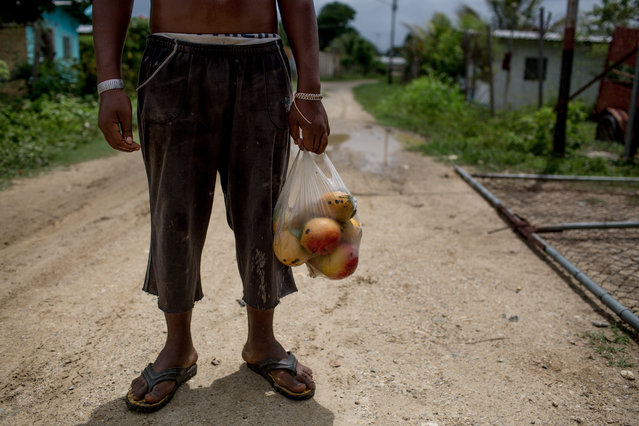
A teenager holds a bag of Mangos, a tropical fruit who grow up in threes in Caracas, Venezuela on June 22, 2016. The shortage of food especially in areas in extreme poverty had made Mangos the daily food. (Photo by Alejandro Cegarra/The Washington Post)
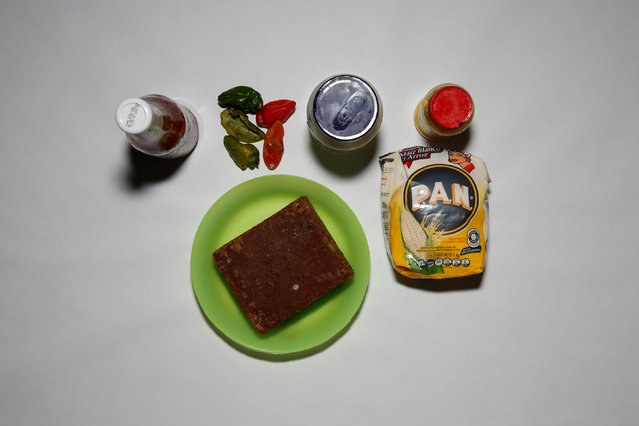
The combination of Venezuela's sky-rocketing prices and chronic product shortages have left many struggling to put regular food on their tables and maintain a balanced diet. According to one recent study, 87 percent of Venezuelans say their income is now insufficient to purchase their food needs. Here: All the food available in the house of Antonia Torres and her family, is pictured at their home in Caracas, Venezuela April 22, 2016. (Photo by Carlos Garcia Rawlins/Reuters)