Loading...
Done
Members of rival teams fight with oranges during an annual carnival battle in the northern Italian town of Ivrea, Italy on February 11, 2018. (Photo by Alessandro Bianchi/Reuters)

Members of rival teams fight with oranges during an annual carnival battle in the northern Italian town of Ivrea, Italy on February 11, 2018. Established in 1808, the Carnival of Ivrea is one of the oldest and most particular festivals in the world. (Photo by Alessandro Bianchi/Reuters)
Details
14 Feb 2018 00:03:00
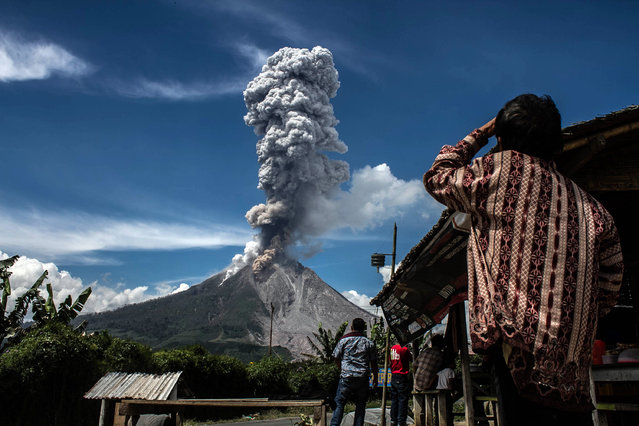
Mount Sinabung releasing volcanic ash, on February 04, 2017 Karo, North Sumatra, Indonesia. (Photo by Albert Damanik/Barcroft Images)

Mount Sinabung releasing volcanic ash, on February 04, 2017 Karo, North Sumatra, Indonesia. (Photo by Albert Damanik/Barcroft Images)
Details
07 Feb 2017 00:06:00
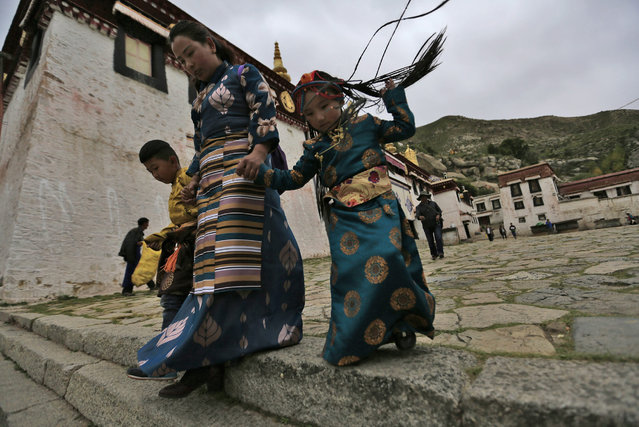
Tibetan pilgrims walk outside the Sera Monastery in Lhasa, Tibet Autonomous Region, China, 11 September 2016. Sera Monastery is known as one of the “great three” Gelug university monasteries of Tibet founded in 1419. (Photo by How Hwee Young/EPA)

Tibetan pilgrims walk outside the Sera Monastery in Lhasa, Tibet Autonomous Region, China, 11 September 2016. Sera Monastery is known as one of the “great three” Gelug university monasteries of Tibet founded in 1419. (Photo by How Hwee Young/EPA)
Details
22 Sep 2016 09:59:00
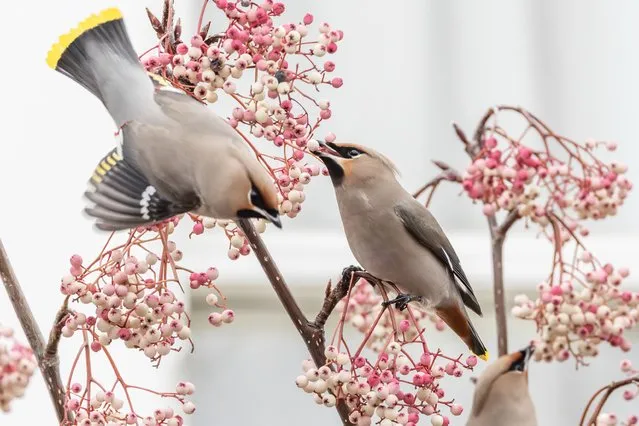
Waxwings in Balham south London on December 31, 2023. There has been a huge influx of this erruptive species this year. This probably due to severe storms and a shortage of food in their native Scandinavia in the Autumn. (Photo by Jack Hill/The Times)

Waxwings in Balham south London on December 31, 2023. There has been a huge influx of this erruptive species this year. This probably due to severe storms and a shortage of food in their native Scandinavia in the Autumn. (Photo by Jack Hill/The Times)
Details
25 Jan 2024 10:02:00
Event entertainer Holly Egan poses with a guitar using an angle grinder as Kevin Jay and Nigel Cox spin burning steel wool, sending sparks flying under the A13 in Essex, UK on April 4, 2024. (Photo by Kevin Jay/Picture Exclusive)

Event entertainer Holly Egan poses with a guitar using an angle grinder as Kevin Jay and Nigel Cox spin burning steel wool, sending sparks flying under the A13 in Essex, UK on April 4, 2024. (Photo by Kevin Jay/Picture Exclusive)
Details
22 May 2024 03:29:00
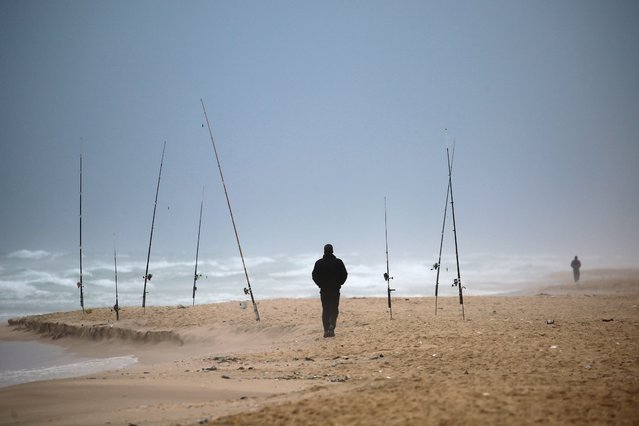
A Palestinian man walks on the beach, as storm winds blow, near a camp for internally displaced on the beach near the Nuseirat refugee in the central Gaza Strip on December 20, 2024, amid the continuing war between Israel and Hamas. (Photo by Eyad Baba/AFP Photo)

A Palestinian man walks on the beach, as storm winds blow, near a camp for internally displaced on the beach near the Nuseirat refugee in the central Gaza Strip on December 20, 2024, amid the continuing war between Israel and Hamas. (Photo by Eyad Baba/AFP Photo)
Details
28 Dec 2024 02:53:00
A folk artist shakes iron nets with hot charcoals to create sparks during Huohu (fire pot) performance on December 28, 2024 in Nanjing, Jiangsu Province of China. (Photo by VCG/VCG via Getty Images)

A folk artist shakes iron nets with hot charcoals to create sparks during Huohu (fire pot) performance on December 28, 2024 in Nanjing, Jiangsu Province of China. (Photo by VCG/VCG via Getty Images)
Details
13 Jan 2025 02:55:00
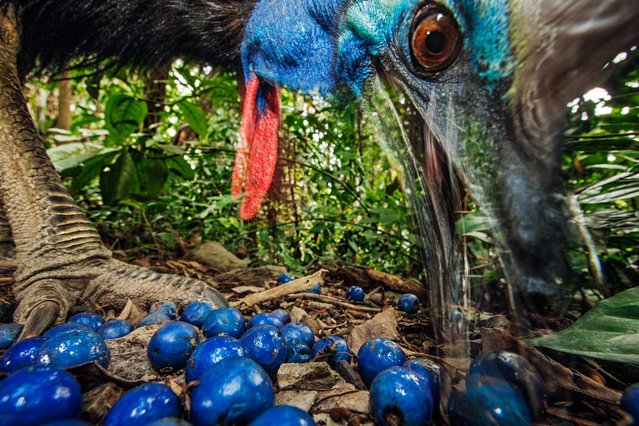
“Cassowaries are large, flightless birds related to emus and (more distantly) to ostriches, rheas, and kiwis”, writes Olivia Judson in the September issue of National Geographic magazine. (Photo by Christian Ziegler/National Geographic)

“Cassowaries are large, flightless birds related to emus and (more distantly) to ostriches, rheas, and kiwis”, writes Olivia Judson in the September issue of National Geographic magazine. How large? People-size: Adult males stand well over five foot five and top 110 pounds. Females are even taller, and can weigh more than 160 pounds. Dangerous when roused, they’re shy and peaceable when left alone. But even birds this big and tough are prey to habitat loss. The dense New Guinea and Australia rain forests where they live have dwindled. Today cassowaries might number 1,500 to 2,000. And because they help shape those same forests – by moving seeds from one place to another – “if they vanish”, Judson writes, “the structure of the forest would gradually change” too. (Photo by Christian Ziegler/National Geographic)

Details
06 Jan 2014 12:21:00