Loading...
Done
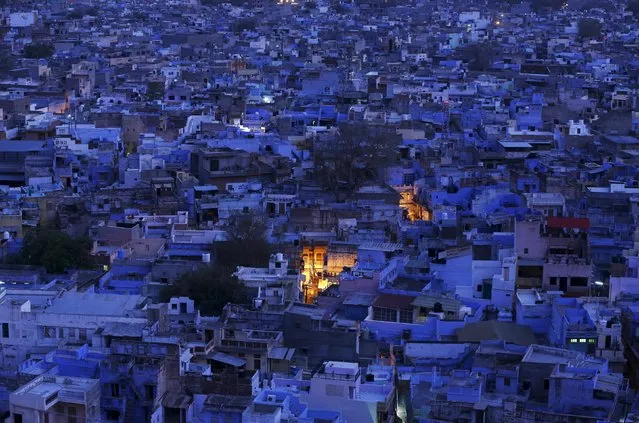
A general view of the residential area is pictured during dusk at Jodhpur in Rajasthan, April 5, 2015. Jodhpur, also known as the blue city in the desert Indian state of Rajasthan, which residents say originally, was used to show where the highest caste of priestly Hindus live, who wanted to set them apart from the rest of the population. Later the rest of the population followed suit. Another reason for the city to be blue is to keep the buildings cool during the summers, local residents said. (Photo by Adnan Abidi/Reuters)

A general view of the residential area is pictured during dusk at Jodhpur in Rajasthan, April 5, 2015. Jodhpur, also known as the blue city in the desert Indian state of Rajasthan, which residents say originally, was used to show where the highest caste of priestly Hindus live, who wanted to set them apart from the rest of the population. Later the rest of the population followed suit. Another reason for the city to be blue is to keep the buildings cool during the summers, local residents said. (Photo by Adnan Abidi/Reuters)
Details
12 Apr 2015 08:27:00
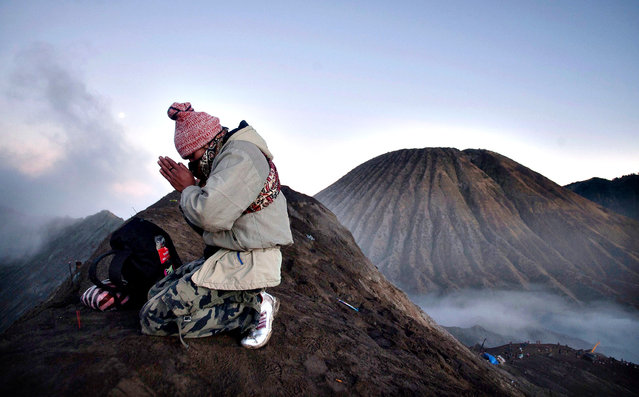
A Tengger tribesman prays at Mount Bromo during the annual Kasada ceremony in East Java on August 12, 2014. The Kasada ceremony is a festival held every 14th day of the Kasada month in the traditional Hindu lunar calender to honour Sang Hyang Widhi (God Almighty) and is based on the legend of Roro Anteng and Joko Seger from the Majapahit Kingdom, from which their Tengger tribe name originates. (Photo by Juni Kriswanto/AFP Photo)

A Tengger tribesman prays at Mount Bromo during the annual Kasada ceremony in East Java on August 12, 2014. The Kasada ceremony is a festival held every 14th day of the Kasada month in the traditional Hindu lunar calender to honour Sang Hyang Widhi (God Almighty) and is based on the legend of Roro Anteng and Joko Seger from the Majapahit Kingdom, from which their Tengger tribe name originates. Hundreds of worshippers from the Tengger tribe offer food and livestock as a symbolic sacrifice which they throw into the crater for the blessings of safety and prosperity to their familyies and community. (Photo by Juni Kriswanto/AFP Photo)
Details
16 Aug 2014 11:19:00
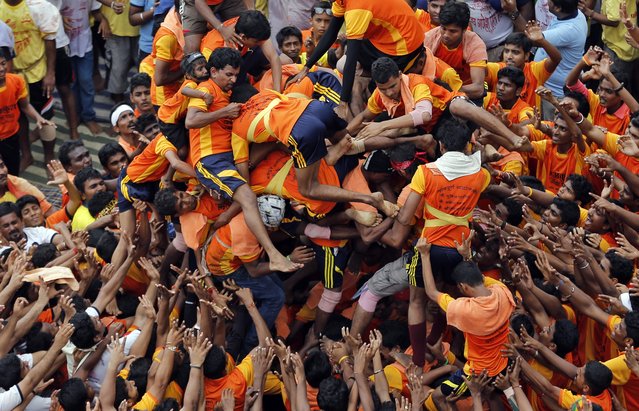
People fall down as they try to form a human pyramid to break the “Dahi handi”, an earthen pot filled with curd, an integral part of celebrations to mark Janmashtami in Mumbai, India, Monday, August 18, 2014. (Photo by Rafiq Maqbool/AP Photo)

People fall down as they try to form a human pyramid to break the “Dahi handi”, an earthen pot filled with curd, an integral part of celebrations to mark Janmashtami in Mumbai, India, Monday, August 18, 2014. Hindu devotees take part in the celebration in which an earthen pot is suspended high above the ground and groups of young men and children form a human pyramid to reach the pot and break it. The festival celebrates the birth of Hindu god Lord Krishna, one of the most popular gods in Hinduism. (Photo by Rafiq Maqbool/AP Photo)
Details
21 Aug 2014 09:38:00
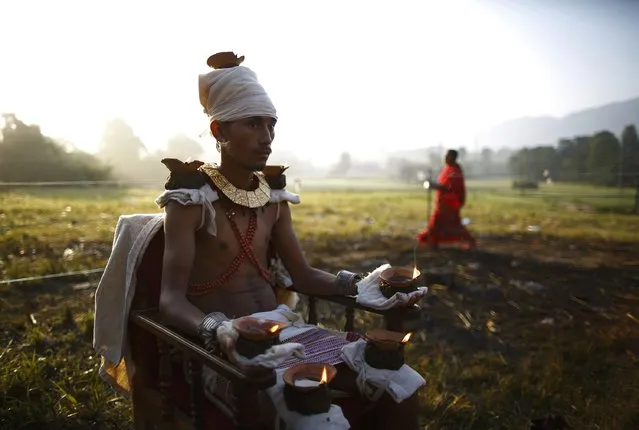
A devotee sits with lighted oil lamps while offering prayers during the “Dashain”, Hinduism's biggest religious festival in Bhaktapur October 3, 2014. Hindus in Nepal celebrate victory over evil during the festival by flying kites, feasting, playing swings, sacrificing animals and worshipping the Goddess Durga as well as other gods and goddess as part of celebrations held throughout the country. (Photo by Navesh Chitrakar/Reuters)

A devotee sits with lighted oil lamps while offering prayers during the “Dashain”, Hinduism's biggest religious festival in Bhaktapur October 3, 2014. Hindus in Nepal celebrate victory over evil during the festival by flying kites, feasting, playing swings, sacrificing animals and worshipping the Goddess Durga as well as other gods and goddess as part of celebrations held throughout the country. (Photo by Navesh Chitrakar/Reuters)
Details
03 Oct 2014 11:30:00
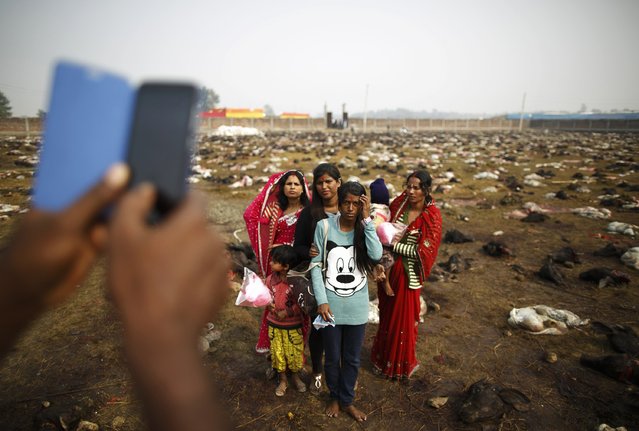
A family poses for a picture in front of the carcasses of sacrificed buffalos a day after the sacrificial ceremony of the “Gadhimai Mela” festival held in Bariyapur November 29, 2014. Sword-wielding Hindu devotees in Nepal began slaughtering thousands of animals and birds in a ritual sacrifice on Friday, ignoring calls by animal rights activists to halt what they described as the world's largest such exercise. (Photo by Navesh Chitrakar/Reuters)

A family poses for a picture in front of the carcasses of sacrificed buffalos a day after the sacrificial ceremony of the “Gadhimai Mela” festival held in Bariyapur November 29, 2014. Sword-wielding Hindu devotees in Nepal began slaughtering thousands of animals and birds in a ritual sacrifice on Friday, ignoring calls by animal rights activists to halt what they described as the world's largest such exercise. (Photo by Navesh Chitrakar/Reuters)
Details
30 Nov 2014 12:35:00
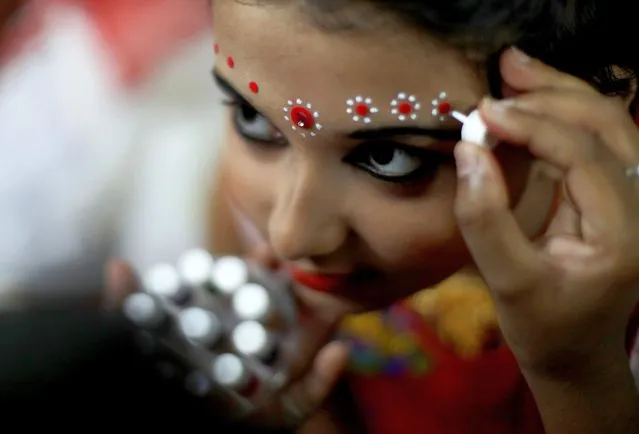
An Indian girl, Aritri Bannerjee, gets dressed as the Goddess Durga, during the Kumari Puja as part of the Durga Puja festival at Shidaspur village, far north of Kolkata, eastern India, 22 October 2023. During the Kumari Puja, devotees worship a girl aged between six and twelve, symbolizing the Kanya Kumari (virgin) form of the Goddess Durga Devi. Hindu devotees believe that Kanya is a living embodiment of the goddess Durga. (Photo by Piyal Adhikary/EPA/EFE)

An Indian girl, Aritri Bannerjee, gets dressed as the Goddess Durga, during the Kumari Puja as part of the Durga Puja festival at Shidaspur village, far north of Kolkata, eastern India, 22 October 2023. During the Kumari Puja, devotees worship a girl aged between six and twelve, symbolizing the Kanya Kumari (virgin) form of the Goddess Durga Devi. Hindu devotees believe that Kanya is a living embodiment of the goddess Durga. (Photo by Piyal Adhikary/EPA/EFE)
Details
02 Nov 2023 05:36:00
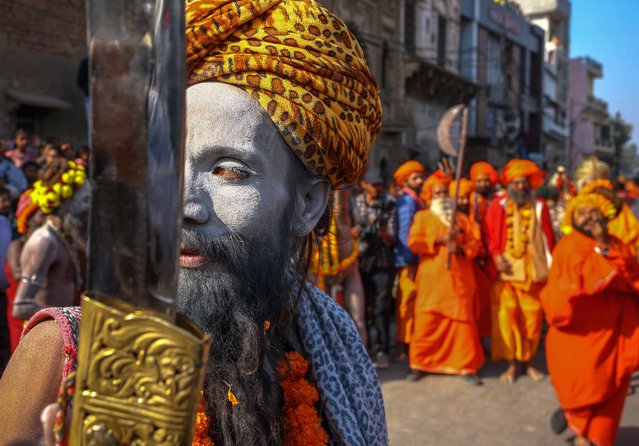
Sadhus take part in a religious roadshow ( Peshwai )  on December 14, 2024 in Allahabad, India. Kumbh Mela in 2025 is a Maha Kumbh, which is a significant Hindu festival celebrated once every 144 years at Prayagraj (Allahabad). Scheduled from January 13 to February 26, 2025, it attracts millions of devotees for ritual bathing at the confluence of the Ganges, Yamuna, and the mythical Saraswati rivers, marking a unique spiritual occasion with enhanced significance compared to regular Kumbh Mela. (Photo by Ritesh Shukla/Getty Images)

Sadhus take part in a religious roadshow (Peshwai) on December 14, 2024 in Allahabad, India. Kumbh Mela in 2025 is a Maha Kumbh, which is a significant Hindu festival celebrated once every 144 years at Prayagraj (Allahabad). Scheduled from January 13 to February 26, 2025, it attracts millions of devotees for ritual bathing at the confluence of the Ganges, Yamuna, and the mythical Saraswati rivers, marking a unique spiritual occasion with enhanced significance compared to regular Kumbh Mela. (Photo by Ritesh Shukla/Getty Images)
Details
26 Dec 2024 01:40:00
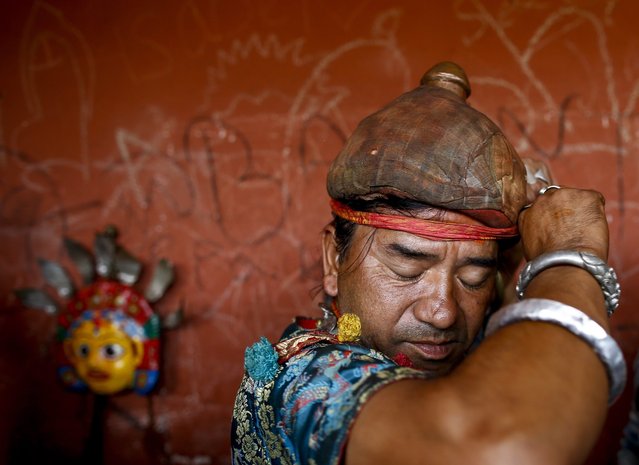
A Nepalese devotee prepares for a religious mask performance during the Seekaali Festival in Khokna village, near Kathmandu, Nepal, 07 October 2016. During the 300-year-old Seekali festival, elderly ethnic Newari devotees wear masks of 14 various goddesses including Lord Ganesha, Lord Shiva, Lord Laxmi, Lord Brahma and Lord Bishnu. The Khokna people celebrate the Seekaali festival as an alternative of the Dashain festival which is biggest festival of Nepalese Hindus that celebrates the victory of the gods over demons. (Photo by Narendra Shrestha/EPA)

A Nepalese devotee prepares for a religious mask performance during the Seekaali Festival in Khokna village, near Kathmandu, Nepal, 07 October 2016. During the 300-year-old Seekali festival, elderly ethnic Newari devotees wear masks of 14 various goddesses including Lord Ganesha, Lord Shiva, Lord Laxmi, Lord Brahma and Lord Bishnu. The Khokna people celebrate the Seekaali festival as an alternative of the Dashain festival which is biggest festival of Nepalese Hindus that celebrates the victory of the gods over demons. (Photo by Narendra Shrestha/EPA)
Details
09 Oct 2016 07:14:00