Loading...
Done
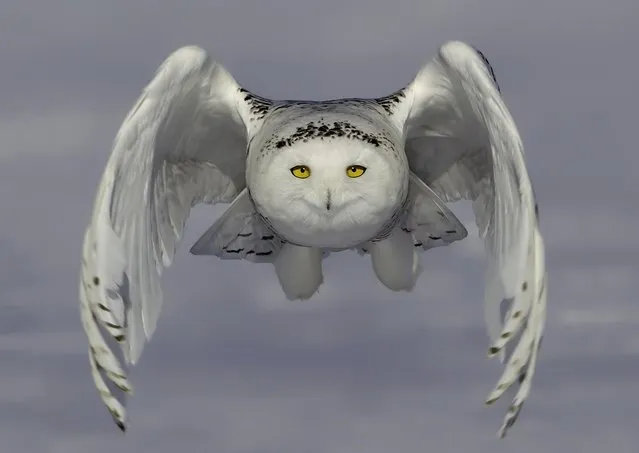
A beautiful snowy owl looks like she is flying above a cloud, but in fact she is gliding inches above a snowplain in a hunt for food. The owls fit in perfectly with their surroundings as both the male and female, which has darker markings on her feathers referred to as barres, hunt for voles. (Photo by Rick Dobson/Solent News/SIPA Press)

A beautiful snowy owl looks like she is flying above a cloud, but in fact she is gliding inches above a snowplain in a hunt for food. The owls fit in perfectly with their surroundings as both the male and female, which has darker markings on her feathers referred to as barres, hunt for voles. The female is so low to the ground she is almost touching it as she spots her prey in the snow. Nature photographer Rick Dobson captured the two birds hunting in corn fields near his home, just outside of Ottawa, Ontario, Canada. (Photo by Rick Dobson/Solent News/SIPA Press)
Details
24 Mar 2015 10:00:00
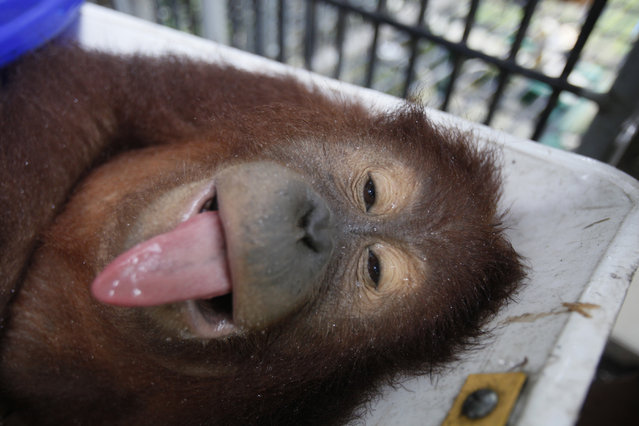
An approximately 8 year-old male orangutan named Siamang reacts under the influence of tranquilizer as it's being prepared to be released into the wild at a rehabilitation center in Kuta Mbelin, North Sumatra, Indonesia, Friday, July 10, 2015. (Photo by Binsar Bakkara/AP Photo)

An approximately 8 year-old male orangutan named Siamang reacts under the influence of tranquilizer as it's being prepared to be released into the wild at a rehabilitation center in Kuta Mbelin, North Sumatra, Indonesia, Friday, July 10, 2015. The orangutans at the center were mostly rescued from palm oil plantations or confiscated from homes where they were kept as pet animals. Orangutan populations in Indonesia's Borneo and Sumatra island are facing severe threats from habitat loss, illegal logging, fires and poaching. Conservationists predicted that without immediate action, orangutans are likely to be the first great ape to become extinct in the wild. (Photo by Binsar Bakkara/AP Photo)
Details
11 Jul 2015 13:57:00
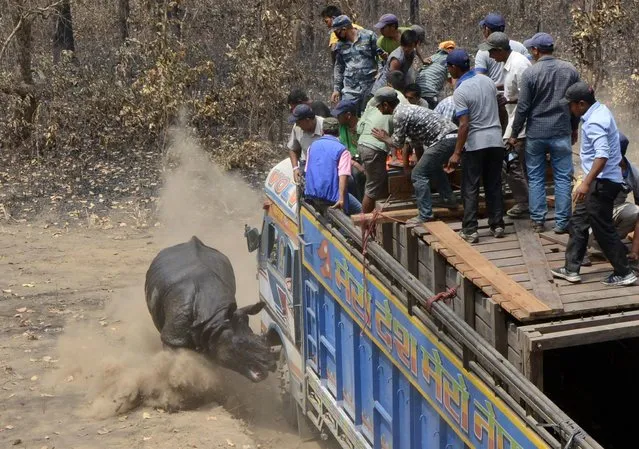
A Nepalese vetinary and technical team release a rhino after it is relocated in Chitwan National Park some of 250 Kilometer South of Kathmandu on April 4, 2017. Conservationists on April 3 captured a rare one-horned rhinoceros in Nepal as part of an attempt to increase the number of the vulnerable animals, which are prized by wildlife poachers. Five rhinos – one male and four female – will be released into a national park in Nepal's far west over the coming week in the hope of establishing a new breeding group. (Photo by Prakash Mathema/AFP Photo)

A Nepalese vetinary and technical team release a rhino after it is relocated in Chitwan National Park some of 250 Kilometer South of Kathmandu on April 4, 2017. Conservationists on April 3 captured a rare one-horned rhinoceros in Nepal as part of an attempt to increase the number of the vulnerable animals, which are prized by wildlife poachers. Five rhinos – one male and four female – will be released into a national park in Nepal's far west over the coming week in the hope of establishing a new breeding group. (Photo by Prakash Mathema/AFP Photo)
Details
05 Apr 2017 09:19:00
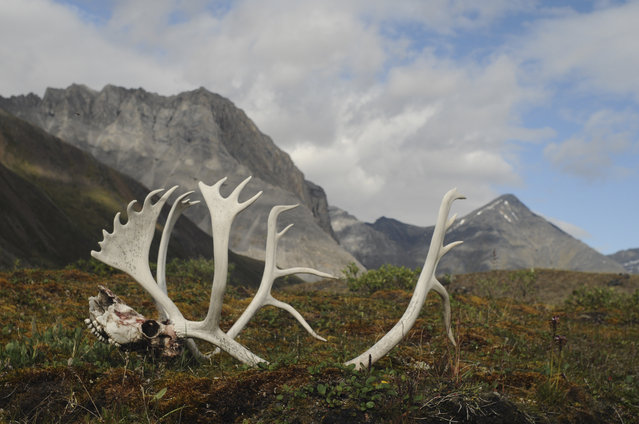
In this August 1, 2014 photo provided by the National Park Service are male caribou antlers in the Oolah Valley, likely the result of a grizzly kill as he migrated south for the winter at the Arctic National Park and Preserve in Alaska. The nation's northernmost national park says its new management plan will have to consider the effects of a new industrial road to the mining district of Ambler, the first road that would be constructed within its Maryland-sized boundaries. (Photo by Cadence Cook/AP Photo/National Park Service)

In this August 1, 2014 photo provided by the National Park Service are male caribou antlers in the Oolah Valley, likely the result of a grizzly kill as he migrated south for the winter at the Arctic National Park and Preserve in Alaska. The nation's northernmost national park says its new management plan will have to consider the effects of a new industrial road to the mining district of Ambler, the first road that would be constructed within its Maryland-sized boundaries. (Photo by Cadence Cook/AP Photo/National Park Service)
Details
03 Sep 2016 09:54:00
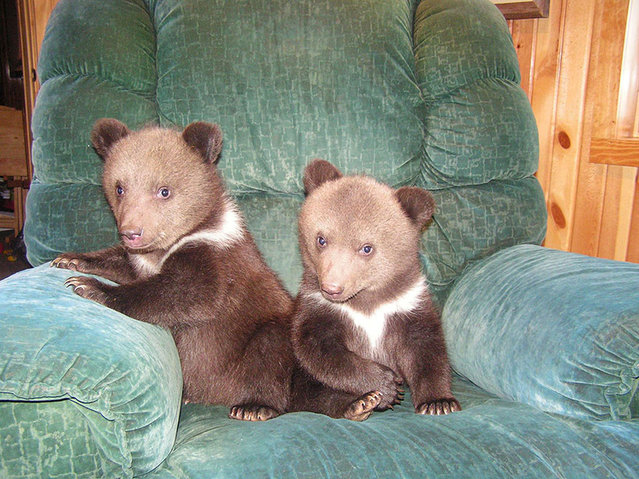
Couple Adopts Twin Bear Cubs Rejected By Their Mother

David and Lana Fechter have recently adopted two adorable Siberian bear cubs that were rejected by their mother at a Chicago zoo. The two nine-week-old male cubs, Lewis and Clark, are being kept in an inside closure and are being bottle fed. When the twins get bigger and more independent, they’ll be be given a large natural enclosure with ponds and ridges to live in at Shalom Wildlife Sanctuary.
Details
13 Apr 2014 07:25:00
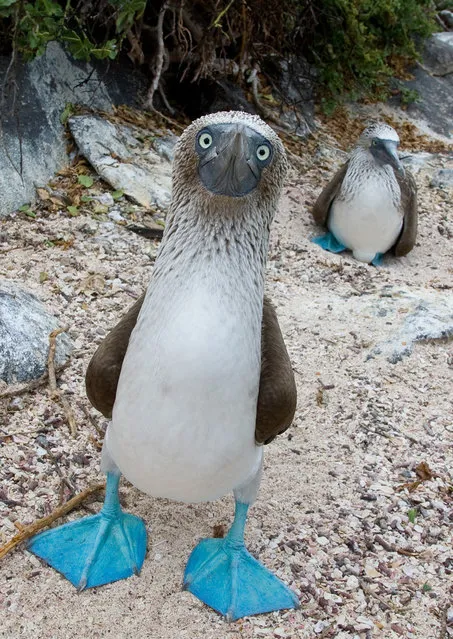
Blue-Footed Booby

The blue-footed booby (Sula nebouxii) is a marine bird in the family Sulidae, which includes ten species of long-winged seabirds. Blue-footed boobies belong to the genus Sula, which comprises six species of boobies. It is easily recognizable by its distinctive bright blue feet, which is a sexually selected trait. Males display their feet in an elaborate mating ritual by lifting their feet up and down while strutting before the female.

See Also: Red
Details
03 Oct 2014 12:42:00
USA's Jake Paul (L) and Mexico's Julio Cesar Chavez Jr. fight during their cruiserweight boxing bout at the Honda Center in Anaheim, California, on June 28, 2025. (Photo by Patrick T. Fallon/AFP Photo)

USA's Jake Paul (L) and Mexico's Julio Cesar Chavez Jr. fight during their cruiserweight boxing bout at the Honda Center in Anaheim, California, on June 28, 2025. (Photo by Patrick T. Fallon/AFP Photo)
Details
07 Jul 2025 03:24:00
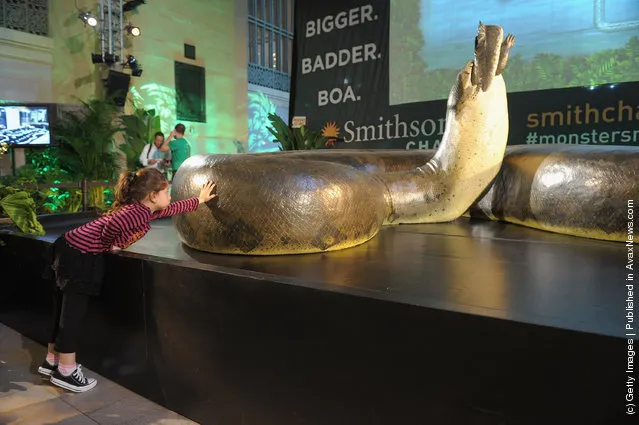
Attendees view a replica of the prehistoric Titanoboa, the largest snake to ever live, on display at Grand Central Terminal in New York City

“Titanoboa is a genus of snake that lived approximately 58–60 million years ago, during the Paleocene epoch, a 10-million-year period immediately following the dinosaur extinction event. The only known species is the Titanoboa cerrejonensis, the largest snake ever discovered, which supplanted the previous record holder, Gigantophis”. – Wikipedia

Photo: Leah Del Rio views a replica of the prehistoric Titanoboa, the largest snake to ever live, on display at Grand Central Terminal on March 23, 2012 in New York City. (Photo by Michael Loccisano/Getty Images)
Details
24 Mar 2012 10:14:00