Loading...
Done
Revellers out and about in Newcastle, England on “Black Eye Friday” or “Mad Friday” on December 22, 2017. This partygoer had so much fun she looks lost. (Photo by Craig Connor/North News and Pictures)

Revellers out and about in Newcastle, England on “Black Eye Friday” or “Mad Friday” on December 22, 2017 as people across the country celebrate the start of the Christmas break by hitting bars, pubs and clubs. This partygoer had so much fun she looks lost. (Photo by Craig Connor/North News and Pictures)
Details
23 Dec 2017 08:56:00
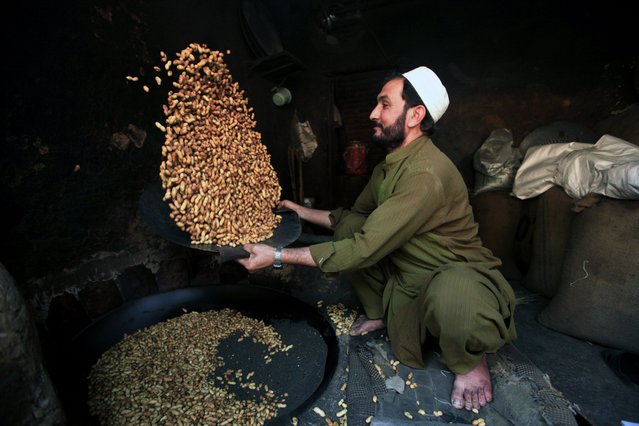
A Pakistani vendor prepares peanuts for sale on a roadside in Peshawar, Pakistan, 01 January 2018. After a good raining season the sales of dry fruits flourish in the country. Tourists from all over Pakistan come to Peshawar to purchase dry fruits along with other items because of price differences between different parts of the country. (Photo by Bilawal Arbab/EPA/EFE)

A Pakistani vendor prepares peanuts for sale on a roadside in Peshawar, Pakistan, 01 January 2018. After a good raining season the sales of dry fruits flourish in the country. Tourists from all over Pakistan come to Peshawar to purchase dry fruits along with other items because of price differences between different parts of the country. (Photo by Bilawal Arbab/EPA/EFE)
Details
09 Feb 2018 07:06:00
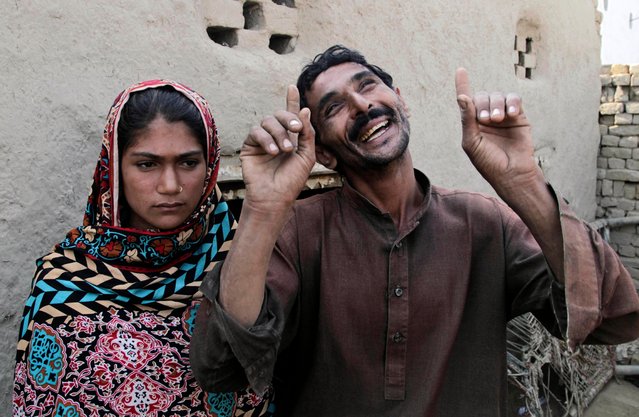
In this Tuesday, December 20, 2016 photo, Mohammad Ramzan, right, reacts while talking to The Associated Press with his young bride Saima in Jampur, Pakistan. Saima was given as a bride to the older man by her father so he could marry the groom’s sister, a practice of exchanging girls that is entrenched in conservative regions of Pakistan. It even has its own name in Urdu: Watta Satta, “give and take”. A mix of interests – family obligations, desire for sons, a wish to hand off a girl to a husband – can lead to a young teen in an a marriage she never sought. (Photo by K.M. Chaudhry/AP Photo)

In this Tuesday, December 20, 2016 photo, Mohammad Ramzan, right, reacts while talking to The Associated Press with his young bride Saima in Jampur, Pakistan. Saima was given as a bride to the older man by her father so he could marry the groom’s sister, a practice of exchanging girls that is entrenched in conservative regions of Pakistan. It even has its own name in Urdu: Watta Satta, “give and take”. A mix of interests – family obligations, desire for sons, a wish to hand off a girl to a husband – can lead to a young teen in an a marriage she never sought. (Photo by K.M. Chaudhry/AP Photo)
Details
31 Dec 2016 10:08:00
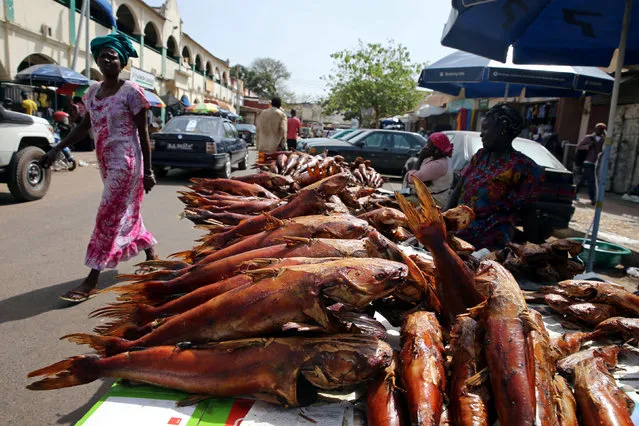
A woman walks past a stall at a market in Banjul, Gambia December 15, 2016. (Photo by Afolabi Sotunde/Reuters)

A woman walks past a stall at a market in Banjul, Gambia December 15, 2016. (Photo by Afolabi Sotunde/Reuters)
Details
03 Jan 2017 11:14:00
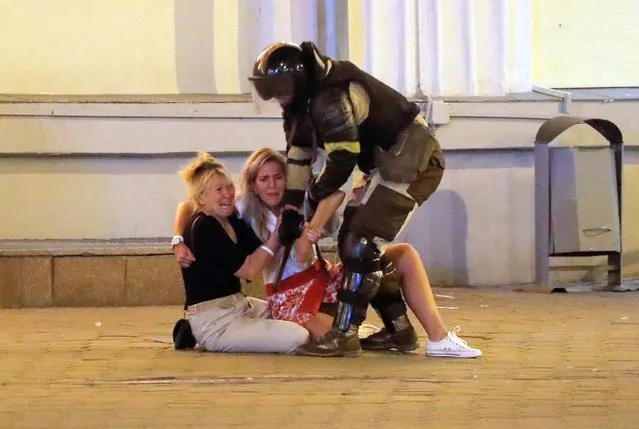
A Belarusian law enforcement officer approaches women, who react while sitting on the pavement during a rally of opposition supporters following the presidential election in Minsk, Belarus on August 10, 2020. Belarusian police clashed with protesters on Monday after the opposition accused President Alexander Lukashenko of rigging his re-election victory amid a chorus of criticism from Western leaders. (Photo by Vasily Fedosenko/Reuters)

A Belarusian law enforcement officer approaches women, who react while sitting on the pavement during a rally of opposition supporters following the presidential election in Minsk, Belarus on August 10, 2020. Belarusian police clashed with protesters on Monday after the opposition accused President Alexander Lukashenko of rigging his re-election victory amid a chorus of criticism from Western leaders. (Photo by Vasily Fedosenko/Reuters)
Details
12 Aug 2020 00:07:00
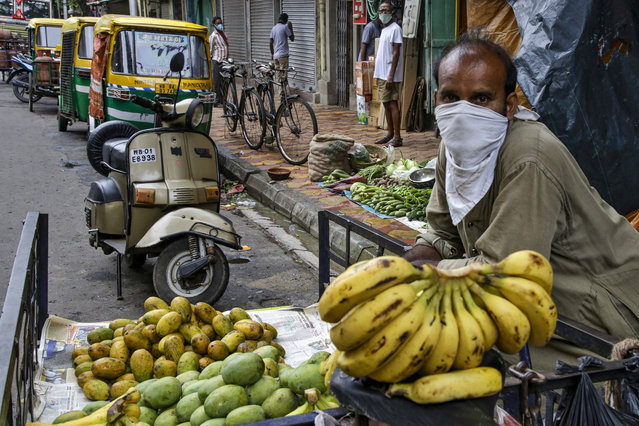
A street side fruit vendor has his face covered as a precaution against the coronavirus in Kolkata, India, Tuesday, July 21, 2020. With a surge in coronavirus cases in the past few weeks, state governments in India have been ordering focused lockdowns in high-risk areas to slow down the spread of infections. (Photo by Bikas Das/AP Photo)

A street side fruit vendor has his face covered as a precaution against the coronavirus in Kolkata, India, Tuesday, July 21, 2020. With a surge in coronavirus cases in the past few weeks, state governments in India have been ordering focused lockdowns in high-risk areas to slow down the spread of infections. (Photo by Bikas Das/AP Photo)
Details
14 Aug 2020 00:05:00
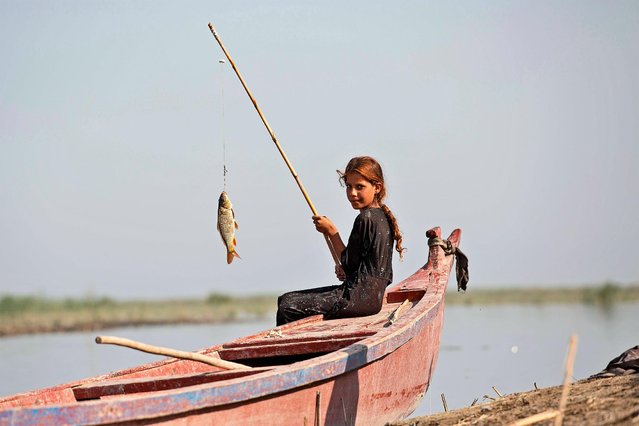
A girl catches a fish in the marshes of the southern district of Chibayish in Dhi Qar province, about 120 kilometres northwest of the southern city of Basra, on September 23, 2020. Iraq's southern marshes are blossoming thanks to a wave of ecotourists picnicking and paddling down their replenished river bends. (Photo by Hussein Faleh/AFP Photo)

A girl catches a fish in the marshes of the southern district of Chibayish in Dhi Qar province, about 120 kilometres northwest of the southern city of Basra, on September 23, 2020. Iraq's southern marshes are blossoming thanks to a wave of ecotourists picnicking and paddling down their replenished river bends. (Photo by Hussein Faleh/AFP Photo)
Details
18 Oct 2020 00:01:00
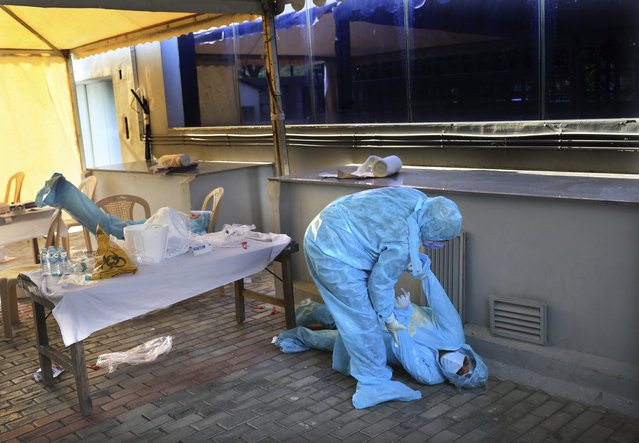
In this April 27, 2020 photo, a health worker helps another as she fainted because of exhaustion and long working hours during a swab test drive for COVID 19, in New Delhi, India. Two and a half months of nationwide lockdown kept numbers of infections relatively low in India. But with restrictions easing in recent weeks, cases have shot up, raising questions about whether authorities have done enough to avert catastrophe. Half of Delhi’s 8,200 hospital beds dedicated to COVID-19 patients are already full and officials are projecting more than half a million cases in the city alone by July 31. (Photo by Manish Swarup/AP Photo)

In this April 27, 2020 photo, a health worker helps another as she fainted because of exhaustion and long working hours during a swab test drive for COVID 19, in New Delhi, India. Two and a half months of nationwide lockdown kept numbers of infections relatively low in India. But with restrictions easing in recent weeks, cases have shot up, raising questions about whether authorities have done enough to avert catastrophe. Half of Delhi’s 8,200 hospital beds dedicated to COVID-19 patients are already full and officials are projecting more than half a million cases in the city alone by July 31. (Photo by Manish Swarup/AP Photo)
Details
08 Jan 2021 00:01:00