Loading...
Done
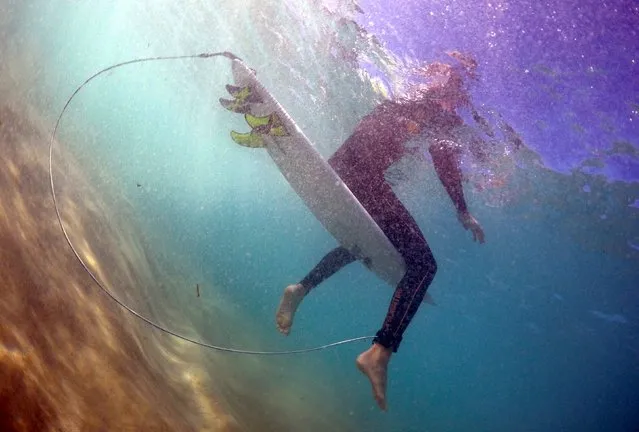
Surfer Arlen Macpherson sits on his board, which has an electronic shark repellent device installed, at Sydney's Bondi Beach in Australia, August 18, 2015. A spate of shark attacks in Australia has left some of world's top surfing beaches deserted and many people having second thoughts about taking a swim as the summer approaches. Macpherson paid A$390 for a device embedded in his surf board to repel sharks by emitting an electronic force field that overpowers its sensing organs. (Photo by David Gray/Reuters)

Surfer Arlen Macpherson sits on his board, which has an electronic shark repellent device installed, at Sydney's Bondi Beach in Australia, August 18, 2015. A spate of shark attacks in Australia has left some of world's top surfing beaches deserted and many people having second thoughts about taking a swim as the summer approaches. Macpherson paid A$390 for a device embedded in his surf board to repel sharks by emitting an electronic force field that overpowers its sensing organs. (Photo by David Gray/Reuters)
Details
19 Aug 2015 12:47:00
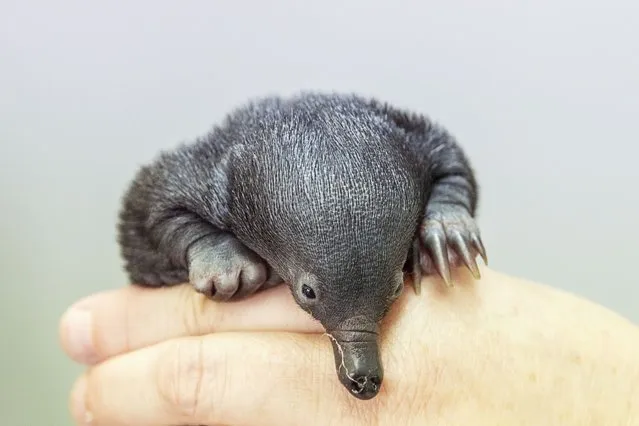
“Smudge” an orphaned echidna puggle is held by Veterinary nurse Sarah Male ahead of its feeding on November 07, 2022 in Sydney, Australia. Echidnas, sometimes known as spiny anteaters, are native to Australia. A baby echidna was found orphaned by the side of the road and is being cared for at Sydney's Taronga Zoo hospital. The care is intensive with several feedings per day, and the echidna is housed in temperature-controlled environment to aid its recovery and growth. (Photo by Jenny Evans/Getty Images)

“Smudge” an orphaned echidna puggle is held by Veterinary nurse Sarah Male ahead of its feeding on November 07, 2022 in Sydney, Australia. Echidnas, sometimes known as spiny anteaters, are native to Australia. A baby echidna was found orphaned by the side of the road and is being cared for at Sydney's Taronga Zoo hospital. The care is intensive with several feedings per day, and the echidna is housed in temperature-controlled environment to aid its recovery and growth. (Photo by Jenny Evans/Getty Images)
Details
04 Jan 2024 19:37:00
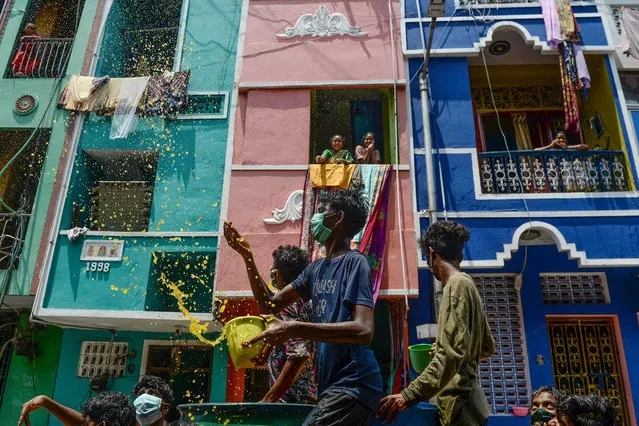
Volunteers throw a mixture of water, neem herb and turmeric as an alleged natural disinfectant on a street in a residential area during a government-imposed nationwide lockdown as a preventive measure against the COVID-19 coronavirus, in Chennai on April 7, 2020. (Photo by Arun Sankar/AFP Photo)

Volunteers throw a mixture of water, neem herb and turmeric as an alleged natural disinfectant on a street in a residential area during a government-imposed nationwide lockdown as a preventive measure against the COVID-19 coronavirus, in Chennai on April 7, 2020. (Photo by Arun Sankar/AFP Photo)
Details
20 Apr 2020 00:03:00
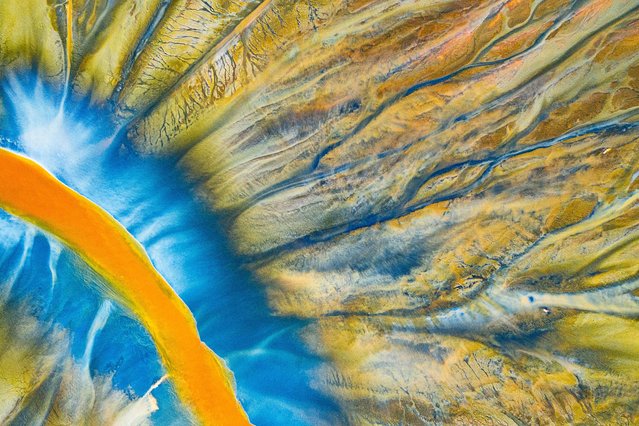
Poisoned River. Abstract Winner. A detailed photograph of a stream filled with poison. “Poisoned Beauty” is a personal project that tells the story of the natural disaster in the Apuseni Mountains in Transylvania, which was a result of chemical waste generated by copper and gold mining, but in a beautifully abstract way. (Photo by Gheorghe Popa/Drone Photography Awards 2021)

Poisoned River. Abstract Winner. A detailed photograph of a stream filled with poison. “Poisoned Beauty” is a personal project that tells the story of the natural disaster in the Apuseni Mountains in Transylvania, which was a result of chemical waste generated by copper and gold mining, but in a beautifully abstract way. (Photo by Gheorghe Popa/Drone Photography Awards 2021)
Details
19 Sep 2021 05:30:00
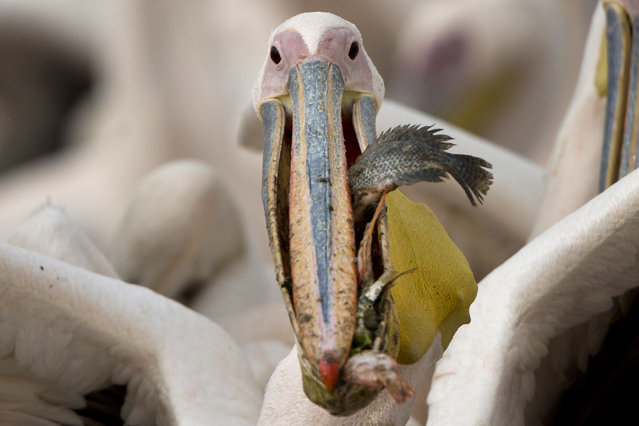
A Great White Pelicans eats fish in the Mishmar HaSharon reservoir, Israel, Wednesday, November 4, 2015. Thousands of Pelicans stop in the reservoir for food provided by the Israeli nature reserves authority as they make their way to Africa. (Photo by Ariel Schalit/AP Photo)

A Great White Pelicans eats fish in the Mishmar HaSharon reservoir, Israel, Wednesday, November 4, 2015. Thousands of Pelicans stop in the reservoir for food provided by the Israeli nature reserves authority as they make their way to Africa. (Photo by Ariel Schalit/AP Photo)
Details
11 Nov 2015 08:04:00
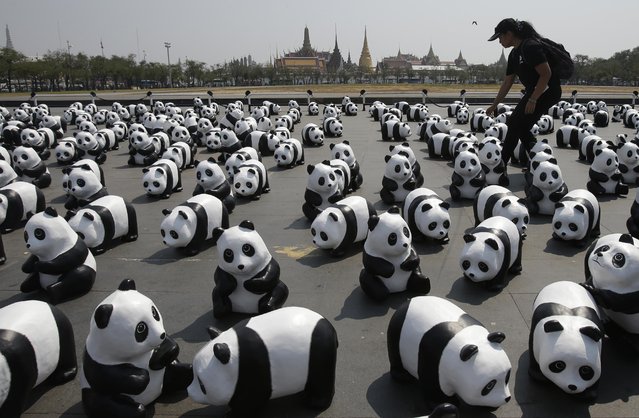
A worker displays paper pandas created by French artist Paulo Grangeon in front of the Grand Palace in Bangkok, Thailand, Friday, March 4, 2016. The exhibit is part of the World Wide Fund's project where the 1600 paper pandas symbolize the last pandas still present in nature.(Photo by Sakchai Lalit/AP Photo)

A worker displays paper pandas created by French artist Paulo Grangeon in front of the Grand Palace in Bangkok, Thailand, Friday, March 4, 2016. The exhibit is part of the World Wide Fund's project where the 1600 paper pandas symbolize the last pandas still present in nature.(Photo by Sakchai Lalit/AP Photo)
Details
05 Mar 2016 12:09:00
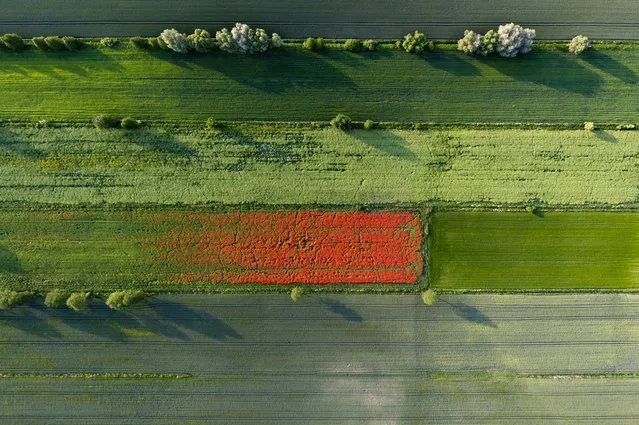
A view over fields of grain in Spring white chamomile, blue cornflower and other weeds growing amongst the grain sprouts. (Photo by Kacper Kowalski/Panos Pictures)

In his book “Side Effects”, aerial photographer Kacper Kowalski took to the skies to paint a portrait of the complex relationship between humans and nature. From the sky, he captured where nature and civilization collide into aesthetic, abstract colors and shapes. Photo: A view over fields of grain in Spring chamomile, cornflower and other weeds growing amongst the grain sprouts. (Photo by Kacper Kowalski/Panos Pictures)
Details
04 Sep 2014 08:19:00
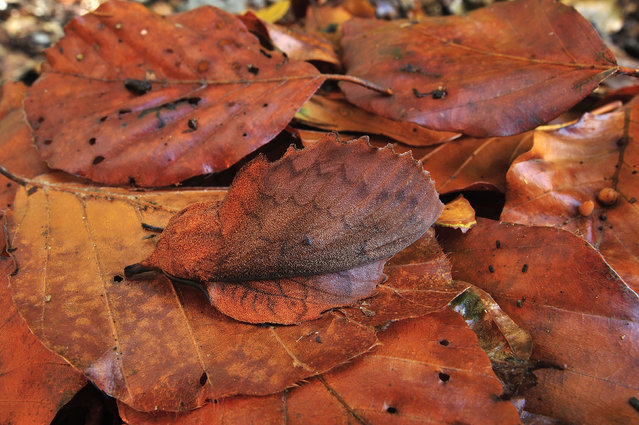
The camouflage mappet moth looks like a fall lead in Switzerland. (Photo by Thomas Marent/Caters News/Ardea)

Whether they are the hunter or the hunted, these camouflage animals show natures incredible ability to blend in with its surroundings. Pictured perfectly concealed against their natural environment, the stunning pictures show the amazing lengths some animals will go to to stay out of sight. Here: The camouflage mappet moth looks like a fall lead in Switzerland. (Photo by Thomas Marent/Caters News/Ardea)
Details
09 Oct 2014 12:58:00