Loading...
Done
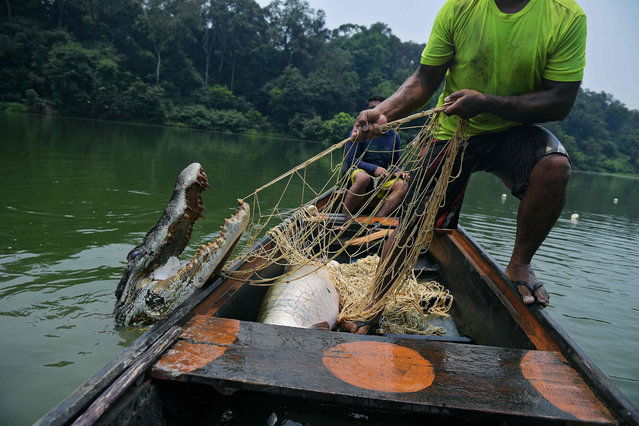
Fishermen pull up a live 2.5 metre crocodile in their net in the Western Amazon region, Brazil on September 20, 2017. The fishermen were fishing for a large river fish called Arapaima but sometimes crocodiles become stuck in the nets as well. (Photo by Carl de Souza/AFP Photo)

Fishermen pull up a live 2.5 metre crocodile in their net in the Western Amazon region, Brazil on September 20, 2017. The fishermen were fishing for a large river fish called Arapaima but sometimes crocodiles become stuck in the nets as well. (Photo by Carl de Souza/AFP Photo)
Details
24 Sep 2017 06:47:00
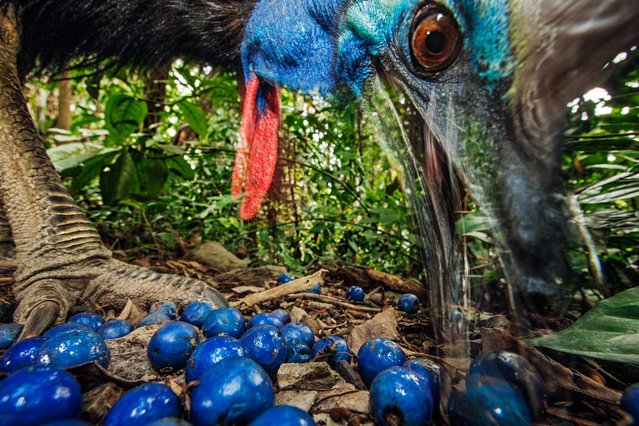
“Cassowaries are large, flightless birds related to emus and (more distantly) to ostriches, rheas, and kiwis”, writes Olivia Judson in the September issue of National Geographic magazine. (Photo by Christian Ziegler/National Geographic)

“Cassowaries are large, flightless birds related to emus and (more distantly) to ostriches, rheas, and kiwis”, writes Olivia Judson in the September issue of National Geographic magazine. How large? People-size: Adult males stand well over five foot five and top 110 pounds. Females are even taller, and can weigh more than 160 pounds. Dangerous when roused, they’re shy and peaceable when left alone. But even birds this big and tough are prey to habitat loss. The dense New Guinea and Australia rain forests where they live have dwindled. Today cassowaries might number 1,500 to 2,000. And because they help shape those same forests – by moving seeds from one place to another – “if they vanish”, Judson writes, “the structure of the forest would gradually change” too. (Photo by Christian Ziegler/National Geographic)

Details
06 Jan 2014 12:21:00
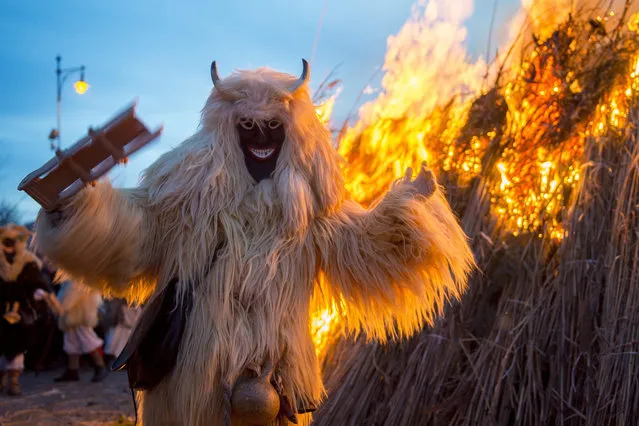
A reveler wearing sheepfur costume is seen in front of a bonfire on which they burn a coffin symbolizing winter during the closing ceremony of the traditional carnival parade in Mohacs, 189 kms south of Budapest, Hungary, 07 February 2016. (Photo by Tamas Soki/EPA)

A reveler wearing sheepfur costume is seen in front of a bonfire on which they burn a coffin symbolizing winter during the closing ceremony of the traditional carnival parade in Mohacs, 189 kms south of Budapest, Hungary, 07 February 2016. The carnival parade of people, the so-called busos, dressed in such costumes and frightening wooden masks, using various noisy wooden rattlers is traditionally held on the seventh weekend before Easter to drive away winter, and is a revival of a legend, which says that ethnic Croats ambushed the Osmanli Turkish troops, who escaped in panic seeing the terrifying figures during the Turkish occupation of Hungary. (Photo by Tamas Soki/EPA)
Details
09 Feb 2016 14:02:00
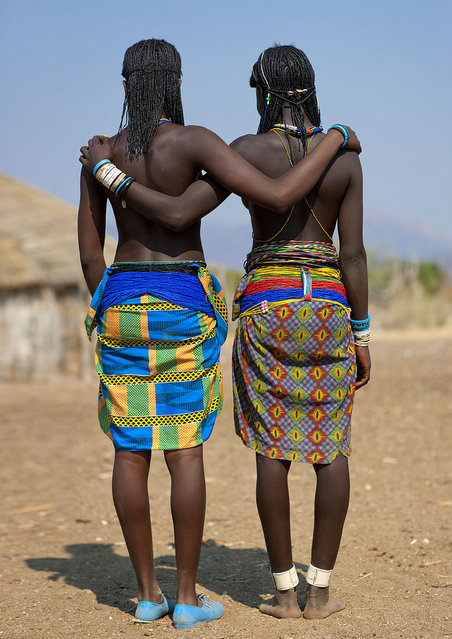
“Show us our butts! Mucawana tribe – Angola. In Soba village, the Muhacaona (Mucawana) tribe, perhaps the best place i have visited. They use cow dung and fat to make this so nice haircut, and love the beads. They asked me to make pictures of their backs... and butts to see on the camera screen if everything was perfect!”. (Eric Lafforgue)

“Show us our butts! Mucawana tribe – Angola. In Soba village, the Muhacaona (Mucawana) tribe, perhaps the best place i have visited. They use cow dung and fat to make this so nice haircut, and love the beads. They asked me to make pictures of their backs... and butts to see on the camera screen if everything was perfect!”. (Photo and comments by Eric Lafforgue)
Details
09 Nov 2012 15:04:00
A girl plays on a pile of discarded flowers outside a market, the day after the Diwali celebrations in Mumbai, India October 31, 2016. (Photo by Shailesh Andrade/Reuters)

A girl plays on a pile of discarded flowers outside a market, the day after the Diwali celebrations in Mumbai, India October 31, 2016. (Photo by Shailesh Andrade/Reuters)
Details
01 Nov 2016 12:05:00


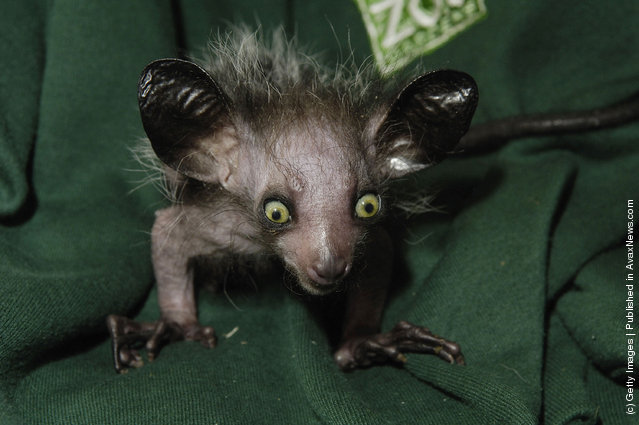
“The aye-aye (Daubentonia madagascariensis) is a lemur, a strepsirrhine primate native to Madagascar that combines rodent-like teeth and a special thin middle finger to fill the same ecological niche as a woodpecker. It is the world's largest nocturnal primate, and is characterized by its unusual method of finding food; it taps on trees to find grubs, then gnaws holes in the wood and inserts its narrow middle finger to pull the grubs out. The only other animal species known to find food in this way is the striped possum. From an ecological point of view the aye-aye fills the niche of a woodpecker as it is capable of penetrating wood to extract the invertebrates within”. – Wikipedia

Photo: In this handout image from Bristol Zoo is seen the first captive bred aye-aye in the UK named “Kintana” (meaning star in Malagasy) April 15, 2005 at Bristol Zoo Gardens, England. The zoo announced today only the second baby aye-aye to be hand-reared in the world (the first was in Jersey Zoo) and has now made his first public appearance since his birth on 11 February 2005. (Photo by Rob Cousins/Bristol Zoo via Getty Images)
Details
13 Apr 2011 13:33:00
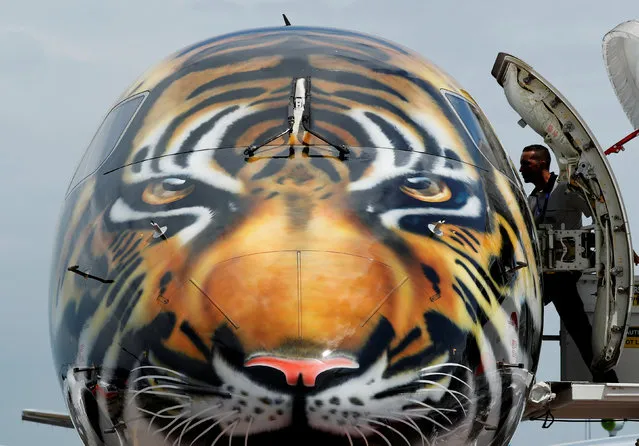
An Embraer E-190 E2 aircraft featuring a spray painted tiger's face on the nose of the aircraft is displayed during a media preview of the Singapore Airshow February 4, 2018. (Photo by Edgar Su/Reuters)

An Embraer E-190 E2 aircraft featuring a spray painted tiger's face on the nose of the aircraft is displayed during a media preview of the Singapore Airshow February 4, 2018. (Photo by Edgar Su/Reuters)
Details
22 Jun 2018 00:03:00
A teller at a money changer handles Indonesia rupiah bank notes in Jakarta, Indonesia November 11, 2016. (Photo by Darren Whiteside/Reuters)

A teller at a money changer handles Indonesia rupiah bank notes in Jakarta, Indonesia November 11, 2016. (Photo by Darren Whiteside/Reuters)
Details
08 Dec 2016 12:21:00