Loading...
Done
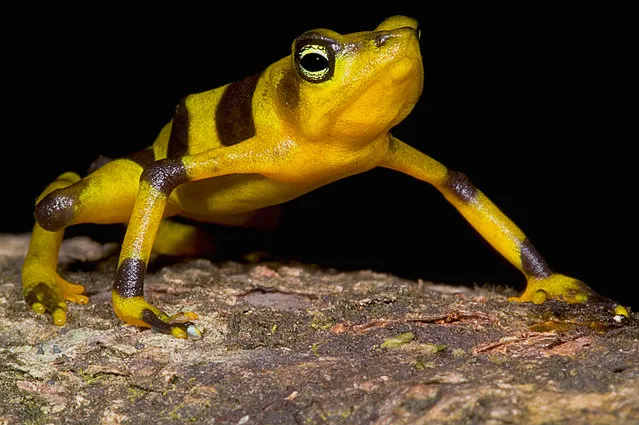
The golden harlequin toad has vanished from the wild, and only a small number live on in captivity. A fungus caused them, and many other amphibians, to die out in their home in Central America. (Photo by Danté Fenolio/The Guardian/Johns Hopkins University Press)

Wildlife photographer Danté Fenolio has headed into areas untouched by sunlight – deep seas, caves and underground – and found creatures that are exploding with colour. Here: The golden harlequin toad has vanished from the wild, and only a small number live on in captivity. A fungus caused them, and many other amphibians, to die out in their home in Central America. (Photo by Danté Fenolio/The Guardian/Johns Hopkins University Press)
Details
20 Jun 2016 12:19:00
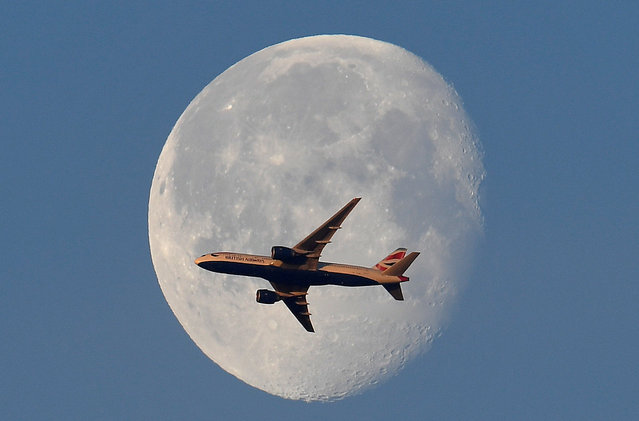
A British Airways passenger plane flies in front of the moon above London, Britain, May 3, 2018. (Photo by Toby Melville/Reuters)

A British Airways passenger plane flies in front of the moon above London, Britain, May 3, 2018. (Photo by Toby Melville/Reuters)
Details
21 Feb 2019 00:03:00


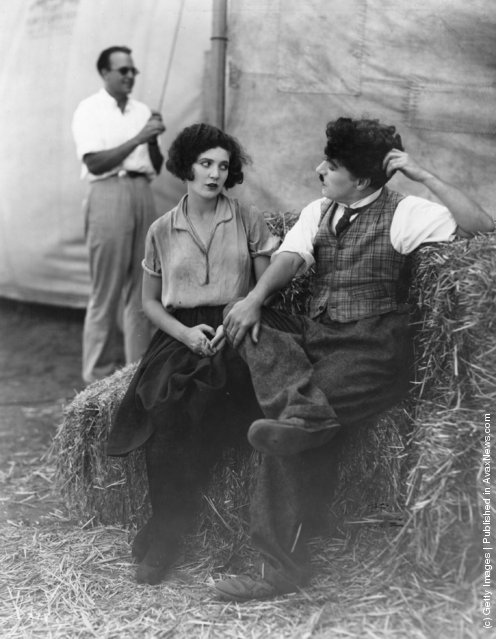
English comic actor and director Charlie Chaplin (Sir Charles Spencer Chaplin, 1889–1977) seated on straw bales during the filming of “The Circus” with his leading lady Merna Kennedy (1908–1944). (Photo by Margaret Chute/Getty Images). 1928
Details
16 Apr 2011 09:08:00
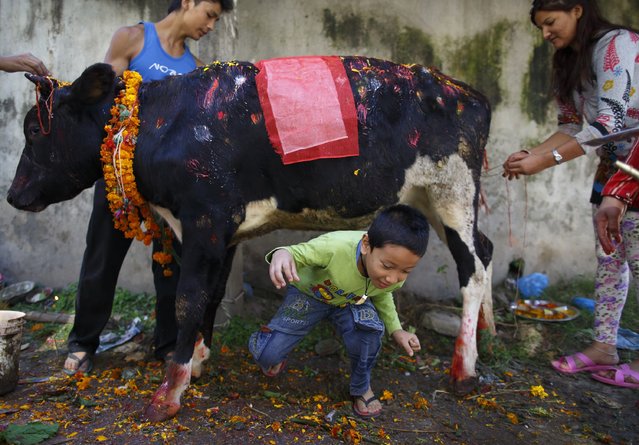
A boy crawls under a cow during a religious ceremony celebrating the Tihar festival, also called Diwali, in Kathmandu, October 23, 2014. Hindus all over Nepal are celebrating the festival during which they worship cows, which are considered a maternal figure, and other animals. Also known as the festival of lights, devotees worship the goddess of wealth Laxmi by illuminating and decorating their homes using garlands, oil lamps, candles and colourful light bulbs. (Photo by Navesh Chitrakar/Reuters)

A boy crawls under a cow during a religious ceremony celebrating the Tihar festival, also called Diwali, in Kathmandu, October 23, 2014. Hindus all over Nepal are celebrating the festival during which they worship cows, which are considered a maternal figure, and other animals. Also known as the festival of lights, devotees worship the goddess of wealth Laxmi by illuminating and decorating their homes using garlands, oil lamps, candles and colourful light bulbs. (Photo by Navesh Chitrakar/Reuters)
Details
25 Oct 2014 13:23:00
The antennas of the European Southern Observatory's Atacama Large Millimeter/Submillimeter Array, also known as ALMA, are set against the splendor of the Milky Way in this picture by Babak Tafreshi

The antennas of the European Southern Observatory's Atacama Large Millimeter/Submillimeter Array, also known as ALMA, are set against the splendor of the Milky Way in this picture by Babak Tafreshi. Construction of the full ALMA array is due to be completed in Chile's Atacama Desert in 2013, but the facility is already making scientific observations with a partial array of antennas. (Photo by ESO/B. Tafreshi/TWAN)
Details
03 Jun 2012 11:57:00
The National Geographic Photo Ark is a travelling exhibition of photographer Joel Sartore’s quest to create a photo archive of biodiversity around the world. So far, Sartore has captured studio portraits of more than 6,000 species – a number that he hopes to double. On 1 July, the ark will open at Melbourne zoo – the first time it has been exhibited in the southern hemisphere. More than 50 portraits will be on display, including many of Australian endangered animals being protected by programs at the zoo itself. These captions have been edited from text supplied by Melbourne zoo. Here: Barking owl. So-named because its call sounds like a barking dog, these birds are native to Australia, Indonesia and Papua New Guinea. In Victoria they are listed as an endangered species, and in 2003 there were estimated to be fewer than 50 breeding pairs. The main threat to the species in Victoria is loss of habitat, especially large trees with hollows in which they can nest and on which many of their prey depend. Apart from a bark, they may utter a chilling scream when they feel threatened. (Photo by Joel Sartore/National Geographic Photo Ark/The Guardian)

The National Geographic Photo Ark is a travelling exhibition of photographer Joel Sartore’s quest to create a photo archive of biodiversity around the world. So far, Sartore has captured studio portraits of more than 6,000 species – a number that he hopes to double. On 1 July, the ark will open at Melbourne zoo – the first time it has been exhibited in the southern hemisphere. More than 50 portraits will be on display, including many of Australian endangered animals being protected by programs at the zoo itself. These captions have been edited from text supplied by Melbourne zoo. Here: Barking owl. (Photo by Joel Sartore/National Geographic Photo Ark/The Guardian)
Details
01 Jul 2017 07:45:00
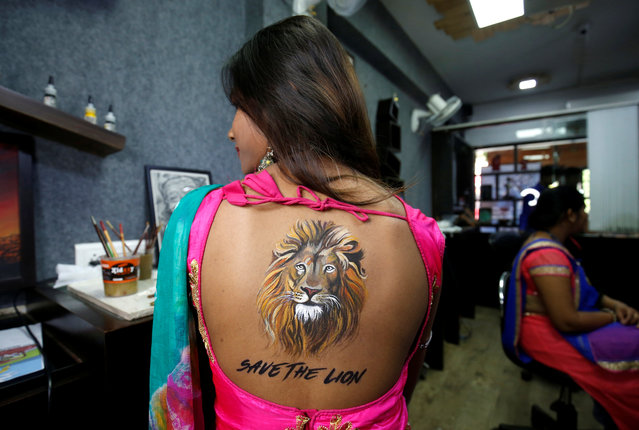
A woman poses after she got an image of a lion tattooed on her back as part of awareness campaign to save Asiatic lions and in preparations for the upcoming Navratri festival in Ahmedabad, India, October 5, 2018. (Photo by Amit Dave/Reuters)

A woman poses after she got an image of a lion tattooed on her back as part of awareness campaign to save Asiatic lions and in preparations for the upcoming Navratri festival in Ahmedabad, India, October 5, 2018. (Photo by Amit Dave/Reuters)
Details
15 Oct 2018 00:05:00
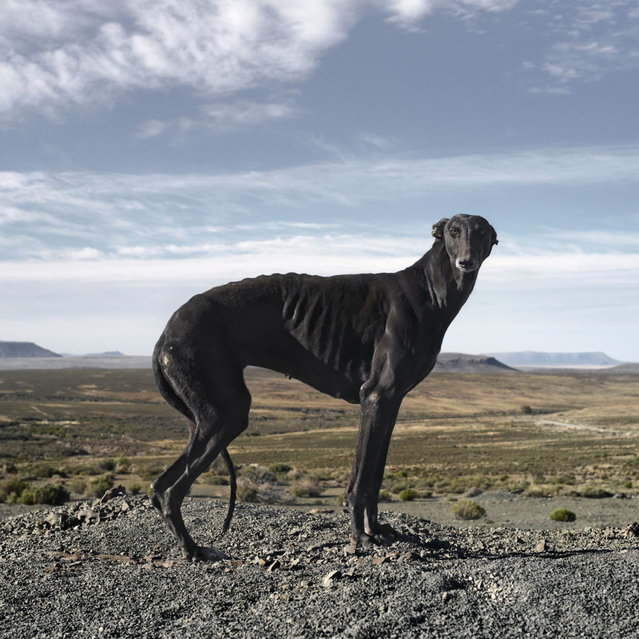
Africanis 18. Murraysburg, Western Cape, May 10, 2010. (Photo by Daniel Naudé)

“The Africanis is a landrace of South African dogs. It is believed to be of ancient origin, directly descended from hounds and pariah dogs of ancient Africa, introduced into the Nile Valley from the Levant. The Swahili name for the breed is umbwa wa ki-shenzi meaning common or mongrel or “traditional dog”. Africanis is also an umbrella name for all the aboriginal dogs in southern Africa”. – Wikipedia. Photo: Africanis 18. Murraysburg, Western Cape, May 10, 2010. (Photo by Daniel Naudé)
Details
19 May 2013 11:51:00