
28 Jun 2013 13:09:00,post received
0 comments

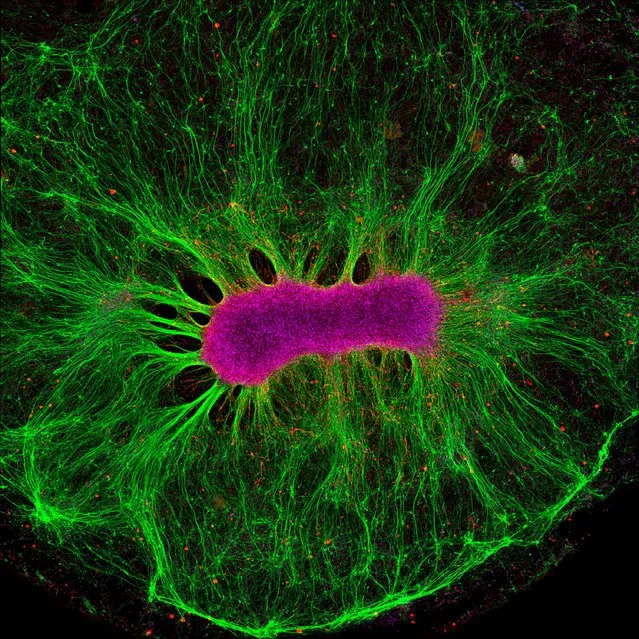
Brain-on-a-chip. Dazzling in green and magenta this image shows the nerve fibres (in green) produced by neural stem cells (in magenta) as they grow on a synthetic gel. Captured by a technique known as confocal microscopy, the image is part of research shedding light on how tinkering with the environment can affect the way in which nerve fibres grow. (Photo by Collin Edington and Iris Lee/Massachusetts Institute of Technology/Wellcome Images)
17 Mar 2017 00:01:00,post received
0 comments

People gather on a hill near the Chopin Airport to watch aeroplanes taking off, in Warsaw, Poland, Sunday, September 9, 2018. (Photo by Alik Keplicz/AP Photo)
12 Sep 2018 08:55:00,post received
0 comments

Martin De Pasquale with his creative photographs. Here's a look at the incredible world of a digital artist who creates mind-bending works of art with Photoshop. (Photo by Martin De Pasquale/Caters News)
25 Jun 2014 06:07:00,post received
0 comments
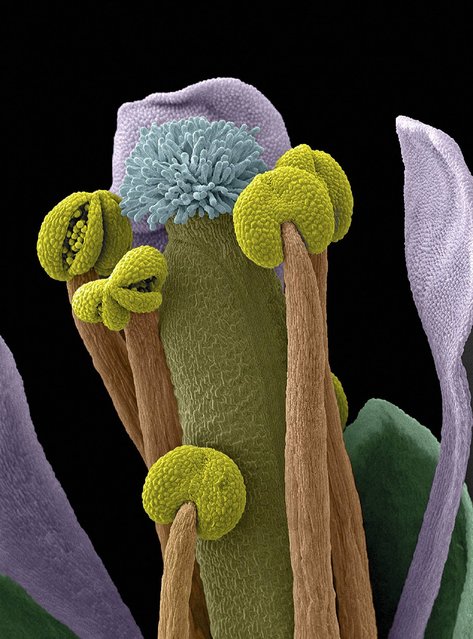
Beautiful, strange and occasionally alarming pictures from the shortlist for this year’s Wellcome image awards – which celebrate the very best in science photography and imaging – from an x-ray of a bat to a micrograph of a kidney stone. The exhibition opens on 12 March at three science centres and the Museum of Science and Industry in Manchester. Photo: Scanning electron micrograph (SEM) of an Arabidopsis thaliana flower, also commonly known as thale cress. Some of the anthers are open, revealing pollen grains ready for dispersal. Arabidopsis was the first plant to have its entire genome sequenced and is widely used as a model organism in molecular and plant biology. Horizontal width of image is 1200 microns. Magnification 100x. (Photo by Stefan Eberhard/Wellcome Images)
11 Mar 2014 05:58:00,post received
0 comments

A three-seater Toyota Kikai concept car is displayed during the 2016 CES trade show in Las Vegas, Nevada January 8, 2016. (Photo by Steve Marcus/Reuters)
12 Jan 2016 08:02:00,post received
0 comments
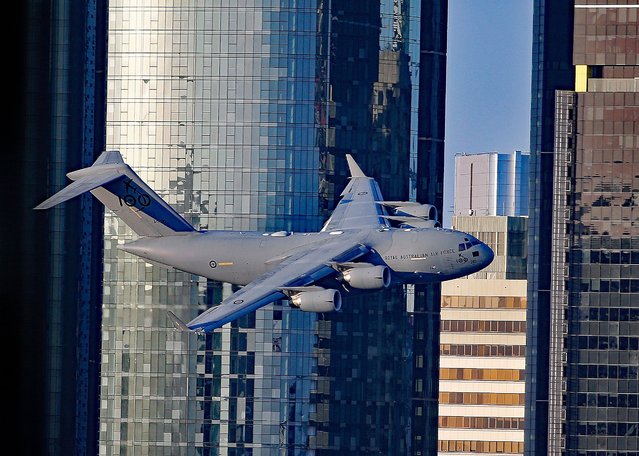
Shocking footage of a low-altitude flight through Brisbane's skyscrapers in United Kingdom on Thursday, September 23, 2021. The Royal Australian Air Force C-17 cargo jet was spotted on a practice run ahead of the annual Sunsuper Riverfire event, which took place on Saturday night. (Photo by The Mega Agency)
16 Oct 2021 09:13:00,post received
0 comments
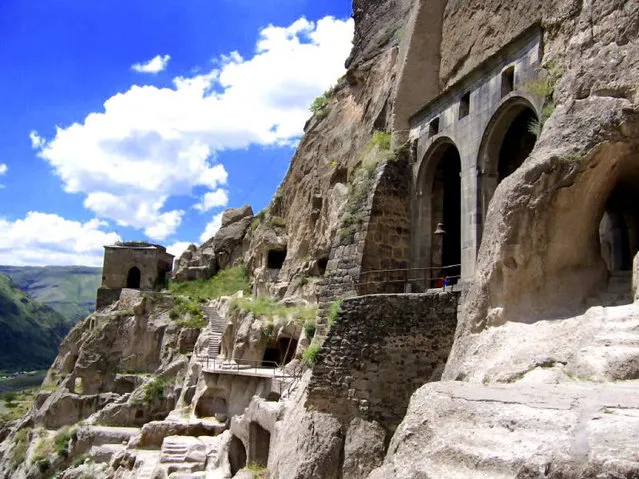
Vardzia is a cave monastery site in southern Georgia, excavated from the slopes of the Erusheti Mountain on the left bank of the Mtkvari River, thirty kilometres from Aspindza. The main period of construction was the second half of the twelfth century. The caves stretch along the cliff for some five hundred metres and in up to nineteen tiers. The Church of the Dormition, dating to the 1180s during the golden age of Tamar and Rustaveli, has an important series of wall paintings. The site was largely abandoned after the Ottoman takeover in the sixteenth century. Now part of a state heritage reserve, the extended area of Vardzia-Khertvisi has been submitted for future inscription on the UNESCO World Heritage List
04 Sep 2013 10:53:00,post received
0 comments