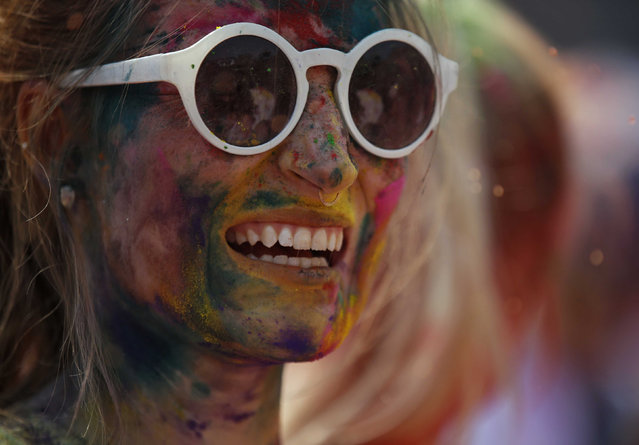
A woman with coloured powder smeared on her face smile as she celebrates Holi, the Festival of Colours, in Kathmandu, Nepal, March 22, 2016. (Photo by Navesh Chitrakar/Reuters)
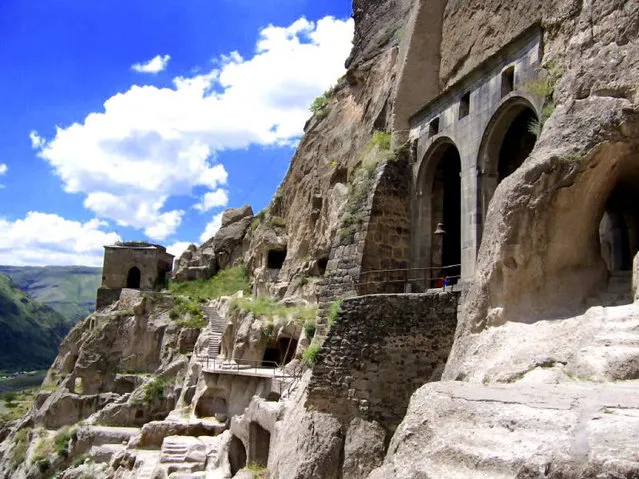
Vardzia is a cave monastery site in southern Georgia, excavated from the slopes of the Erusheti Mountain on the left bank of the Mtkvari River, thirty kilometres from Aspindza. The main period of construction was the second half of the twelfth century. The caves stretch along the cliff for some five hundred metres and in up to nineteen tiers. The Church of the Dormition, dating to the 1180s during the golden age of Tamar and Rustaveli, has an important series of wall paintings. The site was largely abandoned after the Ottoman takeover in the sixteenth century. Now part of a state heritage reserve, the extended area of Vardzia-Khertvisi has been submitted for future inscription on the UNESCO World Heritage List
This is collection on most foolish peoples whose don’t have scene and don’t care about safety and work dangerously that mean they fell in any problem.If you want to see that person then look around you must find one of them.
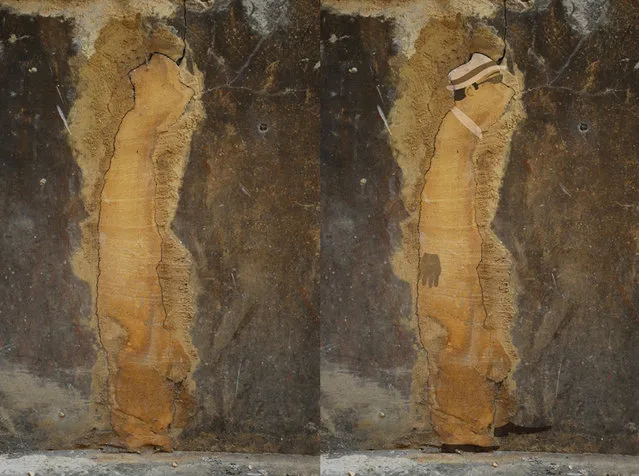
In her blog “Stop Watch” Dutch artist Tineke Meirink takes photos of everyday objects found on the streets, then she gives life to by adding a minimal digital illustratior.
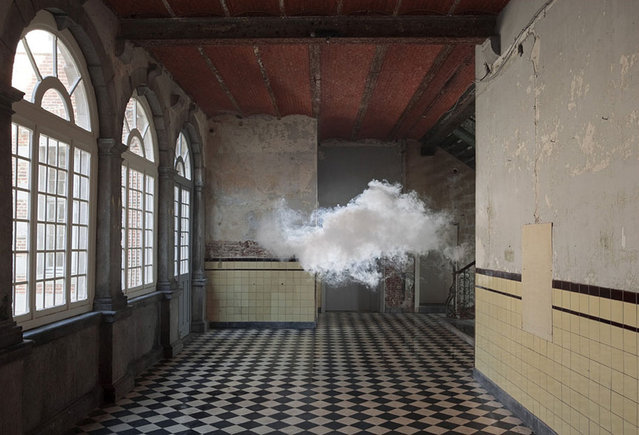
Dutch artist Berndnaut Smilde is interested in the ephemeral -- impermanent states of being which he documents through photographs. For Nimbus II, he used a smoke machine, combined with moisture and dramatic lighting to create a hovering indoor cloud in the empty setting of a sixteenth-century chapel in Hoorn, a small town in Holland. “I imagined walking into a museum hall with just empty walls. The place even looked deserted. On the one hand I wanted to create an ominous situation. You could see the cloud as a sign of misfortune. You could also read it as an element out of the Dutch landscape paintings in a physical form in a classical museum hall.”