Loading...
Done
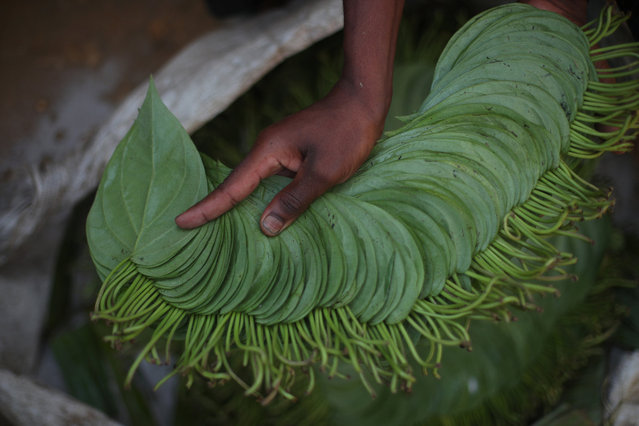
Faruk, 17, a Rohingya refugee trader holds betel leaves which are on sale at a stall in Palong Khali refugee camp near Cox's Bazar, Bangladesh, November 3, 2017. He left his village in Myanmar when the military opened fire towards the Rohingya. “I buy this betel leaf from Palong Khali market, in one bundle there are 160 pieces, I buy it for 80 taka and I sell it for 100 taka. Bangladeshi's and I sell for the same rate in the camp. Outside in the local market it is 80 taka per bundle. My problem is that I don't have money so I can't buy anything to eat, I can't buy fish to eat”, he said. (Photo by Hannah McKay/Reuters)

Faruk, 17, a Rohingya refugee trader holds betel leaves which are on sale at a stall in Palong Khali refugee camp near Cox's Bazar, Bangladesh, November 3, 2017. He left his village in Myanmar when the military opened fire towards the Rohingya. “I buy this betel leaf from Palong Khali market, in one bundle there are 160 pieces, I buy it for 80 taka and I sell it for 100 taka (1 Bangladeshi Taka = 0.012 US Dollar). Bangladeshi's and I sell for the same rate in the camp. Outside in the local market it is 80 taka per bundle. My problem is that I don't have money so I can't buy anything to eat, I can't buy fish to eat”, he said. (Photo by Hannah McKay/Reuters)
Details
27 Nov 2017 08:54:00


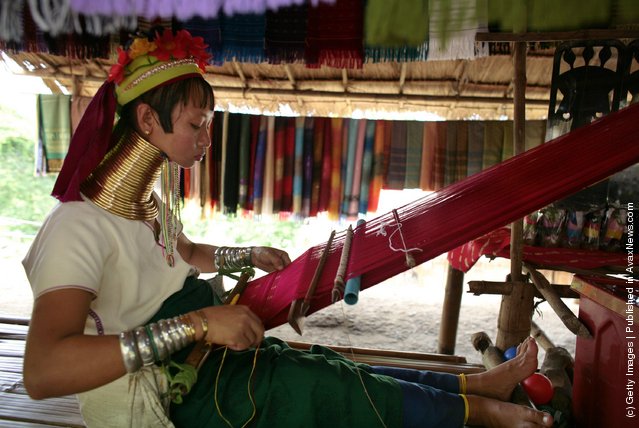
Mah Chan, a Long Neck Padaung hill tribe woman weaves a scraf for sale to tourists in a small village where 30 familes live July 13, 2006 in Chiang Dao, Thailand. All the Long Neck villages are set up for tourists and just over a year ago the hill tribe members were hand picked to move closer to Chiang Mai from more remote communities so that they could be more accessible. The Padaung women famously wear brass rings around their necks, beginning at five-years-old, to distort the growth of their collarbones and making them look like they have long necks. They are originally from eastern Burma near the Thailand border. (Photo by Paula Bronstein/Getty Images)
Details
19 Apr 2011 11:56:00
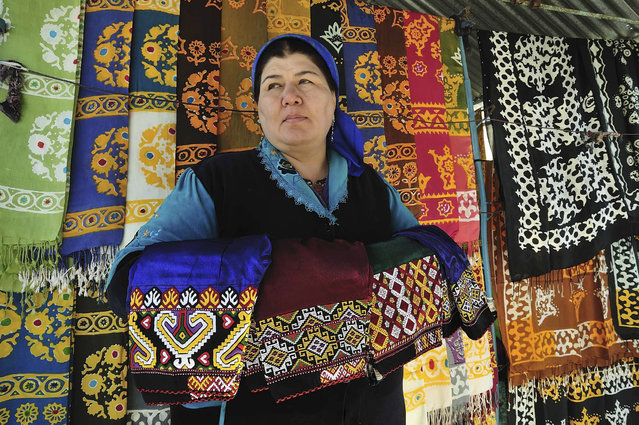
A woman looks out from her stall selling traditional garments and textiles at a market in Ashgabat February 8, 2012. (Photo by Aman Mehinli/Reuters)

A woman looks out from her stall selling traditional garments and textiles at a market in Ashgabat February 8, 2012. (Photo by Aman Mehinli/Reuters)
Details
27 May 2015 00:04:00
A family dressed in traditional chinese clothes celebrates the Chinese New Year in Chinatown in Bangkok, Thailand February 8, 2016. (Photo by Jorge Silva/Reuters)

A family dressed in traditional chinese clothes celebrates the Chinese New Year in Chinatown in Bangkok, Thailand February 8, 2016. (Photo by Jorge Silva/Reuters)
Details
09 Feb 2016 13:40:00
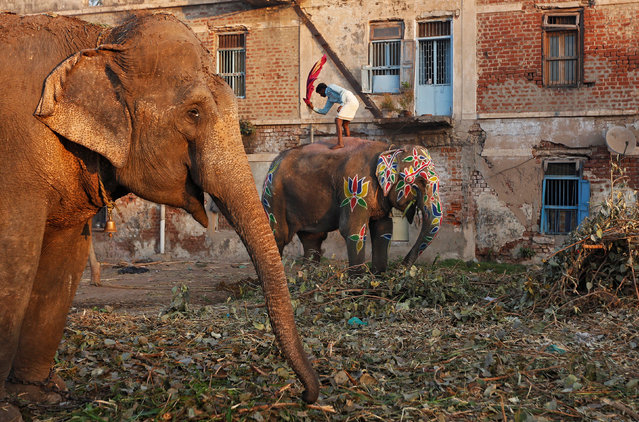
A mahout cleans the dust from his elephant in Ahmedabad, India, February 8, 2017. (Photo by Amit Dave/Reuters)

A mahout cleans the dust from his elephant in Ahmedabad, India, February 8, 2017. (Photo by Amit Dave/Reuters)
Details
13 Feb 2017 00:03:00
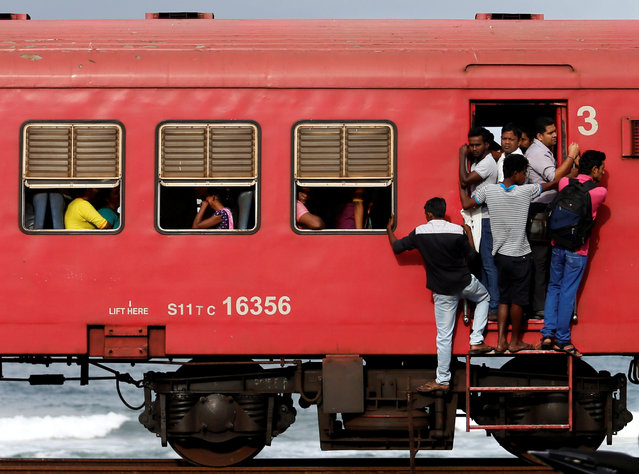
Commuters hang off a local passenger train in the morning in Colombo, Sri Lanka September 8, 2016. (Photo by Dinuka Liyanawatte/Reuters)

Commuters hang off a local passenger train in the morning in Colombo, Sri Lanka September 8, 2016. (Photo by Dinuka Liyanawatte/Reuters)
Details
25 Oct 2016 09:54:00
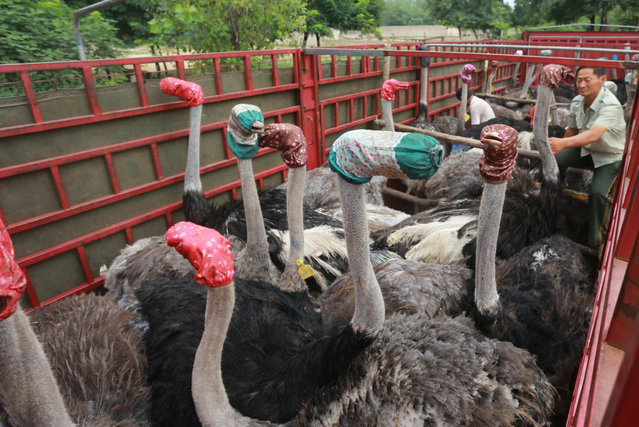
Ostriches wear masks as they are transported by a truck for relocation in Zhengzhou, Henan Province, China, August 8, 2016. (Photo by Reuters/Stringer)

Ostriches wear masks as they are transported by a truck for relocation in Zhengzhou, Henan Province, China, August 8, 2016. (Photo by Reuters/Stringer)
Details
16 Aug 2016 09:35:00
A demonstrator uses a slingshot during a protest against Chile's government in Santiago, Chile on November 8, 2019. (Photo by Pablo Sanhueza/Reuters)

A demonstrator uses a slingshot during a protest against Chile's government in Santiago, Chile on November 8, 2019. (Photo by Pablo Sanhueza/Reuters)
Details
04 Feb 2020 00:01:00