Loading...
Done
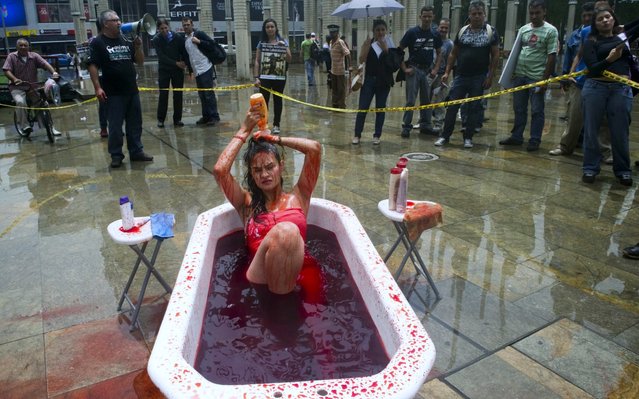
An animal rights activist washes herself with red dye to mimic blood during a protest against the testing of shampoo on animals in Barcelona

An animal rights activist washes herself with red dye to mimic blood during a protest against the testing of shampoo on animals in Barcelona. April 24, 2012. (Photo by Raul Albaledo/AFP Photo)
Details
28 Apr 2012 12:28:00
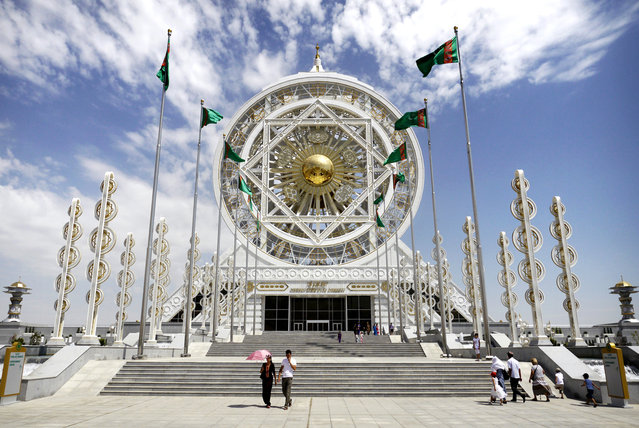
A young couple leave the Alem Entertainment Center in Ashgabat. The current president has a history of breaking obscure records. In 2012 the wheel atop this complex was entered into the Guinness Book of World Records as the world's largest enclosed Ferris wheel. The structure was built at a cost of $90m. (Photo by Amos Chapple via The Atlantic)

Travel photographer Amos Chapple recently crossed into Turkmenistan on a three-day transit visa and was able to photograph many of the sights and monuments in Ashgabat, the capital and largest city. Turkmenistan is a single-party country, a former Soviet state, run by a president at the center of a cult of personality.

Photo: A young couple leave the Alem Entertainment Center in Ashgabat. The current president has a history of breaking obscure records. In 2012 the wheel atop this complex was entered into the Guinness Book of World Records as the world's largest enclosed Ferris wheel. The structure was built at a cost of $90m. (Photo by Amos Chapple via The Atlantic)
Details
09 Jun 2013 07:24:00
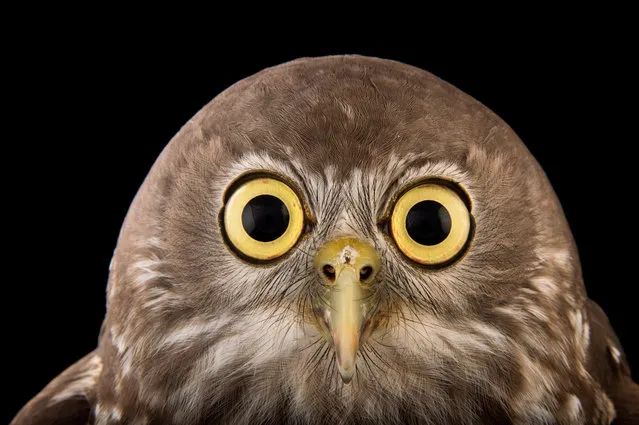
The National Geographic Photo Ark is a travelling exhibition of photographer Joel Sartore’s quest to create a photo archive of biodiversity around the world. So far, Sartore has captured studio portraits of more than 6,000 species – a number that he hopes to double. On 1 July, the ark will open at Melbourne zoo – the first time it has been exhibited in the southern hemisphere. More than 50 portraits will be on display, including many of Australian endangered animals being protected by programs at the zoo itself. These captions have been edited from text supplied by Melbourne zoo. Here: Barking owl. So-named because its call sounds like a barking dog, these birds are native to Australia, Indonesia and Papua New Guinea. In Victoria they are listed as an endangered species, and in 2003 there were estimated to be fewer than 50 breeding pairs. The main threat to the species in Victoria is loss of habitat, especially large trees with hollows in which they can nest and on which many of their prey depend. Apart from a bark, they may utter a chilling scream when they feel threatened. (Photo by Joel Sartore/National Geographic Photo Ark/The Guardian)

The National Geographic Photo Ark is a travelling exhibition of photographer Joel Sartore’s quest to create a photo archive of biodiversity around the world. So far, Sartore has captured studio portraits of more than 6,000 species – a number that he hopes to double. On 1 July, the ark will open at Melbourne zoo – the first time it has been exhibited in the southern hemisphere. More than 50 portraits will be on display, including many of Australian endangered animals being protected by programs at the zoo itself. These captions have been edited from text supplied by Melbourne zoo. Here: Barking owl. (Photo by Joel Sartore/National Geographic Photo Ark/The Guardian)
Details
01 Jul 2017 07:45:00
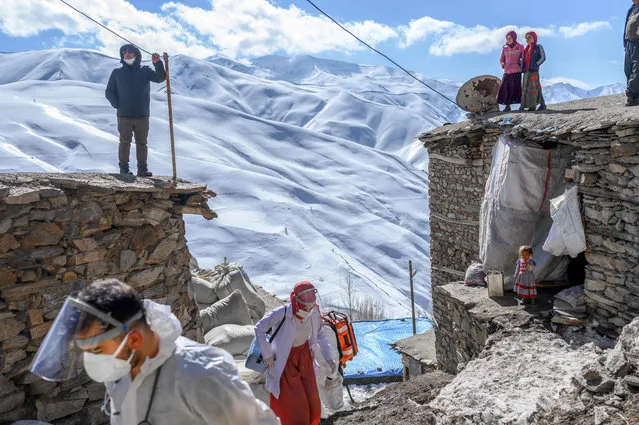
In this photograph taken on February 15, 2021, doctor Sergen Saracoglu (L) and nurse Yilzdiz Ayten (C) from the Bahcesaray public hospital vaccination team, arrive at the village of Guneyyamac in eastern Turkey, as part of an expedition to vaccinate residents of 65 years old or above with Sinovac's CoronaVac Covid-19 vaccine. Turkey's population of more than 83 million is spread out across Europe and Asia and covers some seemingly impregnable terrain. The vaccination effort with China's CoronaVac jab kicked off with a bang in mid-January when Turkey inoculated more than half a million people in the first few days. But it slowed down considerably when doctors left the big cities and tried to reach remote places such as Imamli and Ozbeyli – two ethnically Kurdish hamlets of a few hundred herders and farmers each. (Photo by Bulent Kilic/AFP Photo)

In this photograph taken on February 15, 2021, doctor Sergen Saracoglu (L) and nurse Yilzdiz Ayten (C) from the Bahcesaray public hospital vaccination team, arrive at the village of Guneyyamac in eastern Turkey, as part of an expedition to vaccinate residents of 65 years old or above with Sinovac's CoronaVac Covid-19 vaccine. (Photo by Bulent Kilic/AFP Photo)
Details
18 Mar 2021 09:32:00
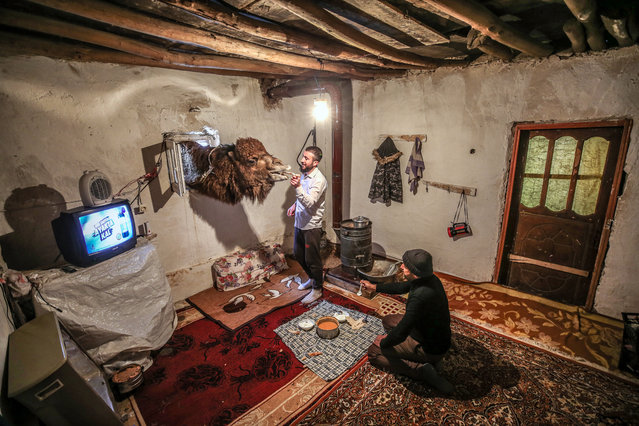
Shepherd brothers Mustafa Erbay and Baran Erbay train their camels on snowy grounds, enabling them to become champions in competitions held in the Aegean and Mediterranean regions in Baskale district of Van, Turkey on February 1, 2020. (Photo by Ozkan Bilgin/Anadolu Agency via Getty Images)

Shepherd brothers Mustafa Erbay and Baran Erbay train their camels on snowy grounds, enabling them to become champions in competitions held in the Aegean and Mediterranean regions in Baskale district of Van, Turkey on February 1, 2020. (Photo by Ozkan Bilgin/Anadolu Agency via Getty Images)
Details
07 Feb 2020 00:01:00
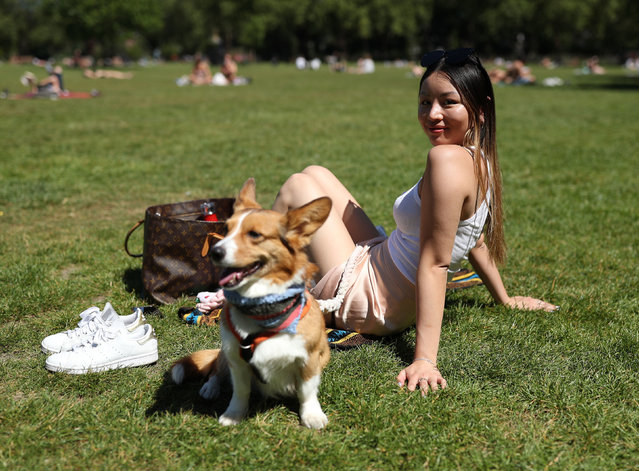
Clarice Hui and her Corgi dog Padfoot enjoying the hot weather in London Fields park, east London on May 19, 2020, after the introduction of measures to bring the country out of lockdown. (Photo by Yui Mok/PA Images via Getty Images)

Clarice Hui and her Corgi dog Padfoot enjoying the hot weather in London Fields park, east London on May 19, 2020, after the introduction of measures to bring the country out of lockdown. (Photo by Yui Mok/PA Images via Getty Images)
Details
22 May 2020 00:07:00
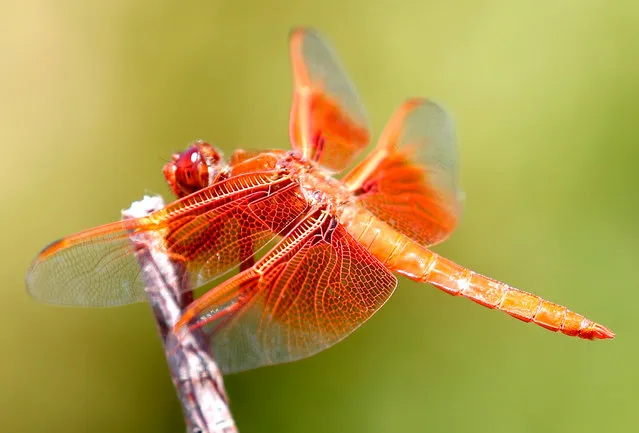
A Flame Skimmer or Firecracker Skimmer dragonfly (Libellula saturata) rests on a small branch in Topanga, California, USA, 18 June 2018. The Flame Skimmer dragonfly is found in the Western United States near ponds and creeks. (Photo by Mike Nelson/EPA/EFE)

A Flame Skimmer or Firecracker Skimmer dragonfly (Libellula saturata) rests on a small branch in Topanga, California, USA, 18 June 2018. The Flame Skimmer dragonfly is found in the Western United States near ponds and creeks. (Photo by Mike Nelson/EPA/EFE)
Details
24 Jun 2018 00:03:00
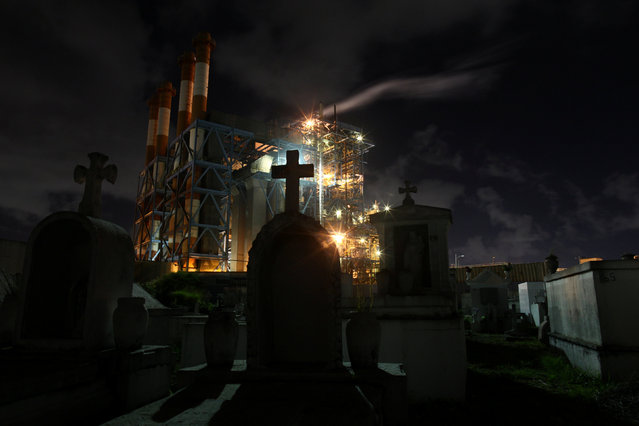
Central Palo Seco power station of the Puerto Rico Electric Power Authority (PREPA) is seen behind a cemetery, in San Juan, Puerto Rico January 22, 2018. (Photo by Alvin Baez/Reuters)

Central Palo Seco power station of the Puerto Rico Electric Power Authority (PREPA) is seen behind a cemetery, in San Juan, Puerto Rico on January 22, 2018. (Photo by Alvin Baez/Reuters)
Details
06 Dec 2018 00:01:00