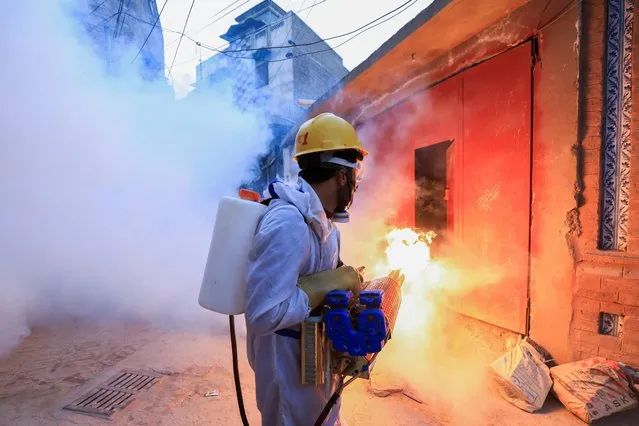
Fire blows from a fogging machine as a worker sprays fumigation vapour to stem the spread of dengue virus along a street in Peshawar, Pakistan, October 18, 2021. (Photo by Fayaz Aziz/Reuters)
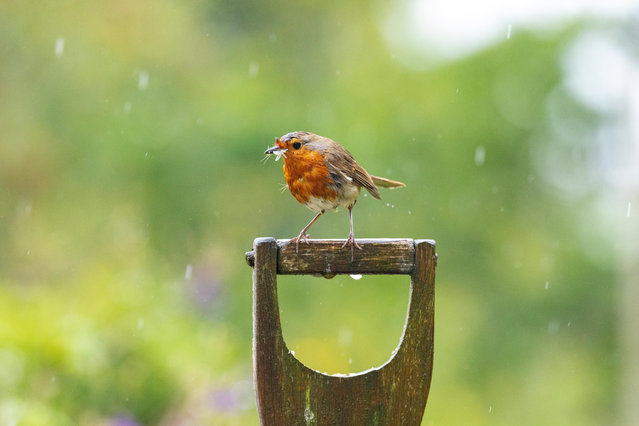
A robin perches on a spade handle in a garden on a rainy day in Lixwm, north Wales. Researchers said this week that when European robins are subjected to human-produced noise, their behaviour changes. (Photo by DGDImages/Alamy Live News)
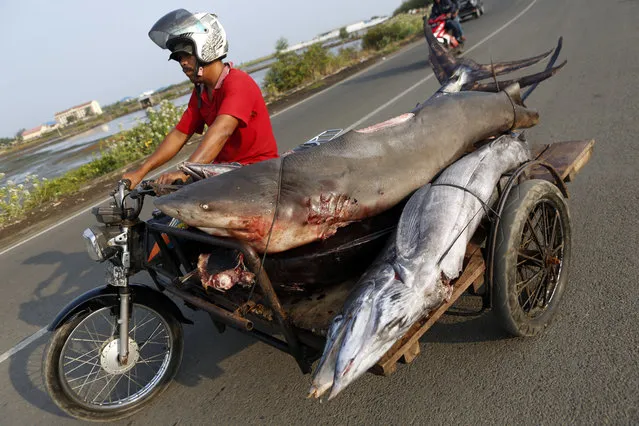
A fisherman transports a shark and other fish with his ride to the traditional fish market in Lampulo, Aceh, Indonesia, 12 April 2018. The fishing industry is one of Indonesia's largest economic contributor, with almost half of the country's population working in the sector. (Photo by Hotli Simanjuntak/EPA/EFE)
Londoners enjoying the magnificent sight of sun setting perfectly in the middle of London Eye as seen from Greenwich Park in London, England on the warmest day of the year on April 19, 2018. (Photo by London Viewpoints/Rex Features/Shutterstock)
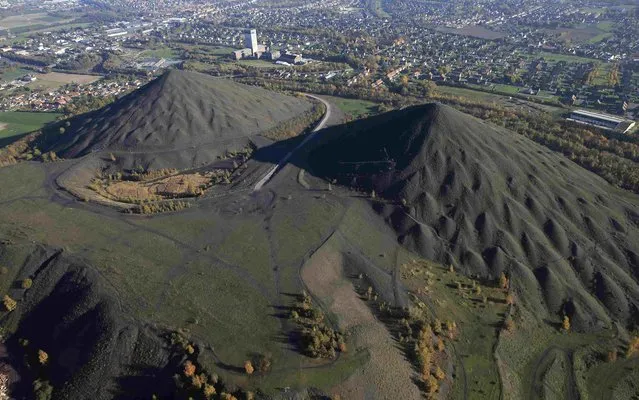
An aerial view shows the 11/19 pit and twin slag heaps at the former coal mine site in Loos-en-Gohelle, northern France, November 1, 2015. Loos-en-Gohelle, a town of 7000 inhabitants in the North of France, marked by the closure of coal mines in 1970, has demonstrated a successful transition from coal to a green economy. (Photo by Pascal Rossignol/Reuters)
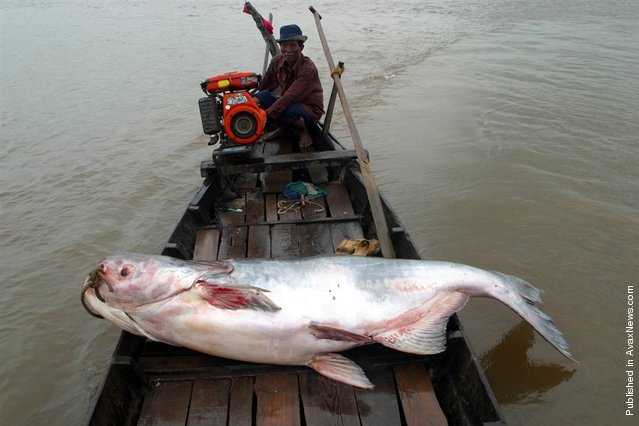
Among the fish populations that could be harmed by the Xayaburi dam in Laos is the critically endangered Mekong giant catfish, considered by the Guinness Book of World Records to be the world’s largest freshwater fish. The fish, which grows to 650 pounds and about 10 feet long, is only found in the Mekong River. It is migratory, moving between downstream habitats in Cambodia upstream to northern Thailand and Laos each year to spawn. Some experts fear the Xayaburi dam could block the migration and drive the giant catfish to extinction. (Photo by Courtesy of Zeb Hogan/University of Nevada, Reno)