Tourists visit an art installation of colorful umbrellas on November 10, 2022 in Nanjing, Jiangsu Province of China. (Photo by VCG/VCG via Getty Images)
Fifth-grade students of the General Yermolov Cadet School get prepared before their first military tactical exercise on the ground, which includes radiation resistance classes, forest survival studies and other activities, in Stavropol, Russia, September 10, 2016. Picture taken September 10, 2016. (Photo by Eduard Korniyenko/Reuters)
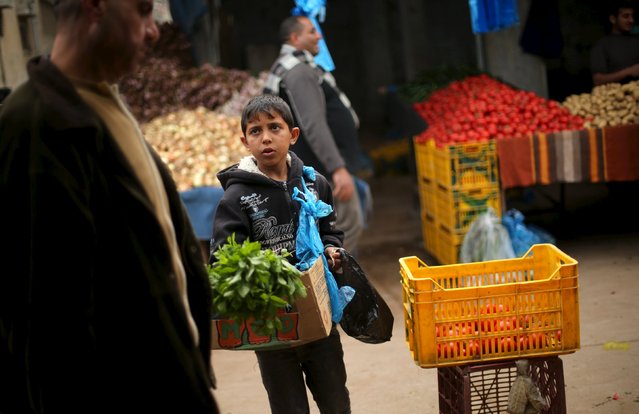
Palestinian boy Mohammad al-Bana, 10, sells mints at a market in Gaza City March 29, 2016. Bana, whose father is unemployed, earns around 10 Shekels ($2.5) per day. The boy starts working after finishing school. He hopes to continue education and become an engineer in the future. (Photo by Mohammed Salem/Reuters)
Miranda Kerr poses at the David Jones Spring/Summer fashion preview on Burke Street on August 10, 2011 in Melbourne, Australia. (Photo by Lucas Dawson)
A model takes a picture of photographers outside the Anna Sui show at the Strand Rare Book Room in New York on February 10, 2024. (Photo by Jeenah Moon for The Washington Post)
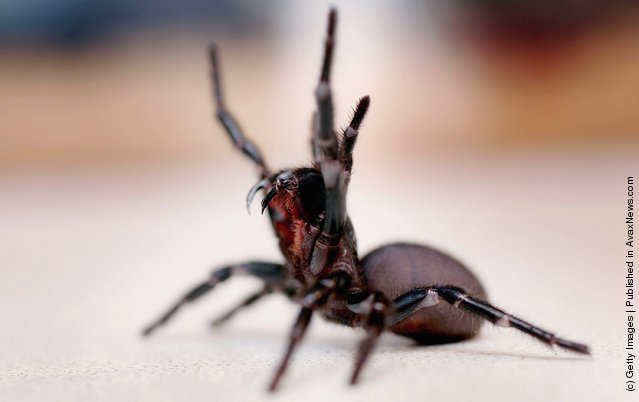
A Funnel Web spider is pictured at the Australian Reptile Park January 23, 2006 in Sydney, Australia. The Funnel Web is one of Australia's deadliest animals, with a venom that is packed with at least 40 different toxic proteins. A bite from a Funnel Web causes massive electrical over-load in the body's nervous system. Finally, fatalities occur from either heart attack or a pulmonary oedema, where the capillaries around the lungs begin to leak fluid and the patient effectively drowns. Death can come as quickly as two hours after a bite if no medical treatment is sought. Due to advances in anti-venom, there has been no death from a Funnel Web bite in Australia since 1980. Australia is home to some of the most deadly and poisonous animals on earth. (Photo by Ian Waldie/Getty Images)