Loading...
Done
A driverless vehicle runs at Vanke's Building Research Centre testing area in Dongguan, south China's Guangdong province November 2, 2015. The country's largest property developer, China Vanke, is investing in its own robots to do certain jobs in the face of a labor shortage in the world's most populated country. This driverless car is among the robots that Vanke is aiming to bring in. (Photo by Tyrone Siu/Reuters)

A driverless vehicle runs at Vanke's Building Research Centre testing area in Dongguan, south China's Guangdong province November 2, 2015. The country's largest property developer, China Vanke, is investing in its own robots to do certain jobs in the face of a labor shortage in the world's most populated country. This driverless car is among the robots that Vanke is aiming to bring in. (Photo by Tyrone Siu/Reuters)
Details
10 Nov 2015 08:01:00
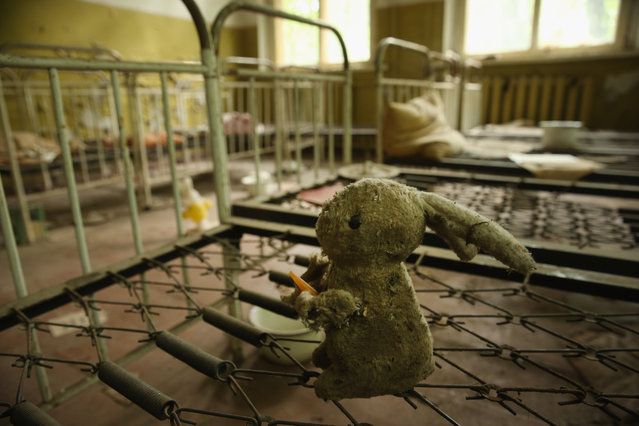
A stuffed rabbit doll sits among children's beds standing in the abandoned kindergarten of Kopachi village located inside the Chernobyl Exclusion Zone on September 29, 2015 near Chornobyl, Ukraine. Kopachi, a village that before 1986 had a population of 1,114, lies only a few kilometers south of the former Chernobyl nuclear power plant, where in 1986 workers inadvertantly caused reactor number four to explode, creating the worst nuclear accident in history. Radiation fallout was so high that authorities bulldozed and buried all of Kopachi's structures except for the kindergarten. (Photo by Sean Gallup/Getty Images)

A stuffed rabbit doll sits among children's beds standing in the abandoned kindergarten of Kopachi village located inside the Chernobyl Exclusion Zone on September 29, 2015 near Chornobyl, Ukraine. Kopachi, a village that before 1986 had a population of 1,114, lies only a few kilometers south of the former Chernobyl nuclear power plant, where in 1986 workers inadvertantly caused reactor number four to explode, creating the worst nuclear accident in history. (Photo by Sean Gallup/Getty Images)
Details
27 Apr 2016 09:28:00
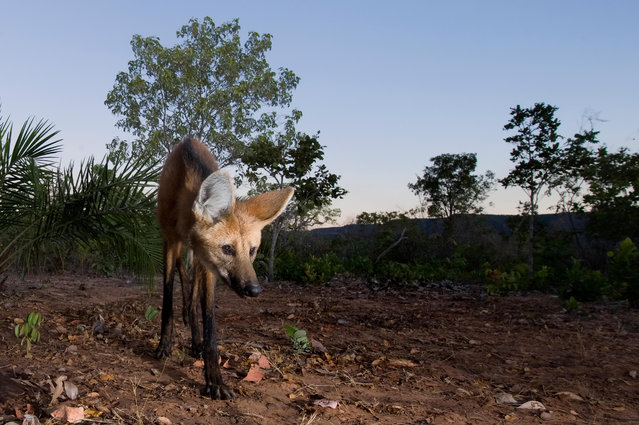
The maned wolf is among the large mammals in the Brazilian Cerrado that are threatened by the increasing conversion of grasslands into farmland for grazing and growing crops. (Photo by Ben Cranke/Nature Picture Library/Alamy Stock Photo)

Global wildlife populations will decline by 67% by 2020 unless urgent action is taken to reduce human impact on species and ecosystems, warns the biennial Living Planet Index report from WWF (World Wide Fund for Nature) and ZSL (Zoological Society of London). From elephants to eels, here are some of the wildlife populations most affected by human activity. Here: The maned wolf is among the large mammals in the Brazilian Cerrado that are threatened by the increasing conversion of grasslands into farmland for grazing and growing crops. (Photo by Ben Cranke/Nature Picture Library/Alamy Stock Photo)
Details
28 Oct 2016 10:47:00
Dublin Horse Show mascot “Conor the Capall” among the crowds on the opening day of the 147th Dublin Horse Show at the RDS on Wednesday, August 17, 2022, the first to be held since 2019. The event which was first held in 1864 takes place over the next five days and includes national and international show jumping competitions. (Photo by Brian Lawless/PA Images via Getty Images)

Dublin Horse Show mascot “Conor the Capall” among the crowds on the opening day of the 147th Dublin Horse Show at the RDS on Wednesday, August 17, 2022, the first to be held since 2019. The event which was first held in 1864 takes place over the next five days and includes national and international show jumping competitions. (Photo by Brian Lawless/PA Images via Getty Images)
Details
18 Aug 2022 06:19:00
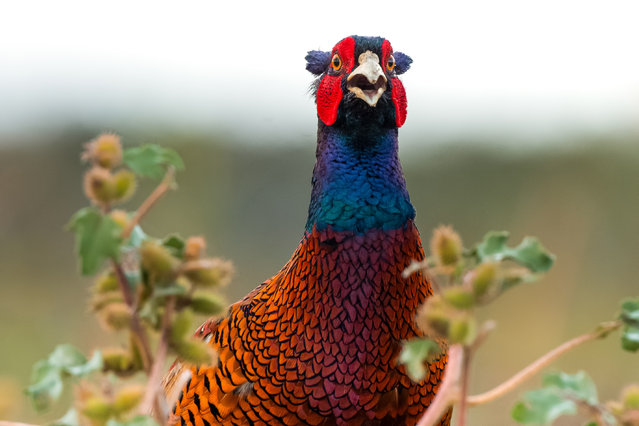
A pheasant is seen among grasses in Bursa, Turkiye on October 07, 2024. Pheasants mostly live in forested areas, thickets and wetlands. Unlike females, male pheasants have a much more remarkable structure with their long tails and feathers in bright and variable colors. Also, they feed on fruits, grains, seeds and invertebrates. (Photo by Alper Tuydes/Anadolu via Getty Images)

A pheasant is seen among grasses in Bursa, Turkiye on October 07, 2024. Pheasants mostly live in forested areas, thickets and wetlands. Unlike females, male pheasants have a much more remarkable structure with their long tails and feathers in bright and variable colors. Also, they feed on fruits, grains, seeds and invertebrates. (Photo by Alper Tuydes/Anadolu via Getty Images)
Details
27 Oct 2024 04:43:00
Ruchaya Nillakan (L) and Nuttimon Sanyamast (C), same-sеx couple, attend their marriage registration event at Paragon shopping mall in Bangkok on January 23, 2025. A high-profile gay couple married in Thailand on January 23 as the kingdom's same-sеx marriage law went into effect, an AFP journalist saw, among the first of hundreds expected to do so. (Photo by Chanakarn Laosarakham/AFP Photo)

Ruchaya Nillakan (L) and Nuttimon Sanyamast (C), same-sеx couple, attend their marriage registration event at Paragon shopping mall in Bangkok on January 23, 2025. A high-profile gay couple married in Thailand on January 23 as the kingdom's same-sеx marriage law went into effect, an AFP journalist saw, among the first of hundreds expected to do so. (Photo by Chanakarn Laosarakham/AFP Photo)
Details
01 Feb 2025 03:21:00
Sea lion is seen among people on a beach in San Cristobal island, part of Galapagos archipelago on February 11, 2025. Located in Ecuadorone of South America's most fascinating countriesthe Galapagos National Park spans 13 main islands and numerous islets, captivating biologists, environmental scientists, and tourists with its rich ecology. (Photo by Ozge Elif Kizil/Anadolu via Getty Images)

Sea lion is seen among people on a beach in San Cristobal island, part of Galapagos archipelago on February 11, 2025. Located in Ecuadorone of South America's most fascinating countriesthe Galapagos National Park spans 13 main islands and numerous islets, captivating biologists, environmental scientists, and tourists with its rich ecology. (Photo by Ozge Elif Kizil/Anadolu via Getty Images)
Details
13 Apr 2025 03:15:00
A juvenile blackcap is recorded in the soft light of morning at Minorca, UK, a former open-cast mine near Moira in the National Forest on June 18, 2025. Dr Heather Gilbert, research and evidence manager, checks mist nets among wildflowers and young trees as part of long-term monitoring that shows bird numbers have increased by 48 per cent over 30 years. (Photo by Rod Kirkpatrick/RKP Photography)

A juvenile blackcap is recorded in the soft light of morning at Minorca, UK, a former open-cast mine near Moira in the National Forest on June 18, 2025. Dr Heather Gilbert, research and evidence manager, checks mist nets among wildflowers and young trees as part of long-term monitoring that shows bird numbers have increased by 48 per cent over 30 years. (Photo by Rod Kirkpatrick/RKP Photography)
Details
29 Jun 2025 03:58:00