Loading...
Done
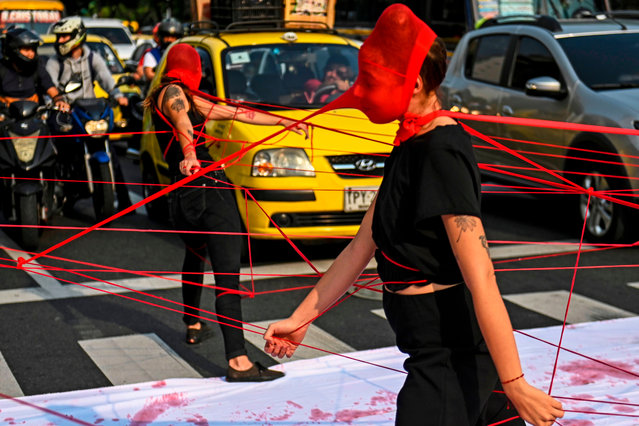
Colombian activists perform during a protest against violence towards women, on a street in Medellin, Colombia, on March 6, 2020. (Photo by Joaquín Sarmiento/AFP Photo)

Colombian activists perform during a protest against violence towards women, on a street in Medellin, Colombia, on March 6, 2020. (Photo by Joaquín Sarmiento/AFP Photo)
Details
08 Mar 2020 00:07:00
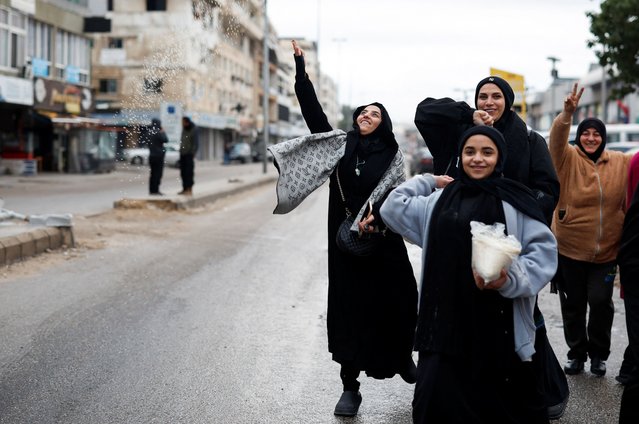
Women welcome the people coming back to Tyre, after a ceasefire between Israel and Iran-backed group Hezbollah took effect, in Lebanon on November 27, 2024. (Photo by Adnan Abidi/Reuters)

Women welcome the people coming back to Tyre, after a ceasefire between Israel and Iran-backed group Hezbollah took effect, in Lebanon on November 27, 2024. (Photo by Adnan Abidi/Reuters)
Details
30 Nov 2024 03:23:00
Activists perform on the occasion of the International Day for the Elimination of Violence against Women, in Rome, Tuesday, November 25, 2025 (Photo by Roberto Monaldo/LaPresse via AP Photo)

Activists perform on the occasion of the International Day for the Elimination of Violence against Women, in Rome, Tuesday, November 25, 2025 (Photo by Roberto Monaldo/LaPresse via AP Photo)
Details
07 Dec 2025 06:33:00
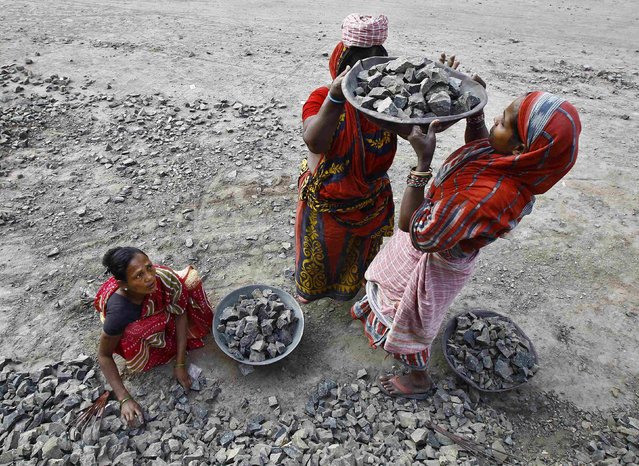
Women labourers work at the construction site of a road in Kolkata January 8, 2015. Across towns and cities in India, it is not uncommon to see women cleaning building sites, carrying bricks and or shoveling gravel - helping construct the infrastructure necessary for the country's economic and social development. (Photo by Rupak De Chowdhuri/Reuters)

Women labourers work at the construction site of a road in Kolkata January 8, 2015. Across towns and cities in India, it is not uncommon to see women cleaning building sites, carrying bricks and or shoveling gravel – helping construct the infrastructure necessary for the country's economic and social development. They help build roads, railway tracks, airports, and offices. They lay pipes for clean water supplies, cables for telecommunications, and dig the drains for sewage systems. But although women make up at least 20 percent of India's 40 million construction workers, they are less recognized than male workers with lower pay and often prone to safety hazards and sexual harassment. They are often unaware of their rights or scared to complain, say activists now trying to campaign for better treatment of women in the construction industry. (Photo by Rupak De Chowdhuri/Reuters)
Details
15 Jan 2015 13:47:00
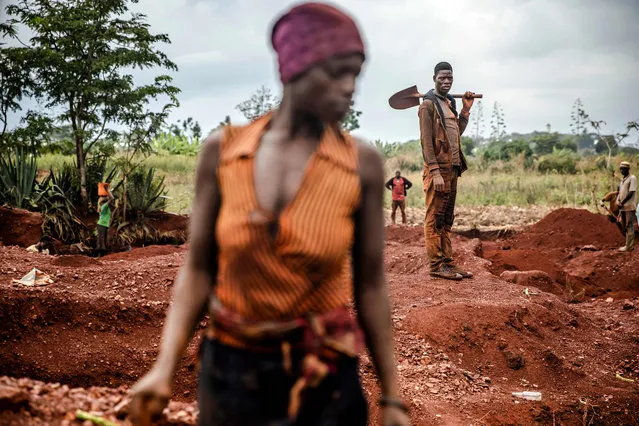
A gold miner observes from the distance how some women miners work at an open-pit gold mine in Nyarugusu, Geita Region, Tanzania on May 27, 2022. Tanzania is a land rich in minerals and one of the main gold producers in Africa, with gold representing more than 90% of the country's mineral exports. Artisanal and small-scale gold mining have culturally and historically relegated women's participation. The extractive sector in Tanzania has historically been a male-dominated industry with high levels of harassment, sеxual abuse, discrimination and misconceptions over women's involvement, and contributions following traditional beliefs. (Photo by Luis Tato/AFP Photo)

A gold miner observes from the distance how some women miners work at an open-pit gold mine in Nyarugusu, Geita Region, Tanzania on May 27, 2022. Tanzania is a land rich in minerals and one of the main gold producers in Africa, with gold representing more than 90% of the country's mineral exports. Artisanal and small-scale gold mining have culturally and historically relegated women's participation. The extractive sector in Tanzania has historically been a male-dominated industry with high levels of harassment, sеxual abuse, discrimination and misconceptions over women's involvement, and contributions following traditional beliefs. (Photo by Luis Tato/AFP Photo)
Details
13 Jun 2022 04:31:00
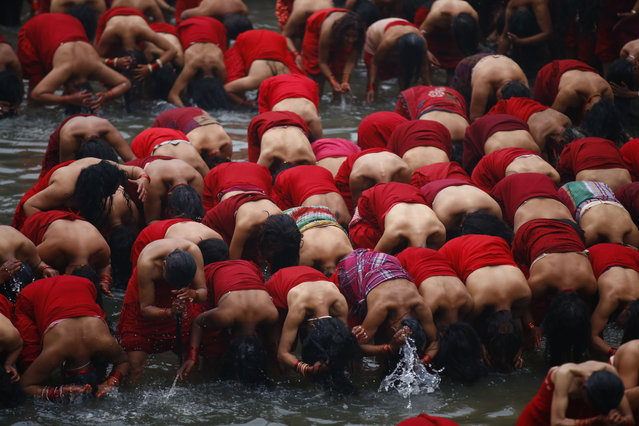
Nepalese devotee women take a holy bath after offering prayers in Pashupathinath Temple premise during the month-long Swasthani Bratakatha festival, devoted to goddess Shree Swasthani in Kathmandu on February 8, 2016. Devotees recite Holy Scripture and women pray for wellbeing of their spouses throughout the month-long fast. (Photo by Skanda Gautam via ZUMA Wire)

Nepalese devotee women take a holy bath after offering prayers in Pashupathinath Temple premise during the month-long Swasthani Bratakatha festival, devoted to goddess Shree Swasthani in Kathmandu on February 8, 2016. Devotees recite Holy Scripture and women pray for wellbeing of their spouses throughout the month-long fast. (Photo by Skanda Gautam via ZUMA Wire)
Details
09 Feb 2016 13:34:00
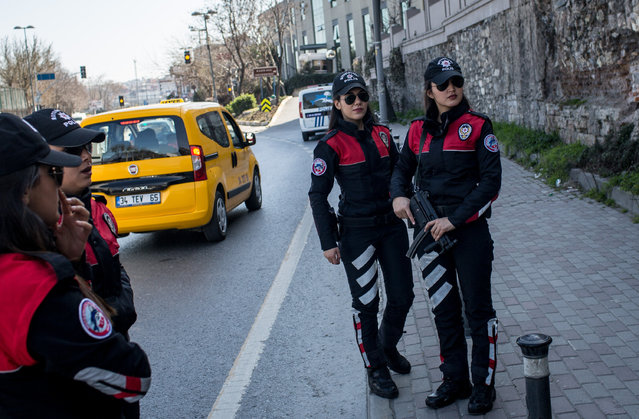
Female police officers from Istanbul's Motorcycled Police Unit wait to search vehicles during a roadside checkpoint operation on March 7, 2017 in Istanbul, Turkey. The rapid response unit nicknamed Dolphins is used primarily in crime prevention operations and has 25 female officers. 6% of Turkey's 250,000 strong police force are women, March 8 marks International Women's Day. (Photo by Chris McGrath/Getty Images)

Female police officers from Istanbul's Motorcycled Police Unit wait to search vehicles during a roadside checkpoint operation on March 7, 2017 in Istanbul, Turkey. The rapid response unit nicknamed Dolphins is used primarily in crime prevention operations and has 25 female officers. 6% of Turkey's 250,000 strong police force are women, March 8 marks International Women's Day. (Photo by Chris McGrath/Getty Images)
Details
09 Mar 2017 11:58:00
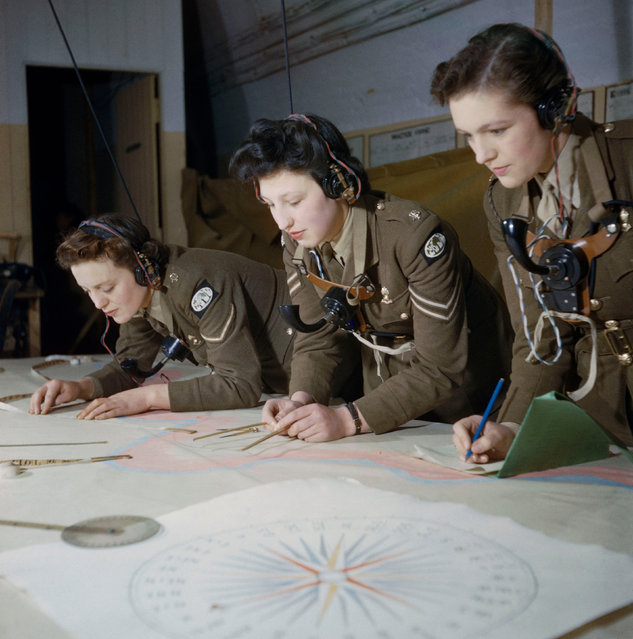
Auxiliary Territorial Service (ATS) plotters at work at Coastal Artillery Headquarters in Dover, December 1942. (Photo by Ted Dearberg/IWM/PA Wire)

Auxiliary Territorial Service (ATS) plotters at work at Coastal Artillery Headquarters in Dover, December 1942. The Auxiliary Territorial Service was the women's branch of the British Army during the Second World War. It was formed on 9 September 1938, initially as a women's voluntary service, and existed until 1 February 1949, when it was merged into the Women's Royal Army Corps. The ATS had its roots in the Women's Auxiliary Army Corps (WAAC), which was formed in 1917 as a voluntary service. During the First World War its members served in a number of jobs including clerks, cooks, telephonists and waitresses. The WAAC was disbanded after four years in 1921. (Photo by Ted Dearberg/IWM/PA Wire)
Details
13 Jul 2017 07:52:00