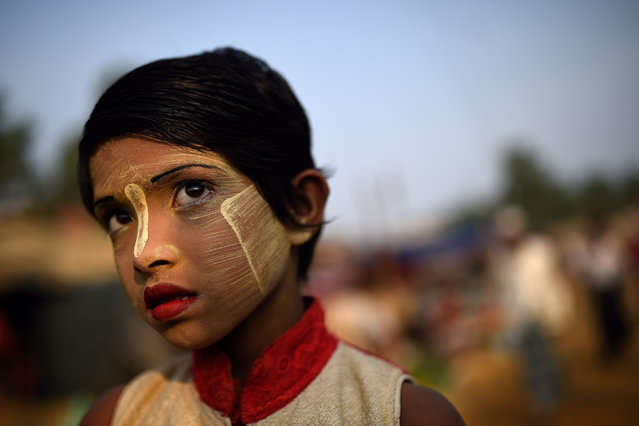
A Rohingya refugee girl named Rufia Begum, aged 9, poses for a photograph as she wears thanaka paste at Balukhali camp in Cox's Bazaar, Bangladesh, March 31, 2018. (Photo by Clodagh Kilcoyne/Reuters)
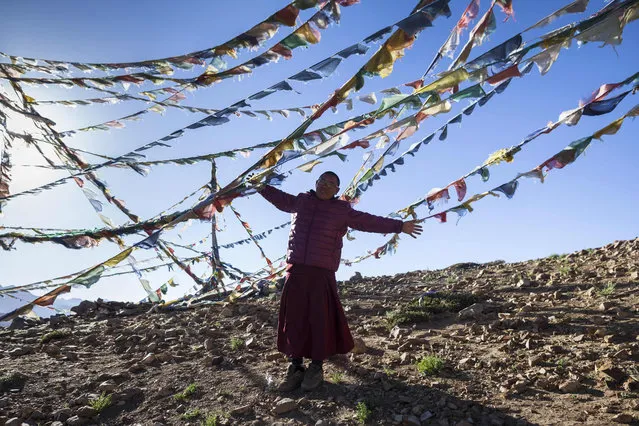
In this photograph taken on July 7, 2018, an Indian Buddhist monk plays with the wind amongst prayer flags on a hill overlooking Tnagyud Gompa monastery in Komik in Spiti Valley in the northern state of Himachal Pradesh. (Photo by Xavier Galiana/AFP Photo)
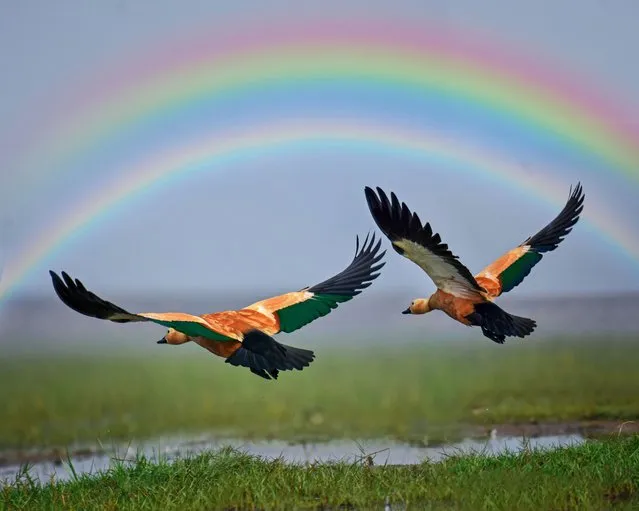
Two ruddy shelducks fly under a double rainbow in Odisha, India in July 2022. These birds are ruddy shelduck, known locally as the Brahminy duck. They have a wingspan of between 43 and 53 inches and stand at a maximum of 28 inches tall. (Photo by Suman Das/Media Drum Images)
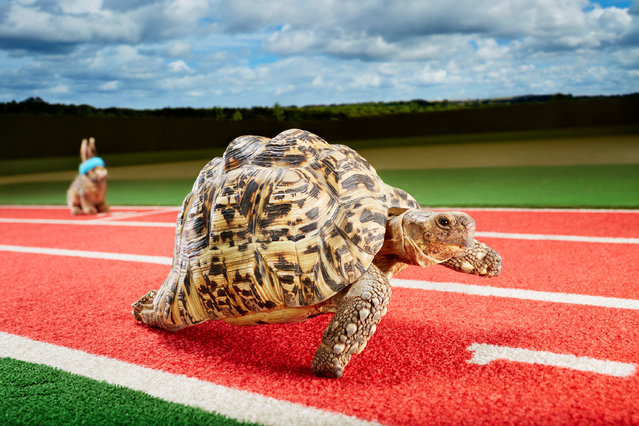
The Guinness World Record for the fastest tortoise in the world is held by Bertie, a South African leopard tortoise, who covered 5.49 metres in 19.59 seconds. (Photo by Paul Michael Hughes/Guinness World Records/PA Wire Press Association)
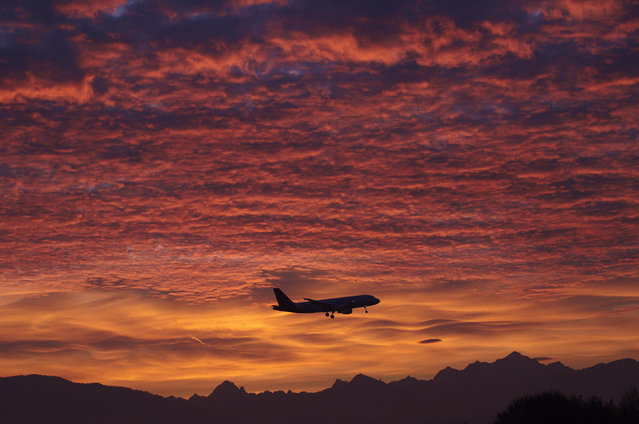
A Brussels Airlines aircraft prepares for landing in Cointrin airport during sunrise over the Mont Blanc in Geneva December 1, 2011. (Photo by Denis Balibouse/Reuters)
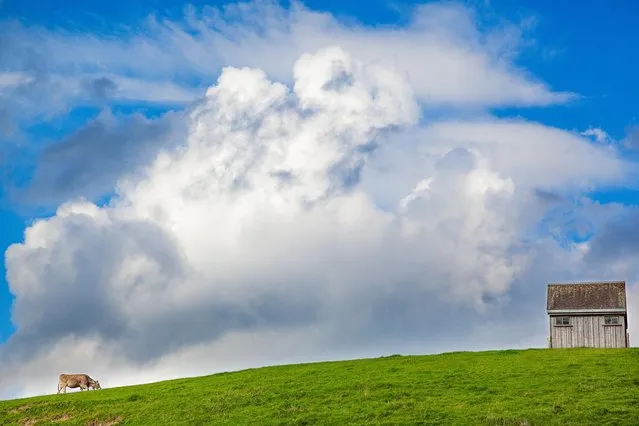
“Sniff out the Appenzell Cheese”. Alexander Hunter, 30, of Greenwich, Conn., took this photo in Appenzell, Switzerland, in September 2014. (Photo by Alexander Hunter)
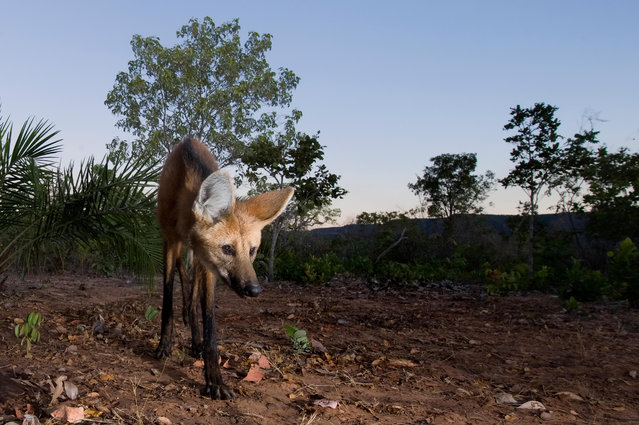
Global wildlife populations will decline by 67% by 2020 unless urgent action is taken to reduce human impact on species and ecosystems, warns the biennial Living Planet Index report from WWF (World Wide Fund for Nature) and ZSL (Zoological Society of London). From elephants to eels, here are some of the wildlife populations most affected by human activity. Here: The maned wolf is among the large mammals in the Brazilian Cerrado that are threatened by the increasing conversion of grasslands into farmland for grazing and growing crops. (Photo by Ben Cranke/Nature Picture Library/Alamy Stock Photo)