Loading...
Done
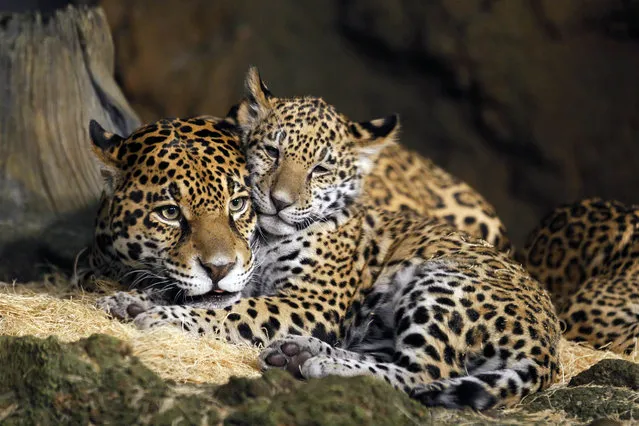
Stella the mother and her cub Zean rest together at The Milwaukee County Zoo  Zean and B'alam  are the two newest jaguar cubs with the mother Stella who are now on public exhibit, at four months old. B' alam (who has larger and darker spots as well as a square space on her forehead showing no spots) name means "Great and powerful king in Mayan.   Zean encompasses the Belize people living and working in Belize, with all cultures. She has smaller, almost greyish spots on her coat.  The names were revealaed at the Milwaukee County Zoo, Wednesday, March 13, 2013. Journal Sentinel photo by Rick Wood/RWOOD@JOURNALSENTINEL.COM

The first jaguar litter since 1975 was born at the Milwaukee County Zoo to Stella and Pat on November 13, 2013. The litter was on public display for the first time on March 13 when the jaguar baby's names were released. Belize schoolchildren named one Zean, which is the end of Belizean, and a public contest named the other B'alam, which means "great and powerful king" in Mayan. Photo: Stella the mother and her cub Zean rest together at The Milwaukee County Zoo. (Photo by Rick Wood)
Details
15 Mar 2013 07:51:00
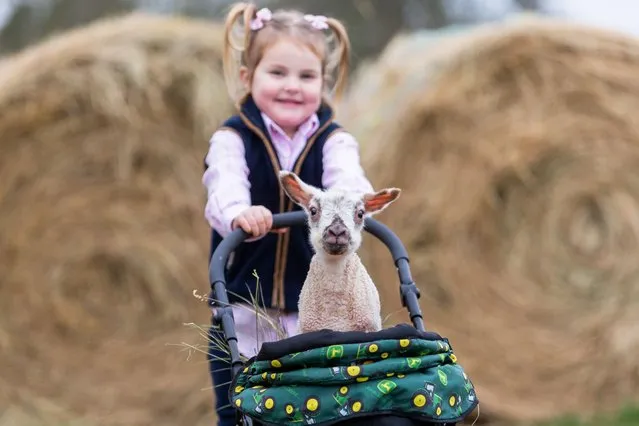
3-year-old Myla Mills plays with a two day old lamb in a toy pram in her family's farmyard in Arley, Worcestershire, United Kingdom on January 28, 2023. Early lambs are produced when the ram is free to tup the ewes over winter. (Photo by Peter Lopeman/Alamy Live News)

3-year-old Myla Mills plays with a two day old lamb in a toy pram in her family's farmyard in Arley, Worcestershire, United Kingdom on January 28, 2023. Early lambs are produced when the ram is free to tup the ewes over winter. (Photo by Peter Lopeman/Alamy Live News)
Details
05 Feb 2023 06:08:00
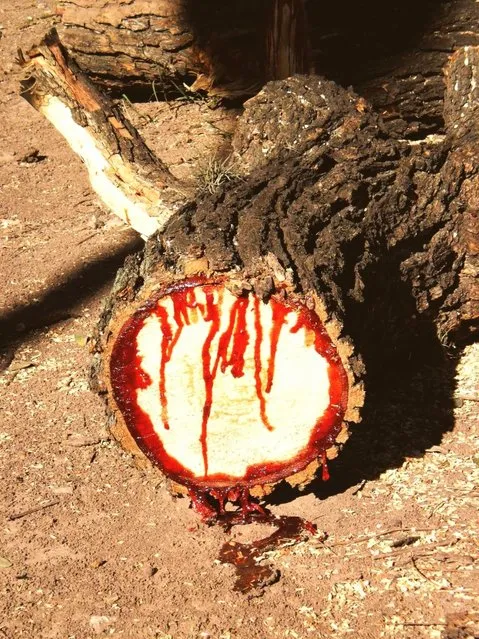
Bloodwood Tree

The bloodwood tree (Pterocarpus angolensis) is a deciduous tree with a high canopy, reaching about 15m in height and has dark bark. The red sap is used traditionally as a dye and in some areas mixed with animal fat to make a cosmetic for faces and bodies. It is also believed to have magical properties for the curing of problems concerning blood, apparently because of its close resemblance to blood. The name bloodwood for these trees stems from the dark red to brown sap that accumulates on wounds on the trunks.
Details
14 May 2014 12:44:00
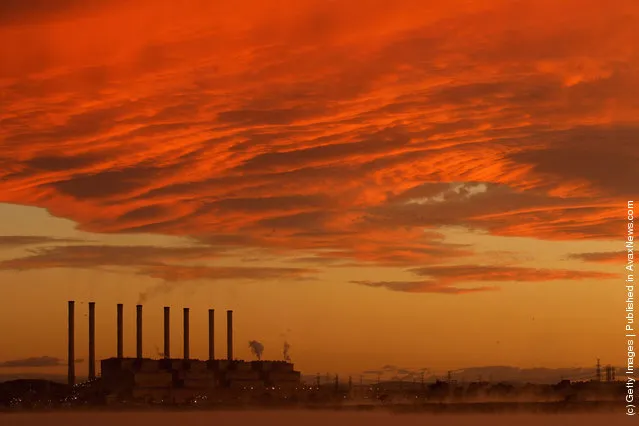
A view of the Hazelwood Power Station across the cooling pondage at sunrise in Melbourne, Australia

A view of the Hazelwood Power Station across the cooling pondage at sunrise on March 21, 2012 in Melbourne, Australia. The brown coal fueled power station, located in Latrobe Valley is the oldest in Victoria and provides the state nearly 25% of its energy. In 2005 Hazelwood was labeled Australia's least carbon efficient power station by WWF Australia and continues to be a target of issue of environmentalist groups. (Photo by Hamish Blair/Getty Images)
Details
21 Mar 2012 08:34:00
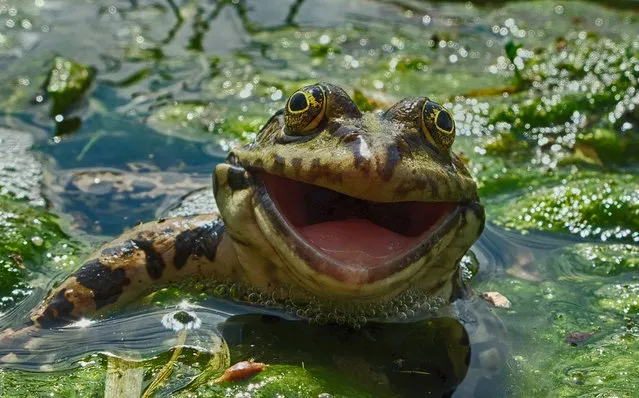
A frog appears to have a big smile for the camera, Russia. (Photo by Artyom Krivosheev/Barcroft Images/Comedy Wildlife Photography Awards 2016)

A frog appears to have a big smile for the camera, Russia. Things are heating up at the Comedy Wildlife Photography Awards as the shortlisted final 40 entries are revealed. This year's competition has featured over 2200 hilarious entries from around the world with photos including a fox face planting in the snow, a dancing brown bear and a pair of seemingly headless penguins – all beautifully photographed with perfect comedy timing and a strong conservation message. (Photo by Artyom Krivosheev/Barcroft Images/Comedy Wildlife Photography Awards 2016)
Details
08 Oct 2016 11:57:00
Authorities Fear MV Rena May Break-Up In Rough Seas

In this handout provided by Maritime New Zealand, MV Rena is battered by strong seas as it is stuck on Astrolabe Reef, on November 2, 2011 in Tauranga, New Zealand. The stricken vessel encountered a three metre swell, which led authorities to fear it may finally break up. Rena struck the reef on October 5, and has spilled 350 tonnes of oil, and almost 100 shipping containers. (Photo by Graeme Brown/Maritime New Zealand via Getty Images)
Details
02 Nov 2011 10:50:00
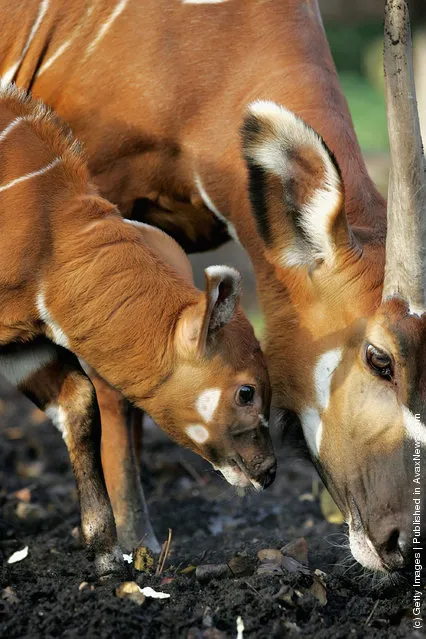
The one month old newborn Bongo Antelope

“The western or lowland bongo is a herbivorous, mostly nocturnal forest ungulate and among the largest of the African forest antelope species. Bongos are characterised by a striking reddish-brown coat, black and white markings, white-yellow stripes and long slightly spiralled horns”. – Wikipedia

Photo: The one month old newborn Bongo Antelope Calf ventures out in the cold with his mother in their enclosure at London Zoo on December 9, 2005 in London, England. (Photo by Christopher Lee/Getty Images)
Details
21 Feb 2012 12:17:00
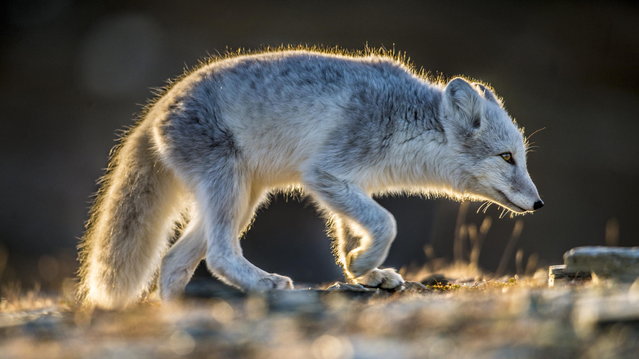
Arctic Fox. (Photo by Trond Eriksen)

“The arctic fox (Vulpes lagopus), also known as the white fox, polar fox, or snow fox, is a small fox native to the Arctic regions of the Northern Hemisphere and is common throughout the Arctic tundra biome. It is well adapted to living in cold environments. It has a deep thick fur which is brown in summer and white in winter. It averages in size at about 85.3 cm (33.6 in) in body length, with a generally rounded body shape to minimize the escape of body heat. – Wikipedia. (Photo by Trond Eriksen)
Details
26 May 2014 14:09:00