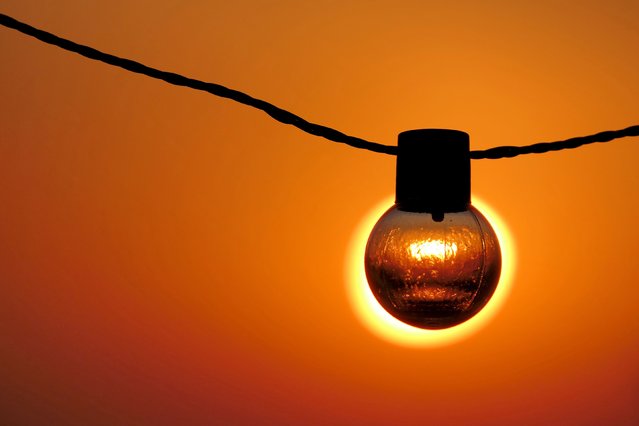
Festive decorations and illumination lights for the upcoming New Year and Christmas season are unveiled in Minsk, Belarus on December 15 , 2019. (Photo by Vasily Fedosenko/Reuters)
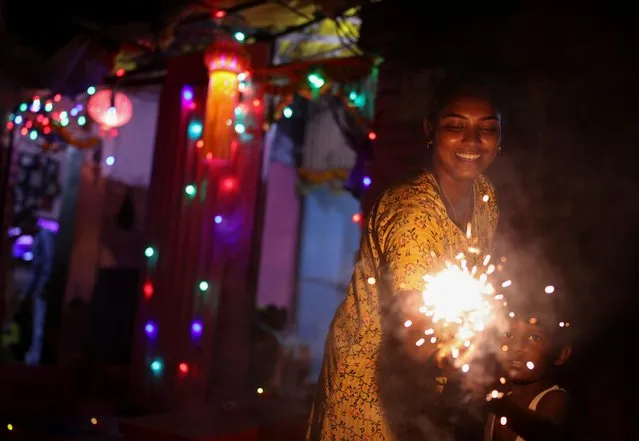
A woman and her son hold firecrackers during Diwali, the Hindu festival of lights, in Mumbai, India, November 4, 2021. (Photo by Francis Mascarenhas/Reuters)
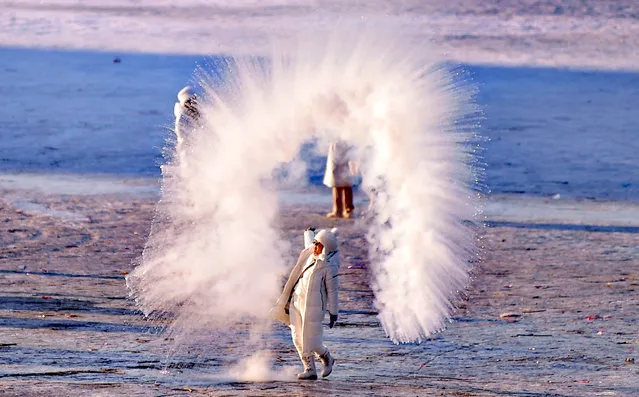
A tourist splashes water on the frozen Songhua River on December 18, 2023 in Harbin, Heilongjiang Province of China. The water immediately freezes into ice in the frigid air. (Photo by VCG/VCG via Getty Images)
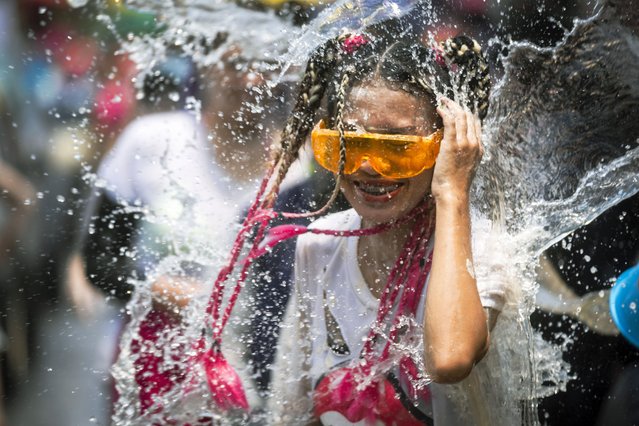
A bucket of water is splashed on a woman during the Songkran water festival to celebrate the Thai New Year, in Prachinburi Province, Thailand, April 13, 2024. (Photo by Wason Wanichakorn/AP Photo)
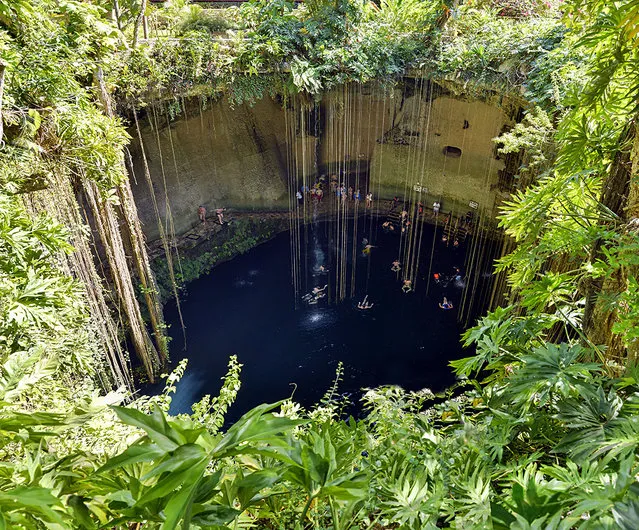
A cenote is a natural phenomenon, a sinkhole in the Earth’s surface. The Yucatan Peninsula in Mexico has an estimated 7,000 cenotes because it is primarily made up of porous limestone. For millions of years, rainfall slowly ate away at the limestone and a huge system of underground caves and caverns was formed. Many filled with water from rain or from the underground water table. When the roof of a water filled cave collapses, a cenote is born. The water found in a cenote may be fresh water, salt water, or both. Structurally it may be completely open, like a lake, almost completely closed with just a small opening at the top, or somewhere in between.
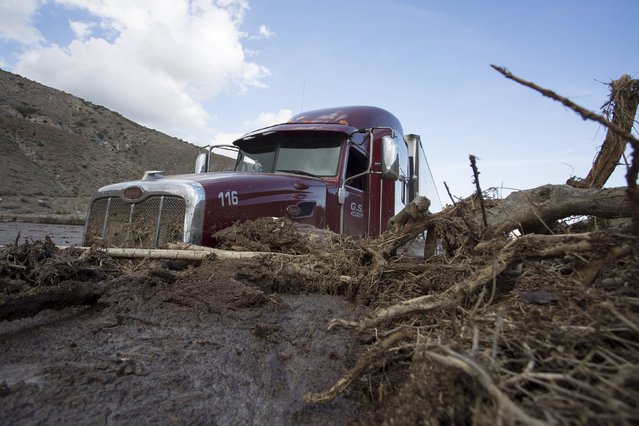
A truck remains mired in mud and debris on State Route 58 near Tehachapi, California, about 60 miles (97 km) outside of Los Angeles October 17, 2015. A mudslide on Thursday left nearly 200 vehicles, including 75 semi-trailer trucks, stuck in up to five feet of mud, local sheriff's spokesman Ray Pruitt said. (Photo by David McNew/Reuters)