Iranian bodybuilder Sharareh Nobahari, 30, assists her fitness trainees at a gym in Tehran, Iran on September 20, 2019. (Photo by Nazanin Tabatabaee/Reuters)
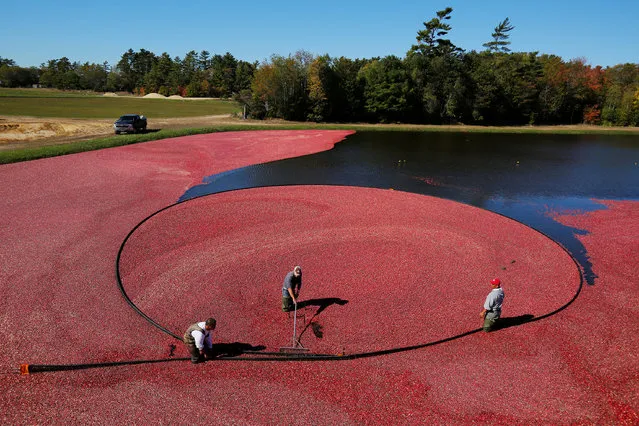
Workers harvest cranberries from one of third-generation farmer Larry Harju's bogs in Carver, Massachusetts, U.S. October 14, 2016. The cranberries from Harju’s farm are a part of the 8 million barrels of cranberries Ocean Spray anticipates is grower-owners will produce this year. (Photo by Brian Snyder/Reuters)
Sofia Valenzuela poses during a photo session for her quinceanera (coming of age of 15-year-olds) celebration amid coronavirus disease (COVID-19) spread concerns, in Havana, Cuba, July 17, 2020. (Photo by Alexandre Meneghini/Reuters)
A woman instructs a boy on how to pose for pictures in front of a mural depicting Soviet pilot Valery Chkalov – who took a non-stop flight over the Arctic and landed in the US state of Washington in 1937 – at Chkalovskaya metro station in Moscow on August 14, 2019. (Photo by Yuri Kadobnov/AFP Photo)
A Chinese future bride has her friends playing with her dress during a pre-wedding photoshoot in front of the Eiffel tower in Paris, France, August 28, 2015. As young Chinese become wealthier, they take abroad the tradition of taking their wedding photos days before they are married, rather than on their wedding day. (Photo by Philippe Wojazer/Reuters)
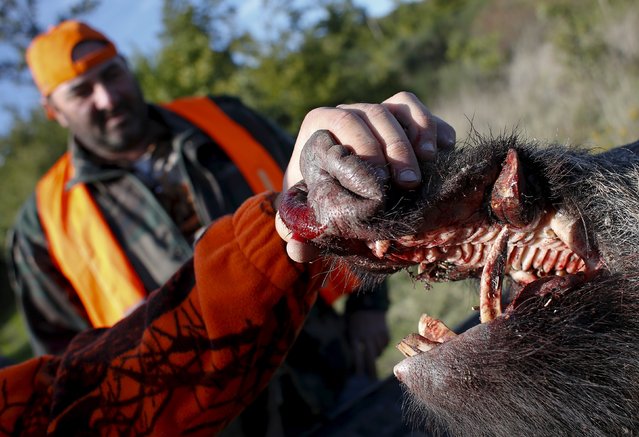
A dead wild boar is seen during a hunt in Castell'Azzara, Tuscany, central Italy, October 23, 2015. Extinct across much of the country by the end of the 1800s, the number of wild boar in Italy has almost doubled over the past decade and there are now about a million roaming the country, environmental and agricultural associations say. (Photo by Max Rossi/Reuters)
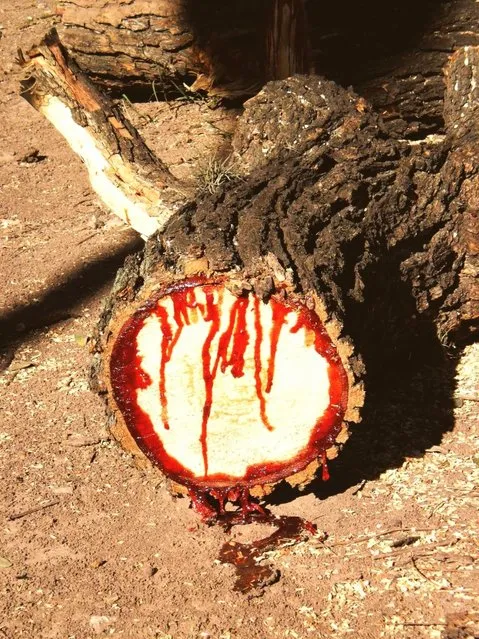
The bloodwood tree (Pterocarpus angolensis) is a deciduous tree with a high canopy, reaching about 15m in height and has dark bark. The red sap is used traditionally as a dye and in some areas mixed with animal fat to make a cosmetic for faces and bodies. It is also believed to have magical properties for the curing of problems concerning blood, apparently because of its close resemblance to blood. The name bloodwood for these trees stems from the dark red to brown sap that accumulates on wounds on the trunks.